

Asia
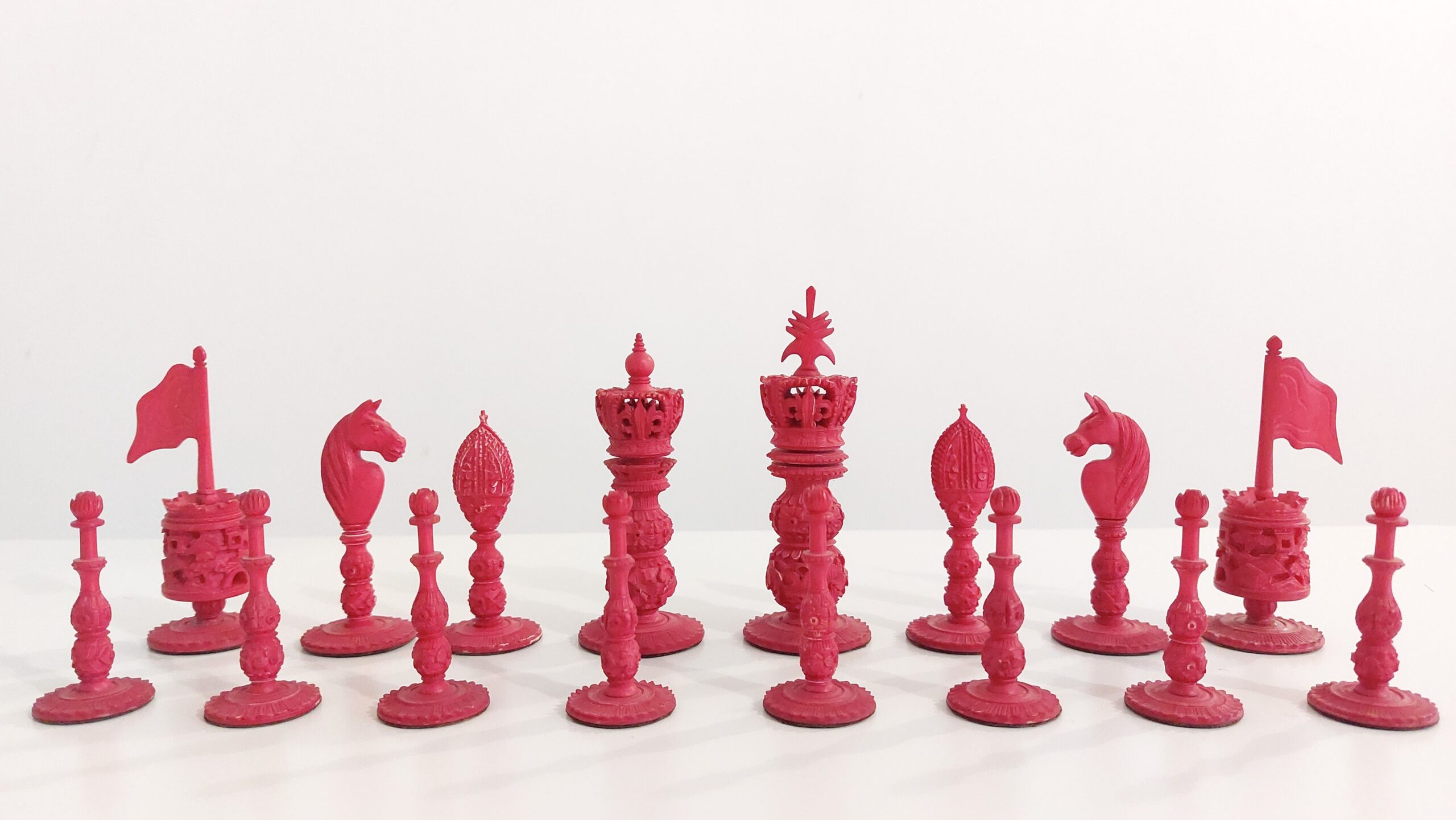
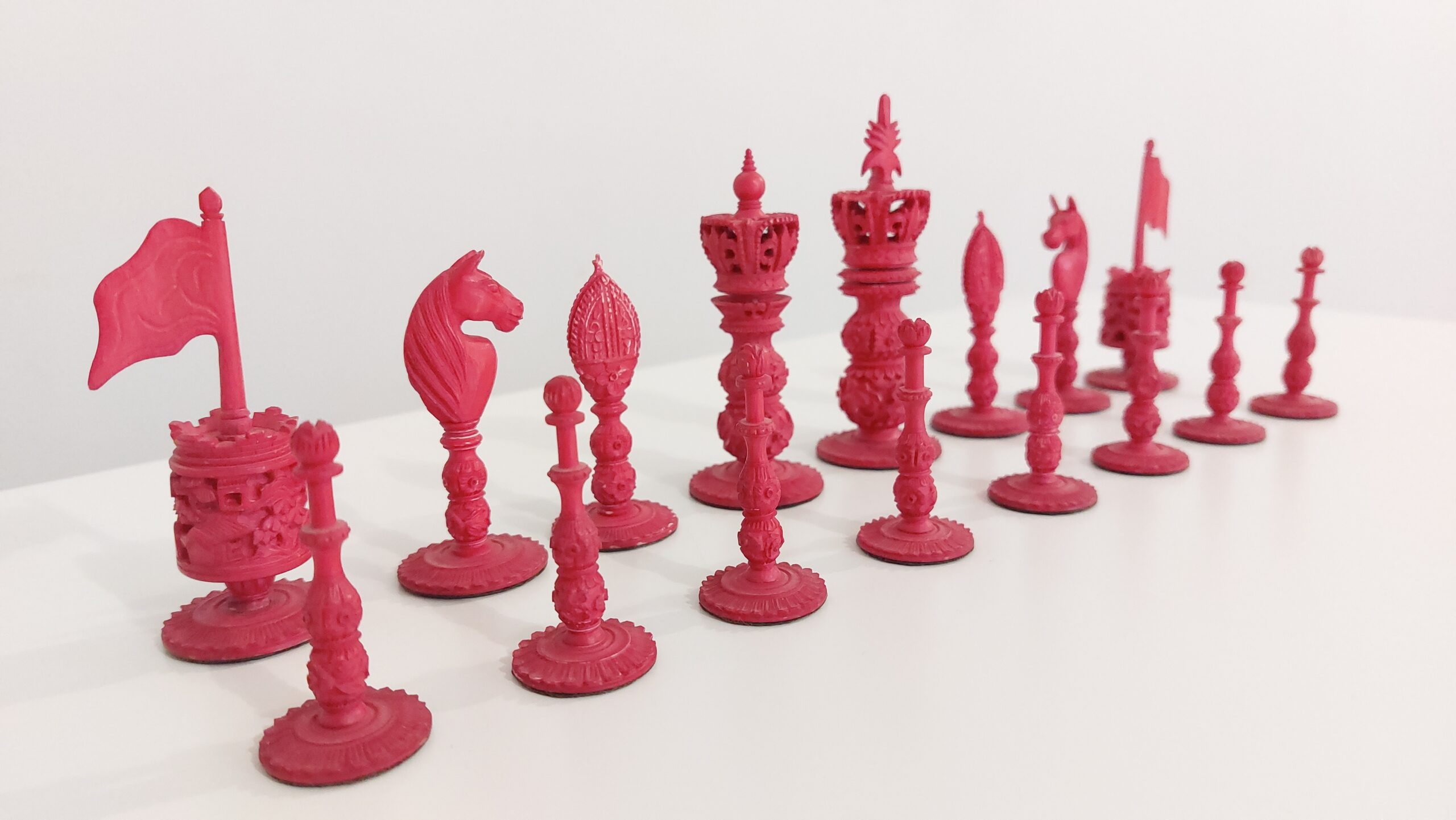
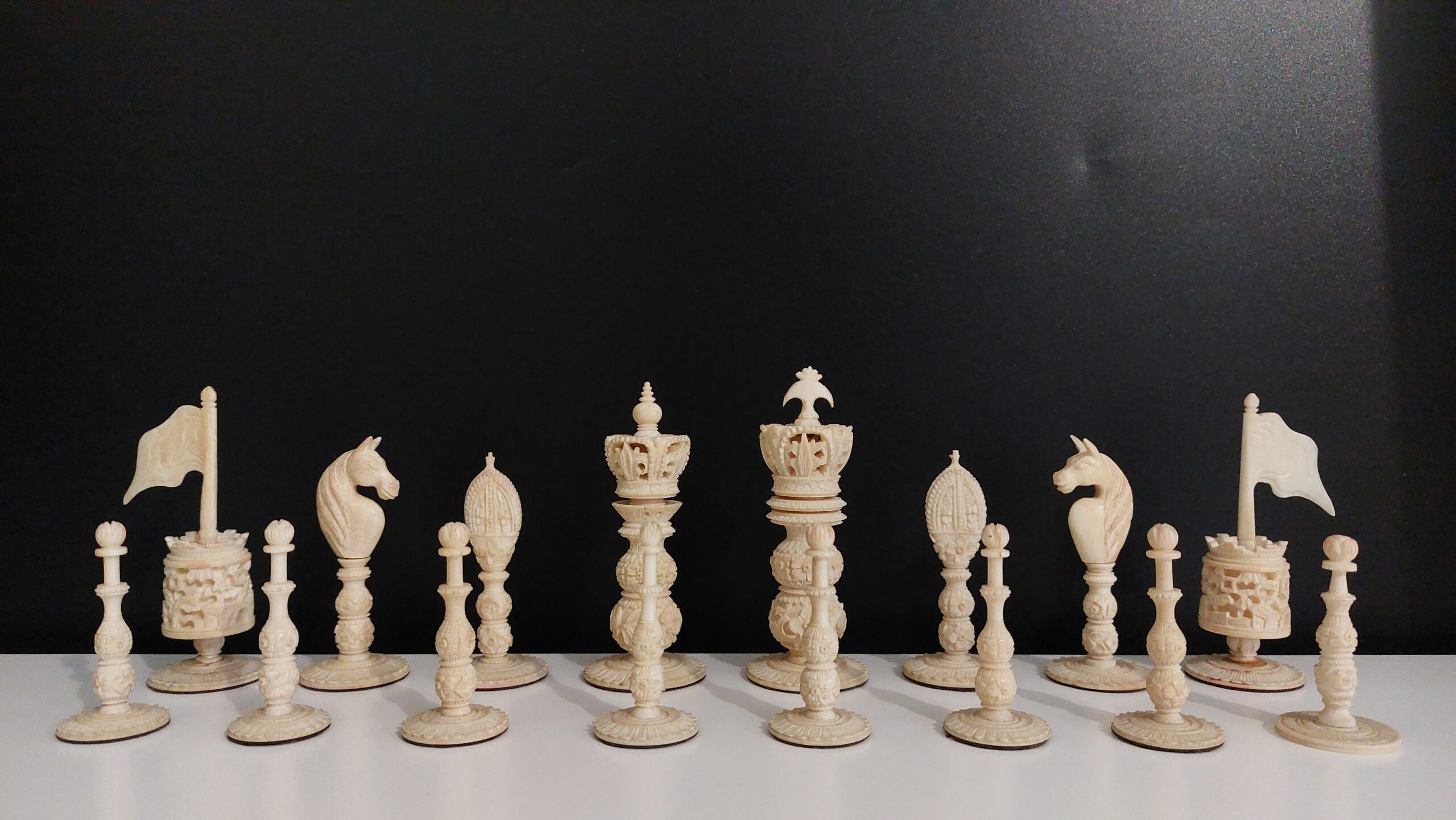
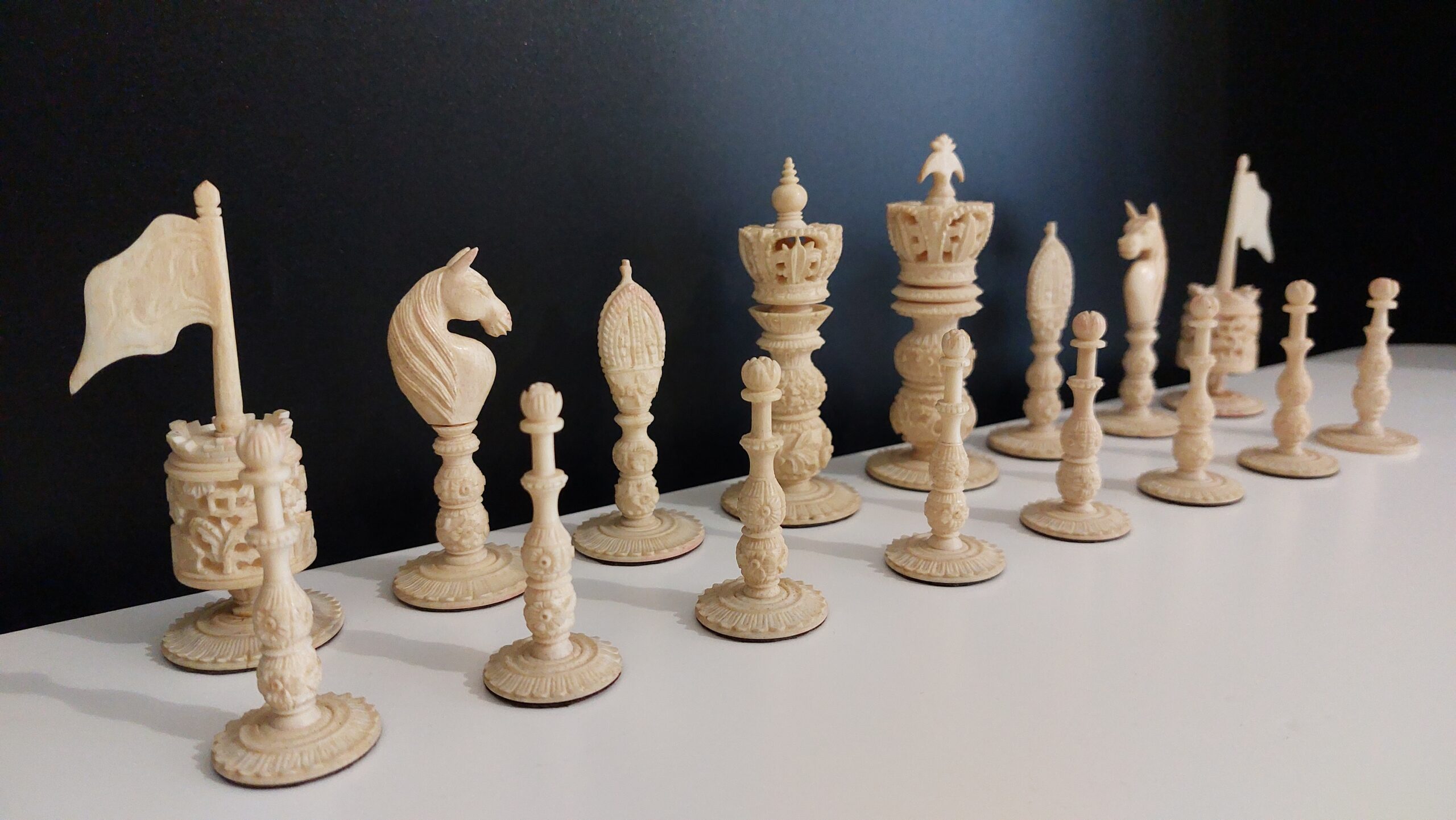
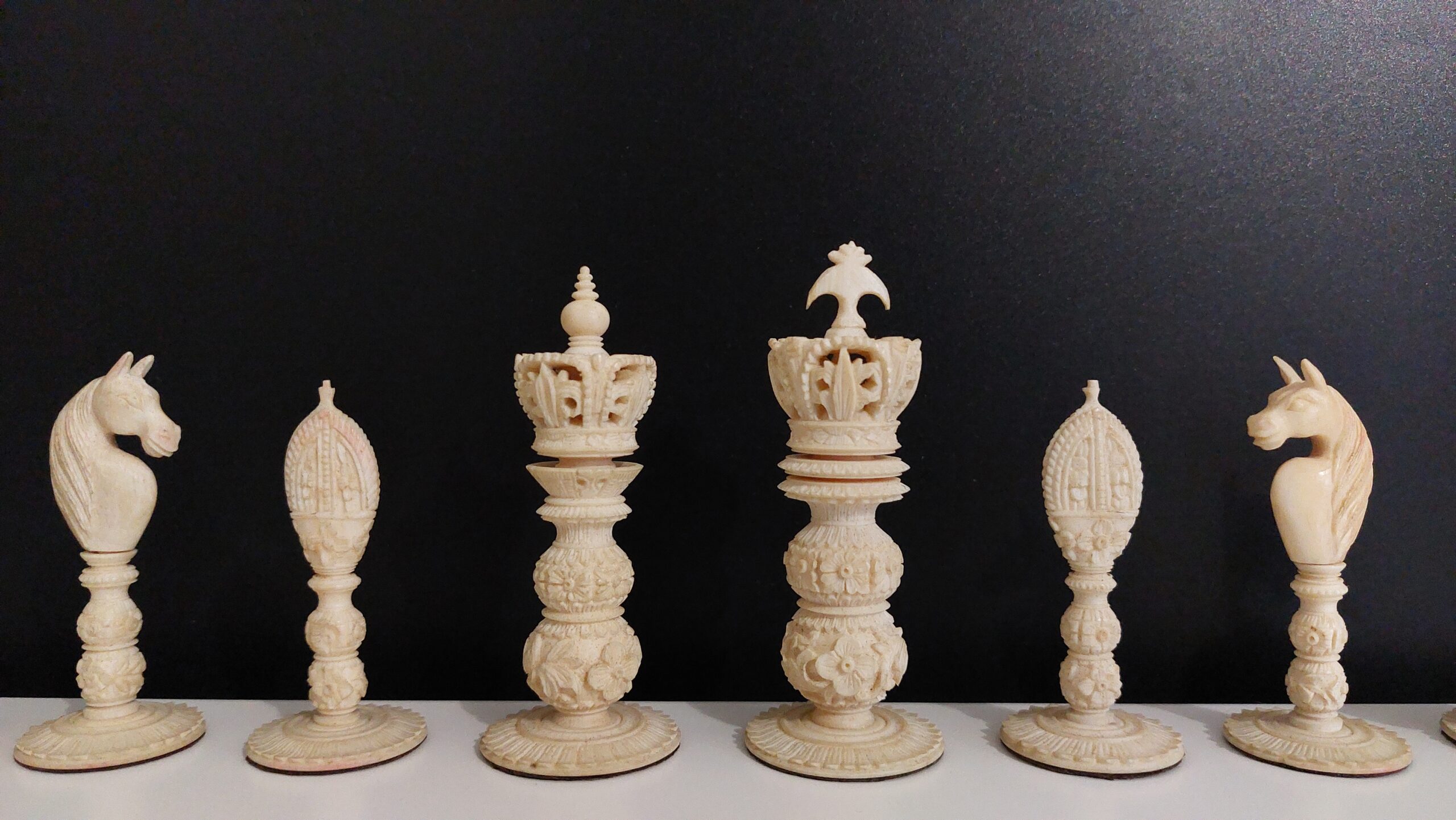
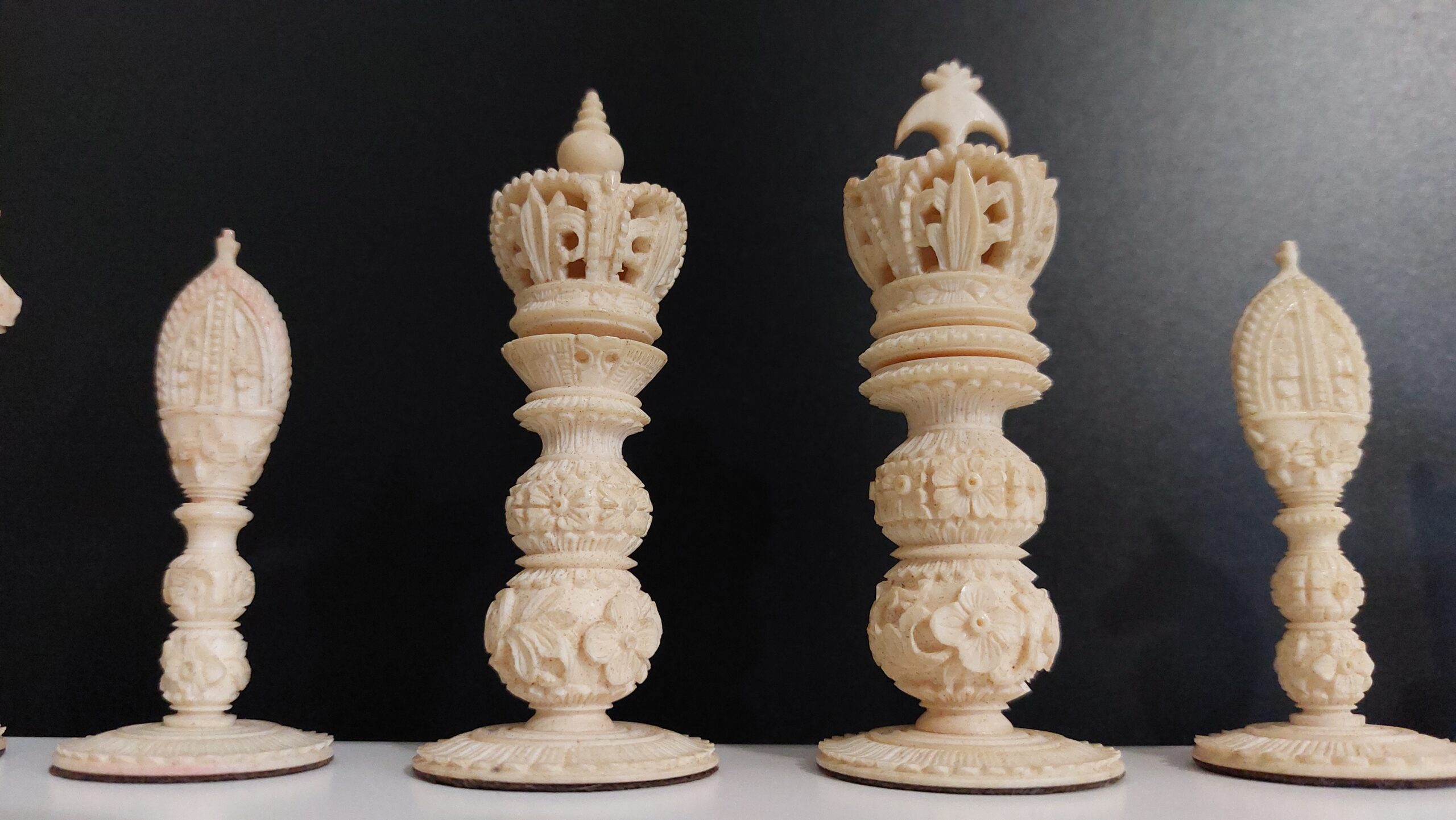
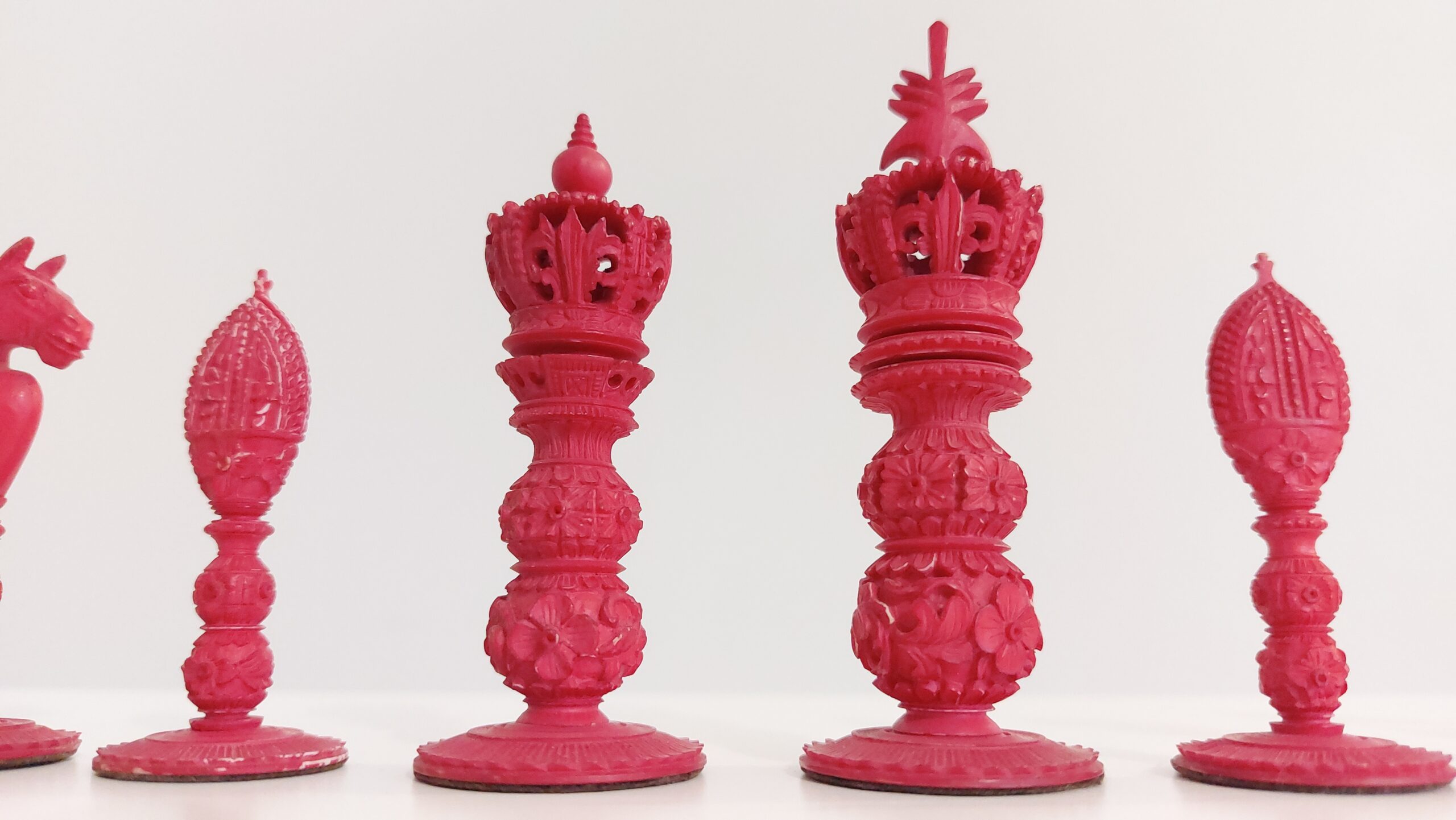
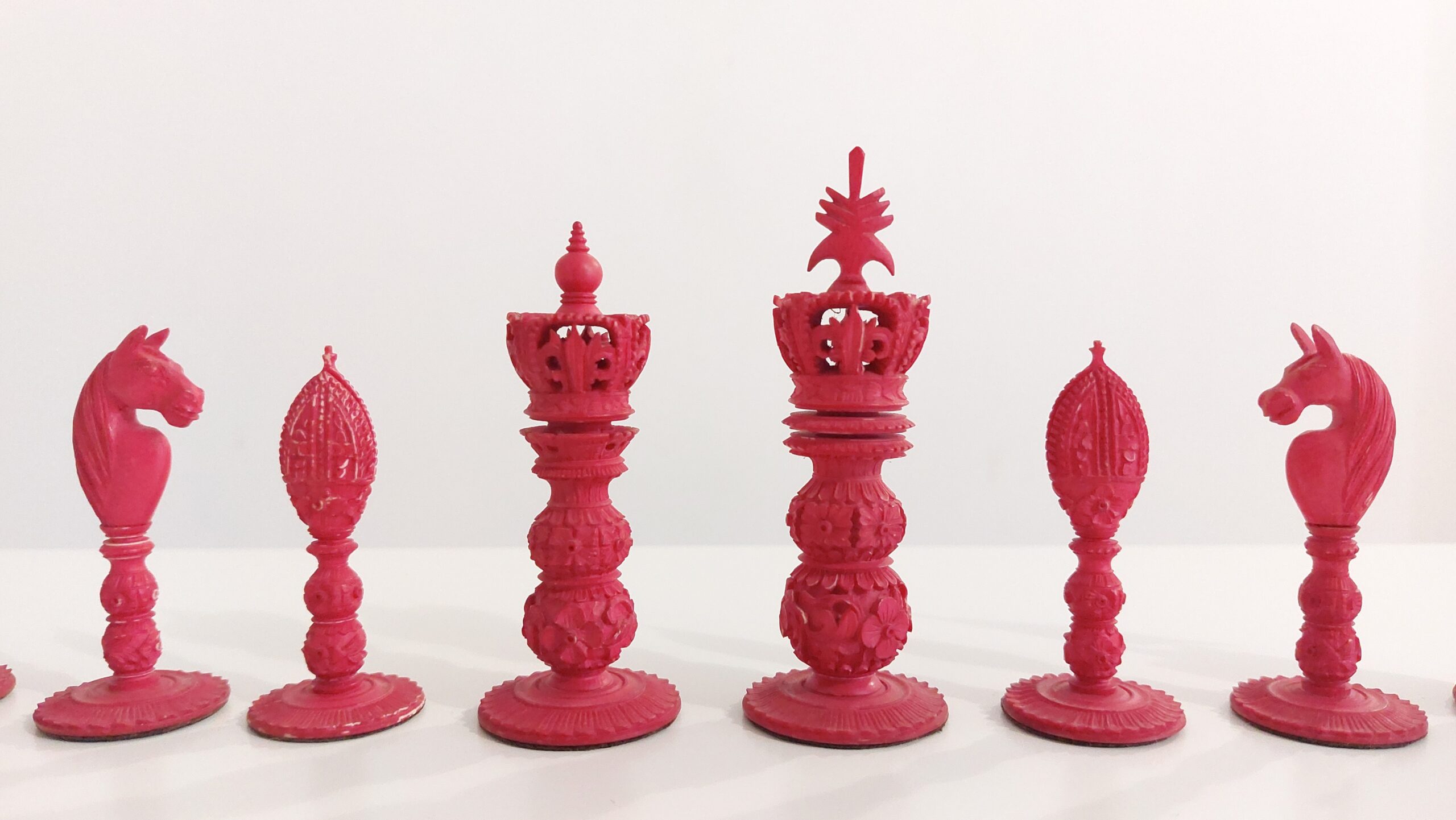
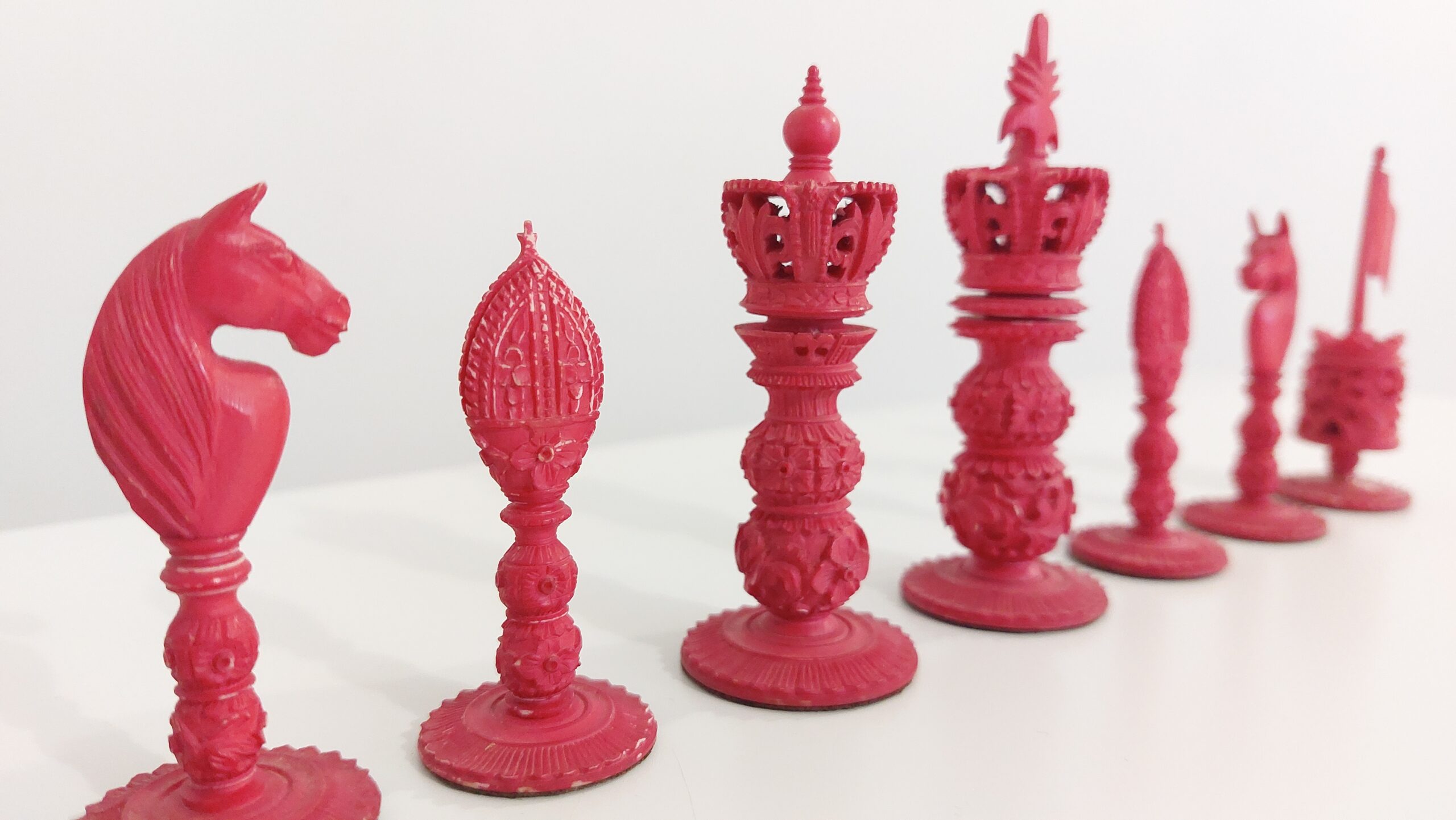
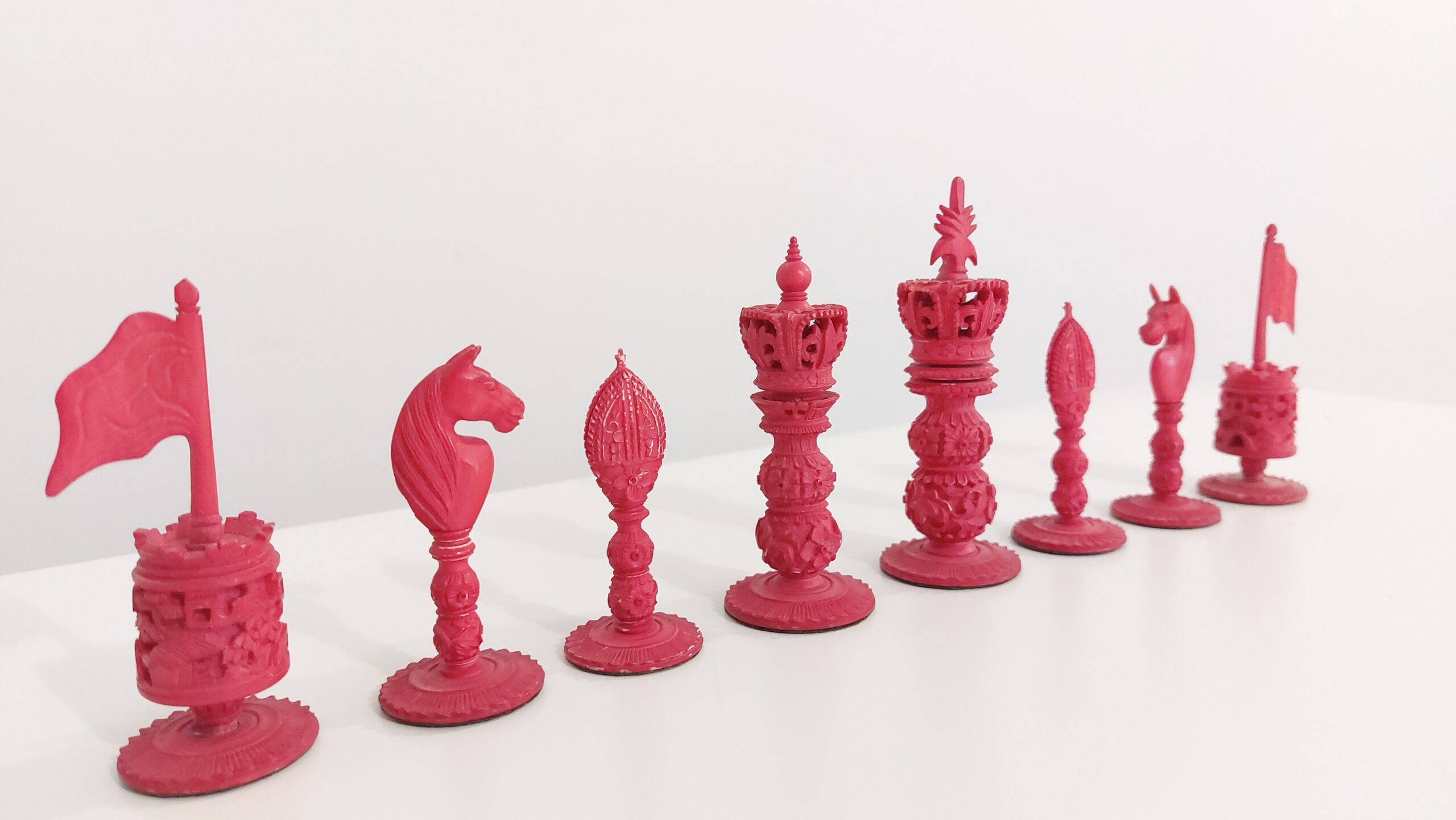
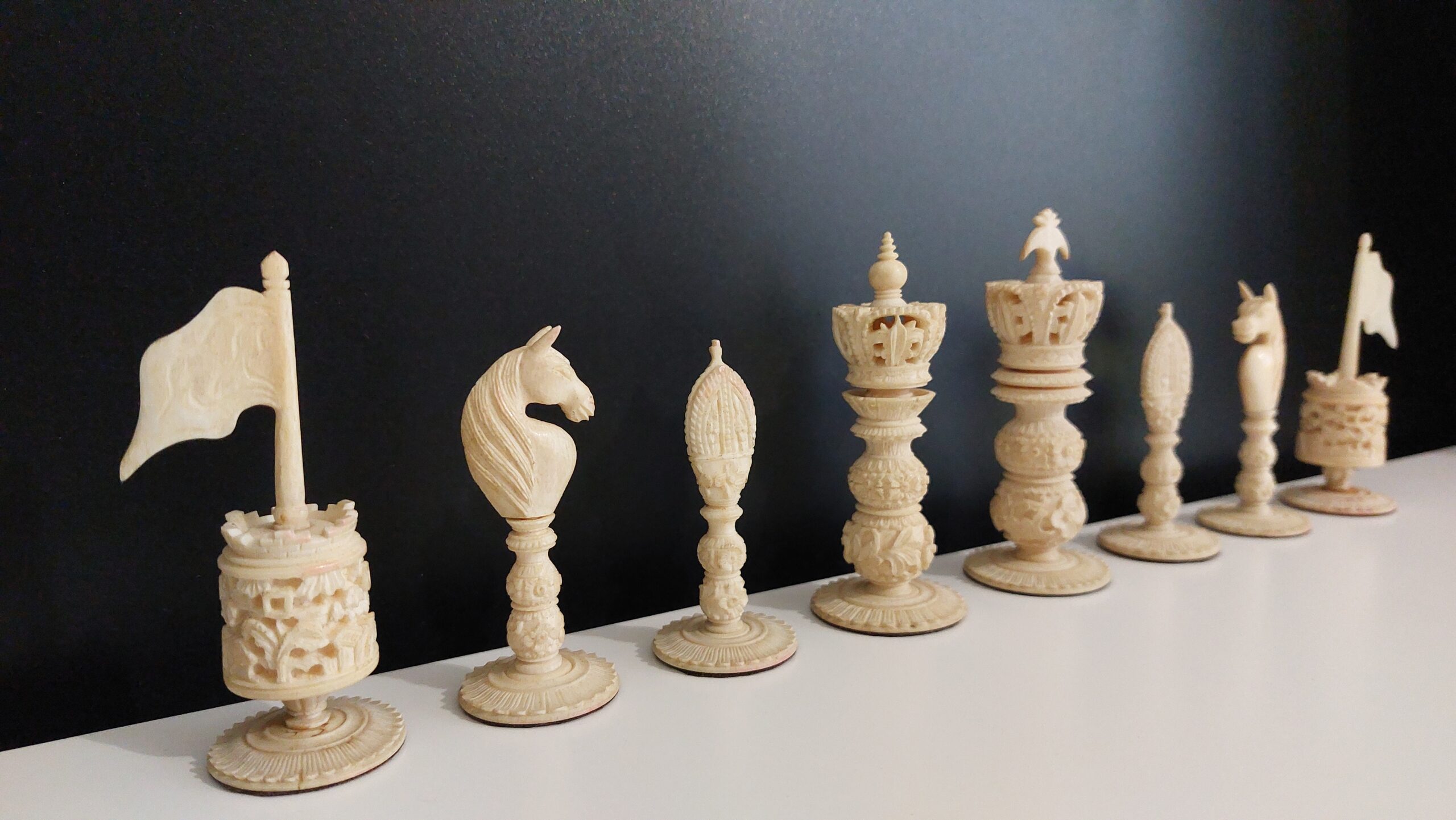
Fine Cantonese Burmese-Style Bone Chess Set, 1820–1850
Fine Cantonese Burmese-Style Bone Chess Set, 1820–1850
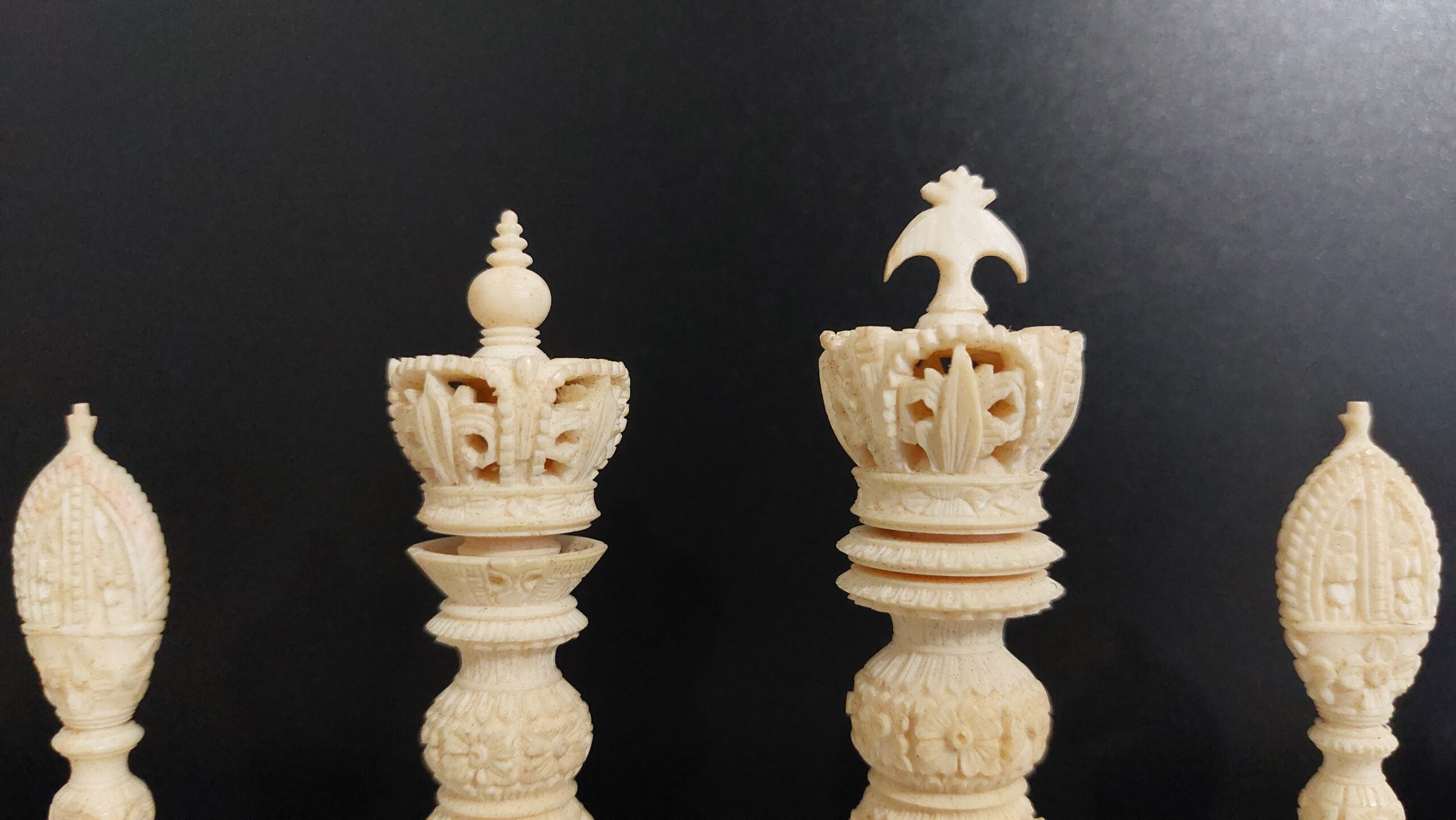
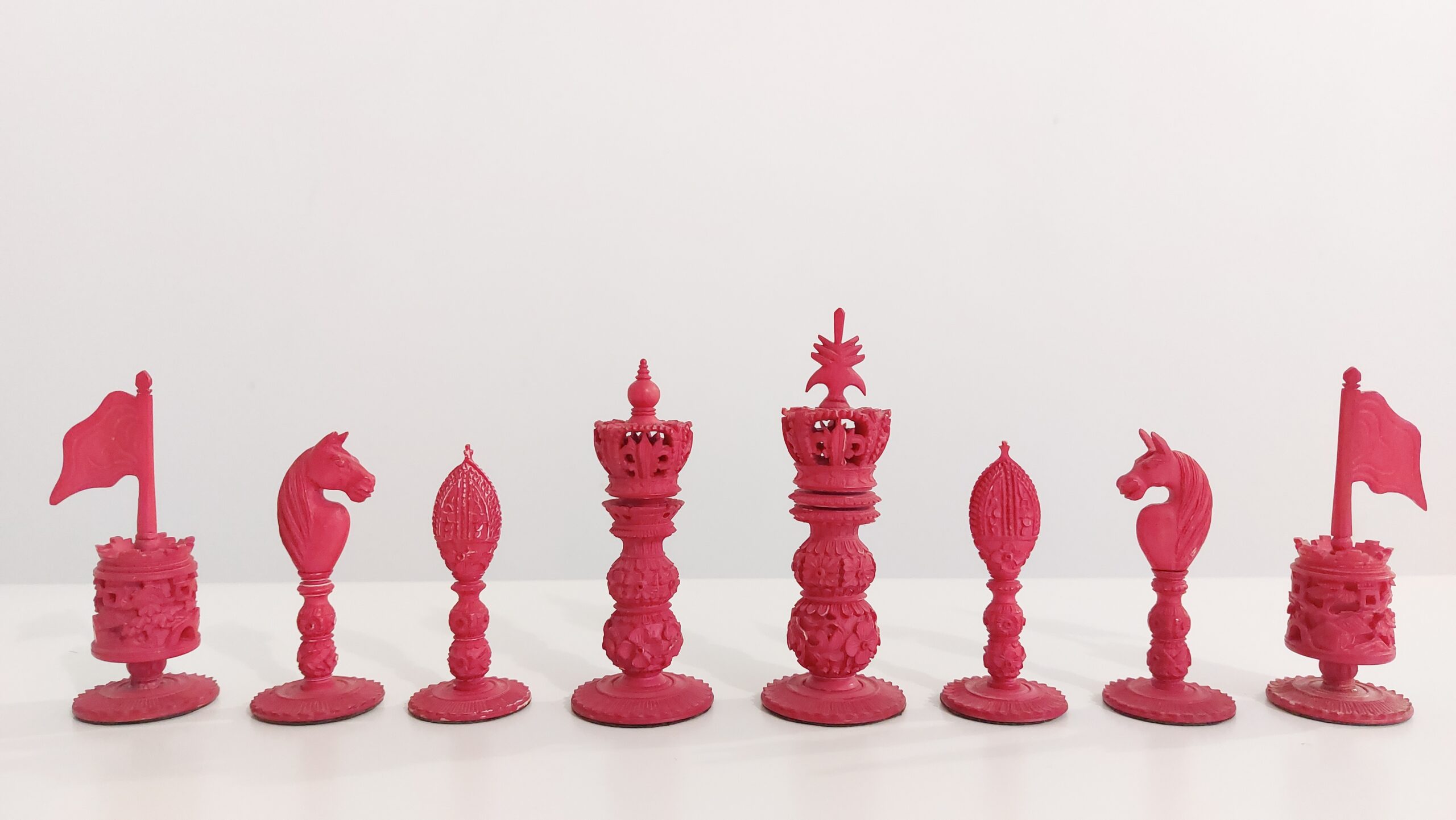
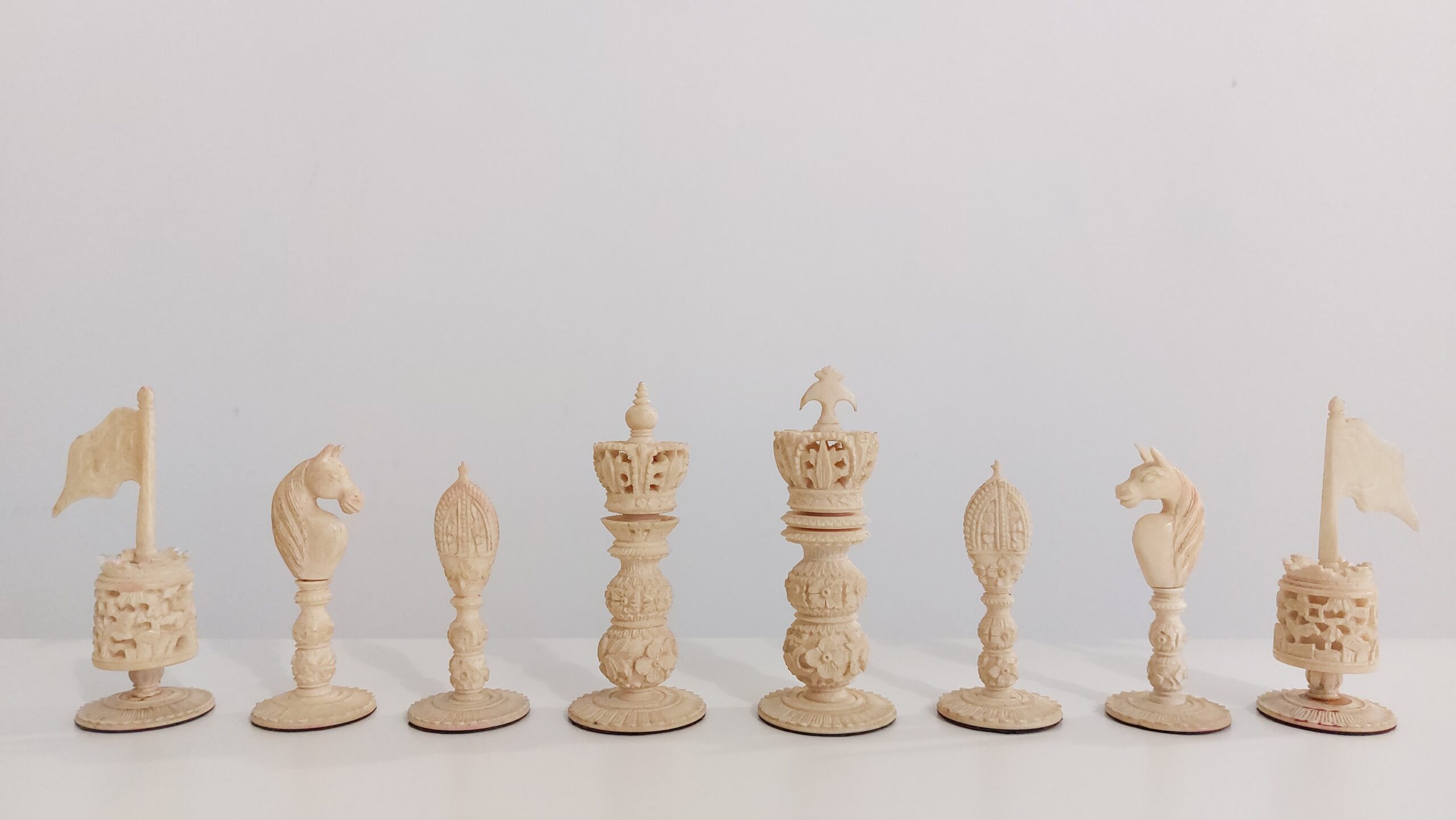
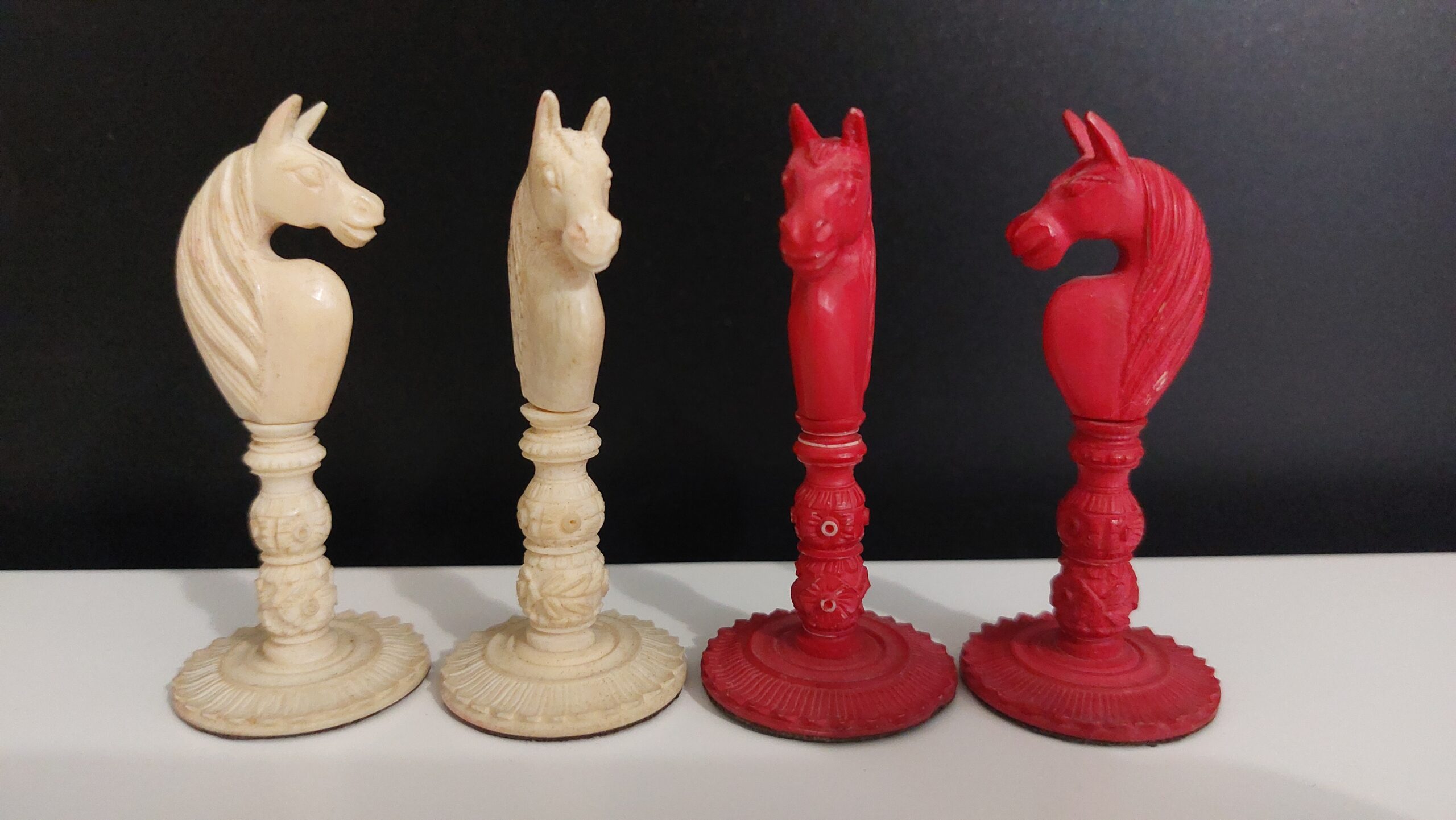
A truly antique piece, these exceedingly rare chess sets were produced in the mid-19th century, between 1820 and 1850. They are referred to as the “Burmese pattern” not because of their origin, but due to the Burmese influence evident in their aesthetic. These sets were crafted from fine bone by Chinese artisans in the Canton region and were frequently sold and exported through the city of Macau.
The king measures 9.2 cm with a base of 3.2 cm.
The pawns measure 4.8 cm.
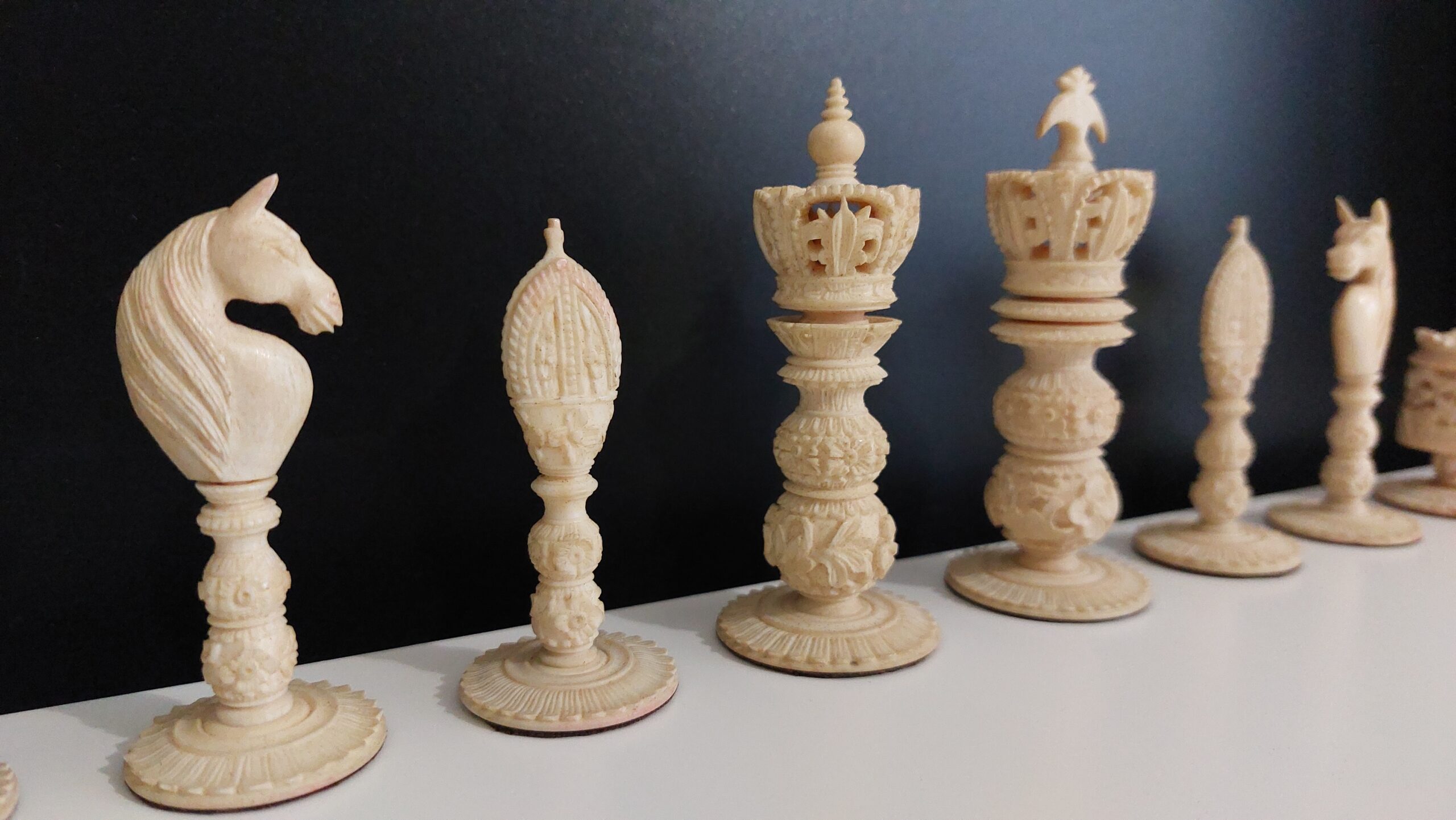
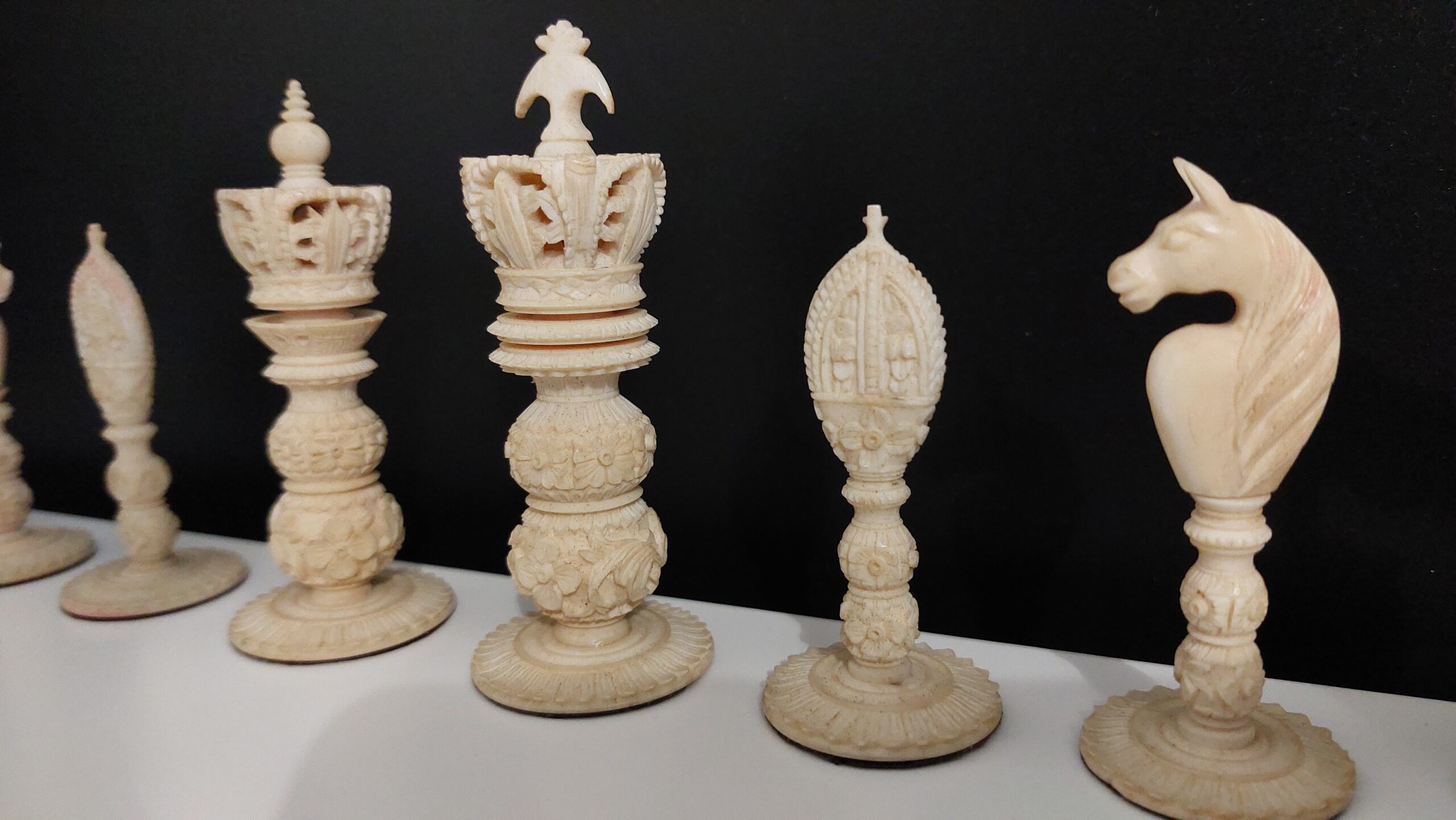
The finishing and detailing on the pieces are extraordinarily intricate; a magnifying glass is essential to fully appreciate the depth of the artisans’ meticulous craftsmanship and the abundance of microscopic details covering every surface.
The two halves of the bishops’ mitres, for instance, are separated by an incredibly fine gap, barely wide enough to accommodate a single sheet of paper.
The floral motifs adorning the lower spheres of the king and queen exhibit pronounced relief and depth. They stand out beautifully and prominently, carved with exceptional refinement.
The pawn heads are delicately sculpted to resemble flowers in bloom, with petals gently unfurling.
The artisans embraced a wide array of technical challenges in crafting these pieces, demonstrating remarkable boldness and creativity in their artistic design, drawing inspiration from nature, Burmese art, and Western traditions.
Despite their compact size, the pieces feature such a wealth of details, patterns, and symbols that they appear to contain a miniature universe, fully decipherable only under magnification.
Write / view comments
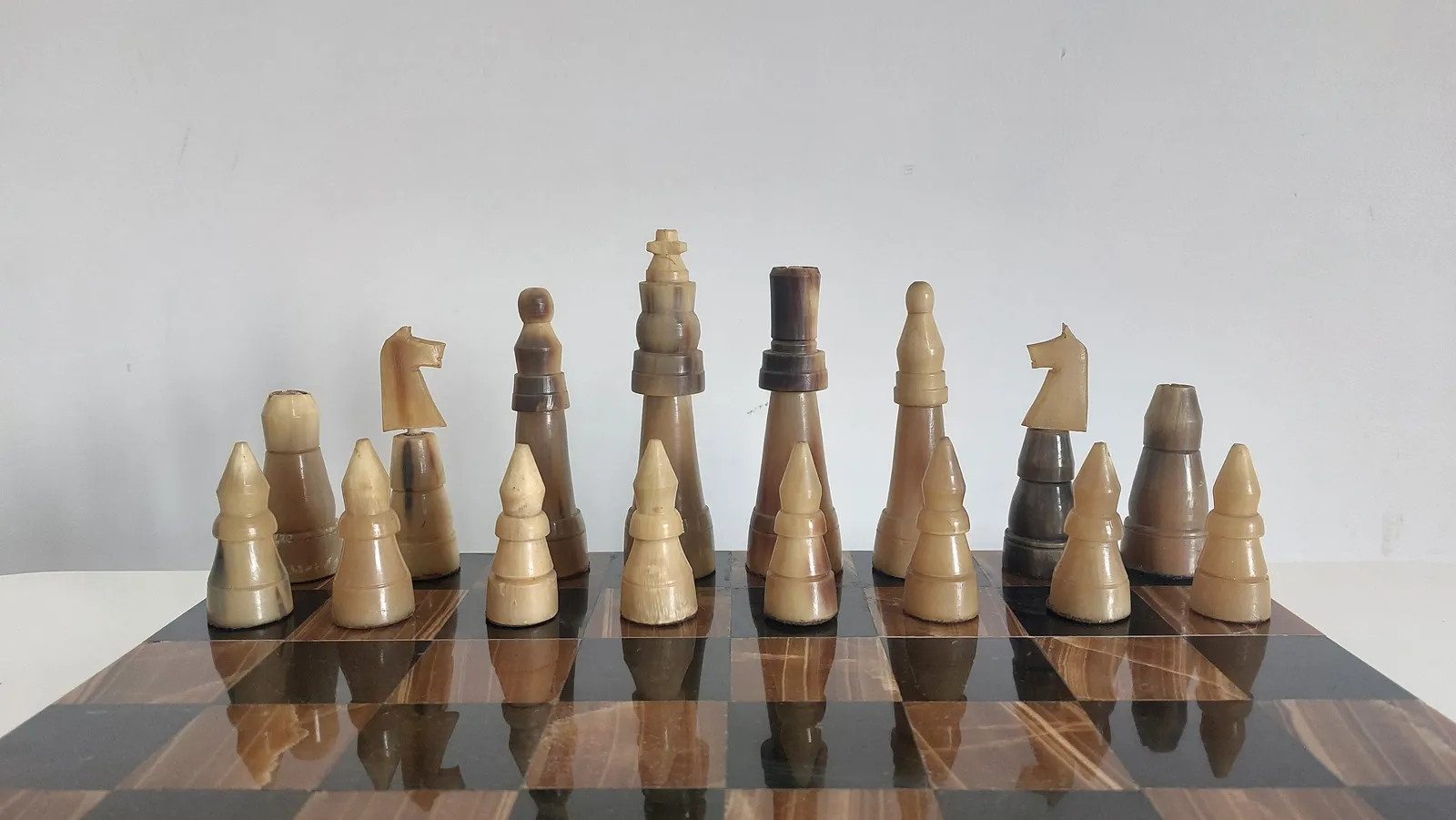
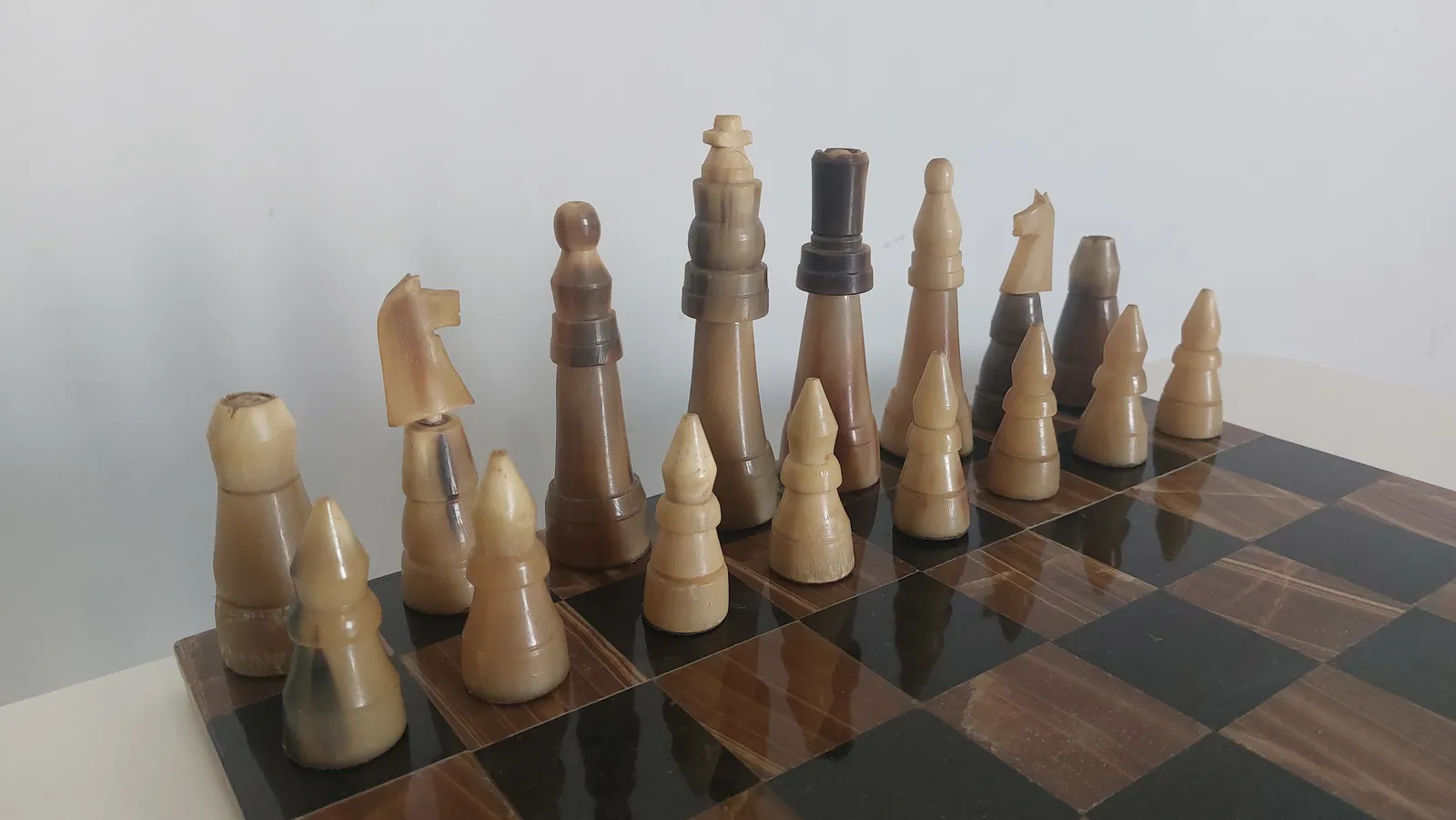
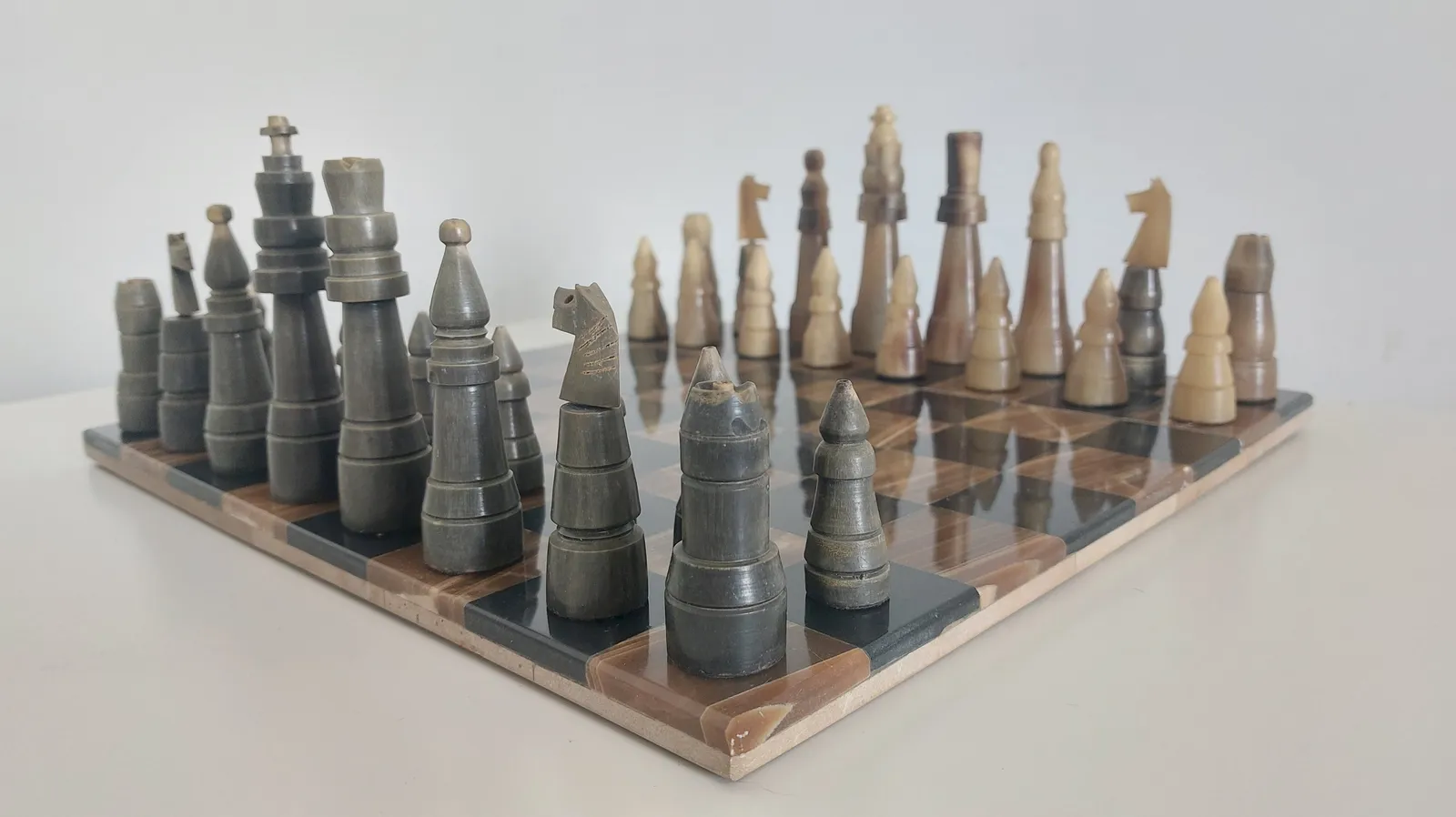
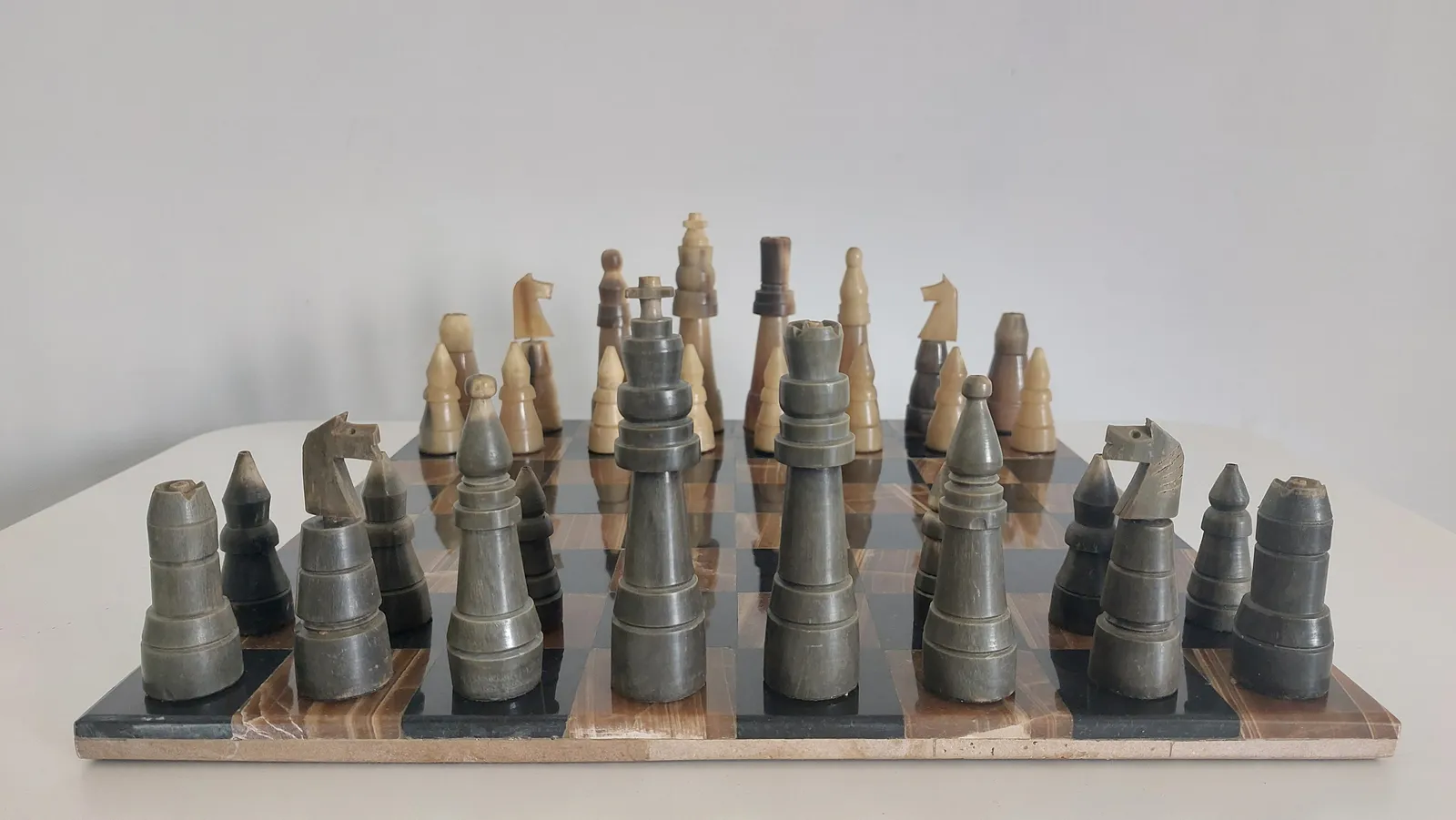
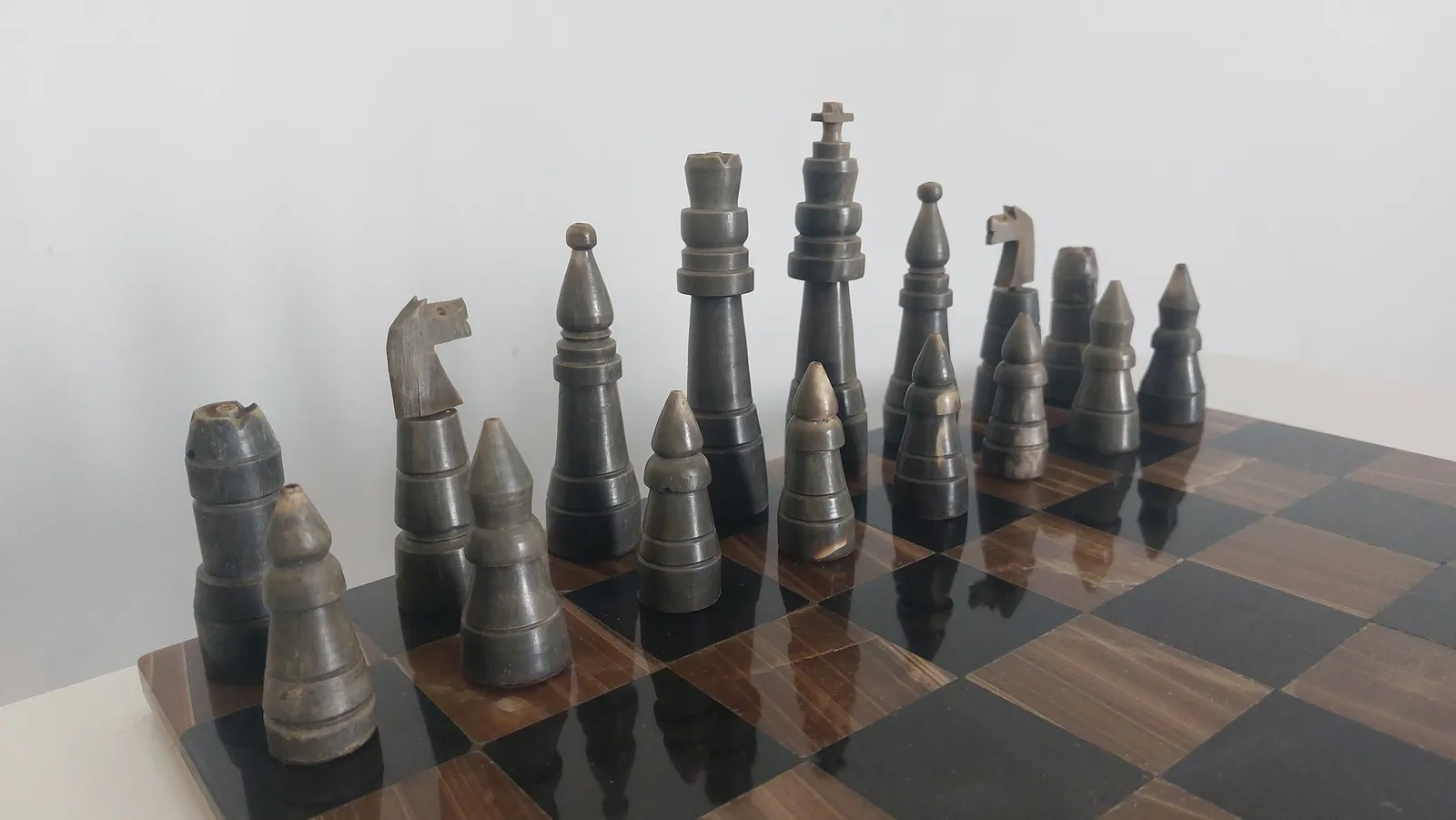
Vietnamese chess set made from buffalo and zebu horn
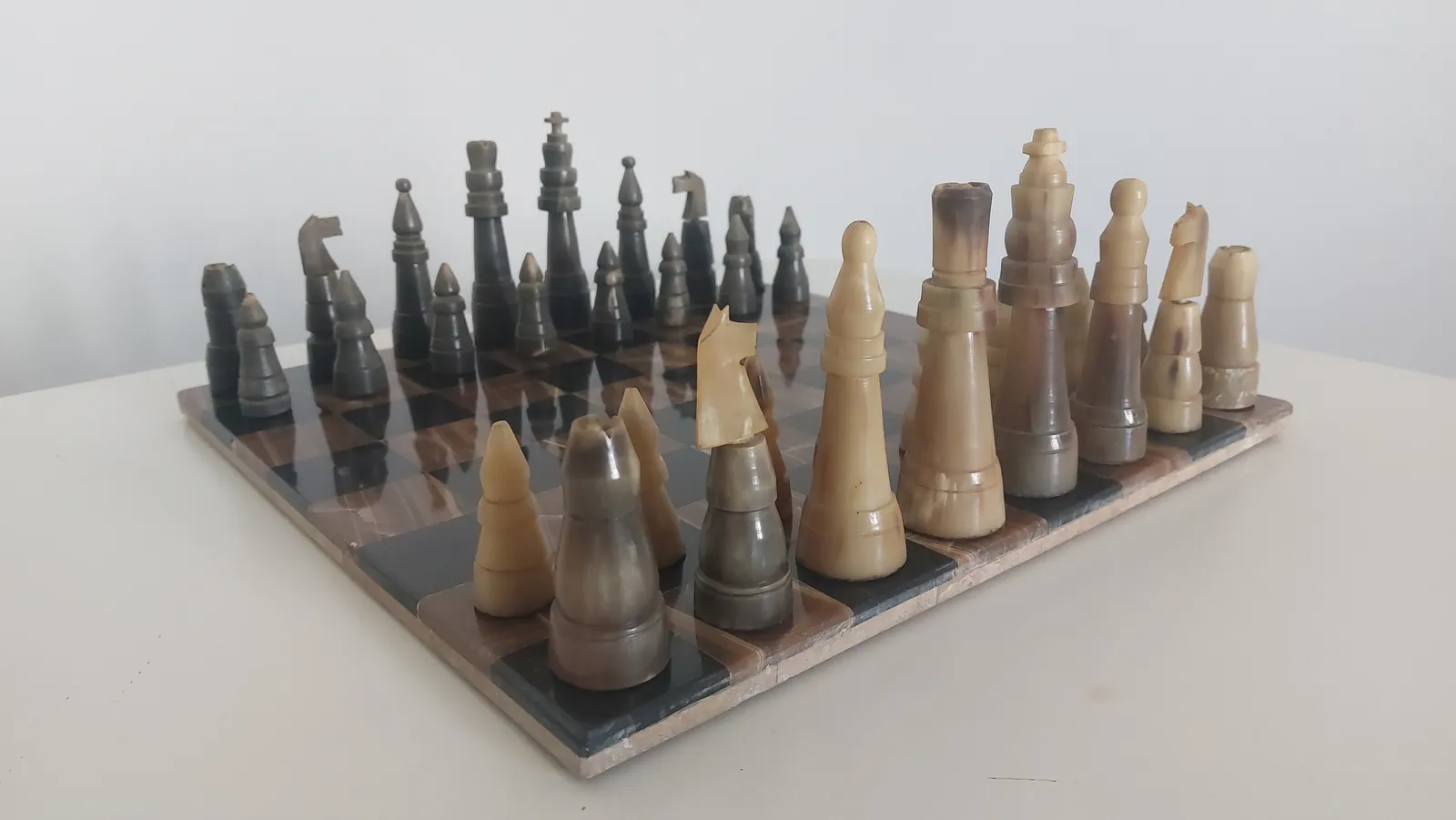
A Vietnamese chess set with large horn pieces. The pieces rest on a board with obsidian and quartz squares.
The king measures 12 cm with a base of 3.2 cm.
Many horns must have been used to create the set given its size.
The set was carved in Vietnam and was brought to France in the 1970s according to the previous owner.
The pieces are assembled from individually carved pieces that are then fitted together.
The materials used give this game a very striking and unusual appearance. It is an atypical piece with an uncommon and exotic look and design.
Write / view comments
Leave a Reply Cancel reply
europe
Europe
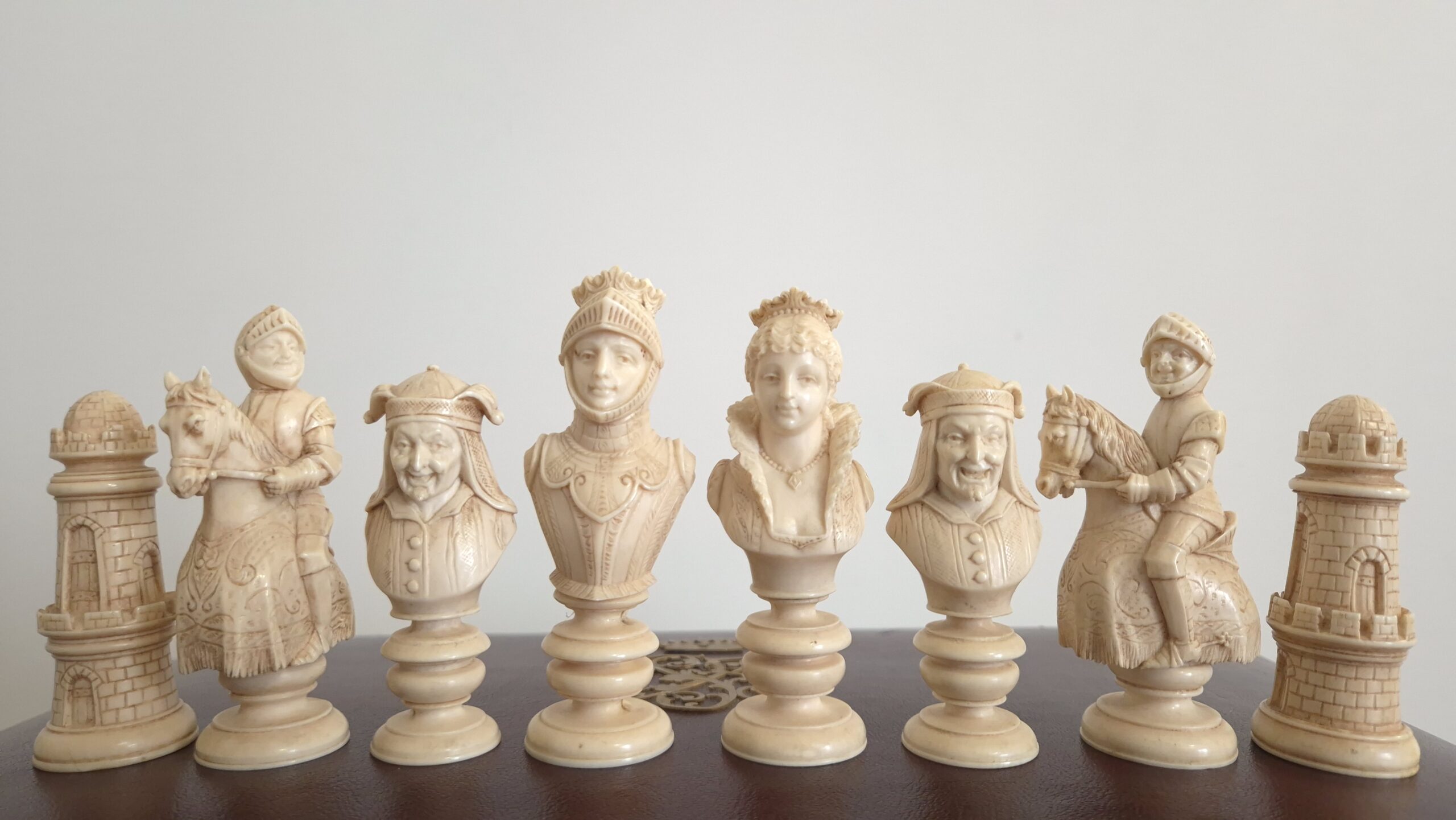
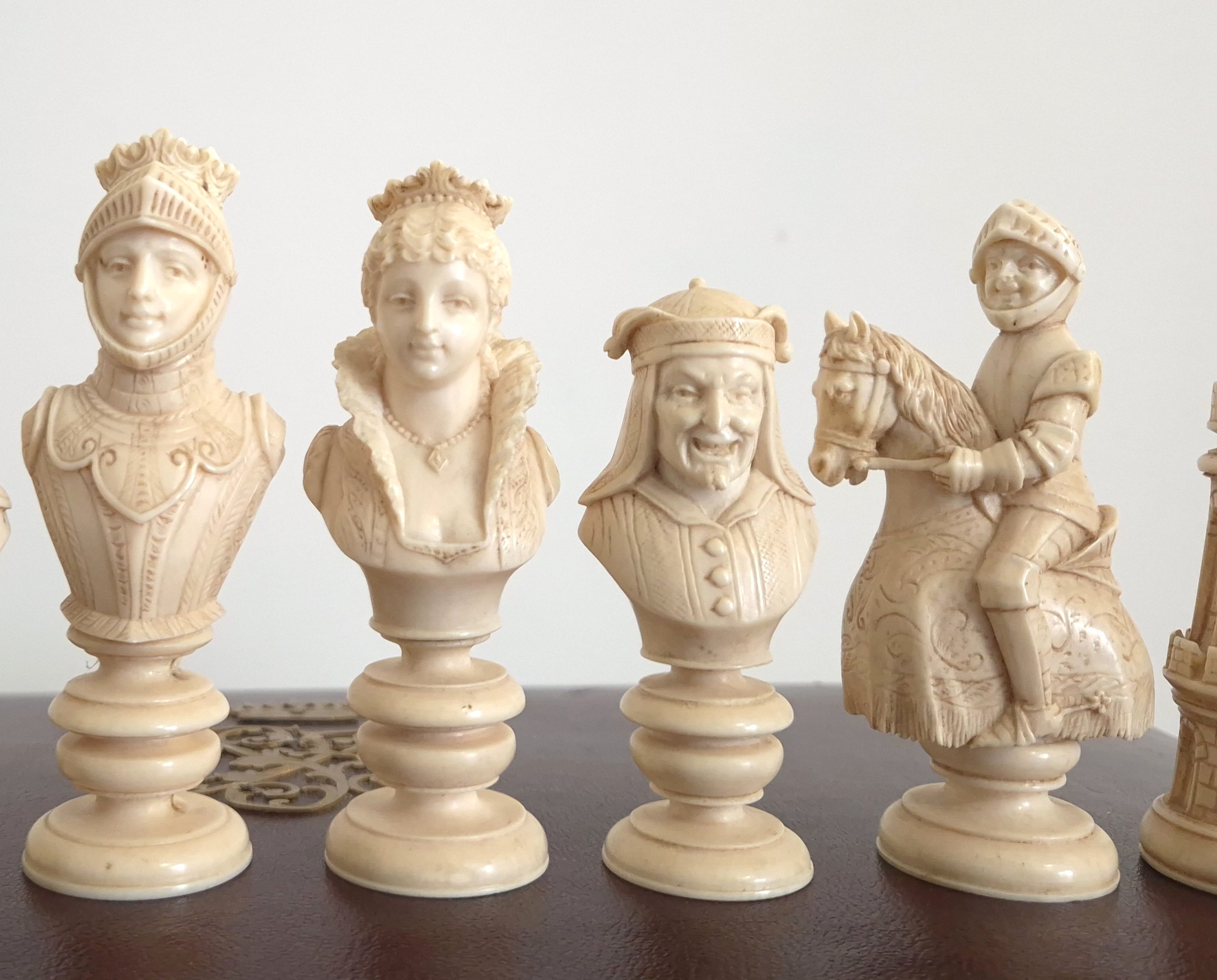
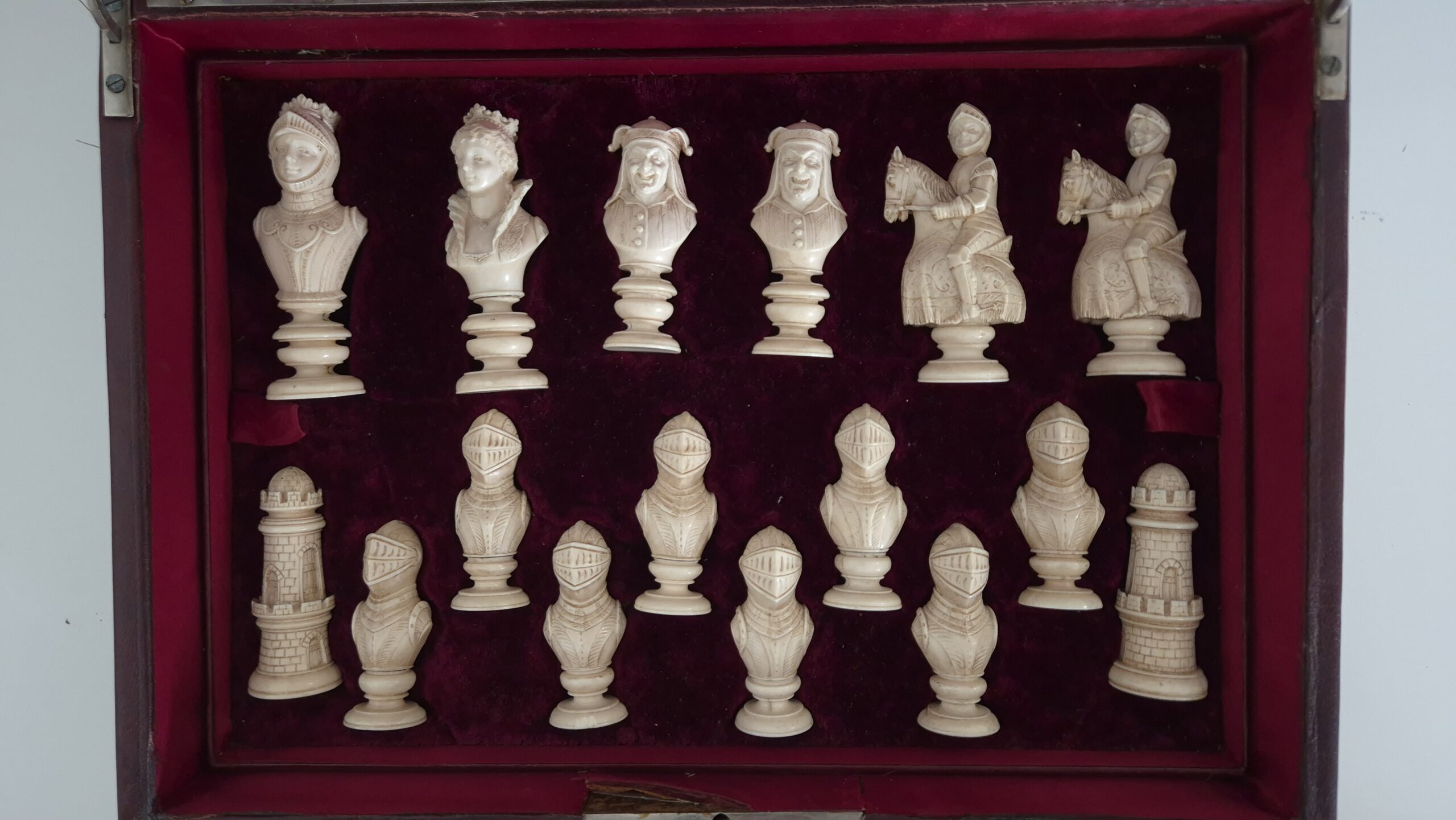
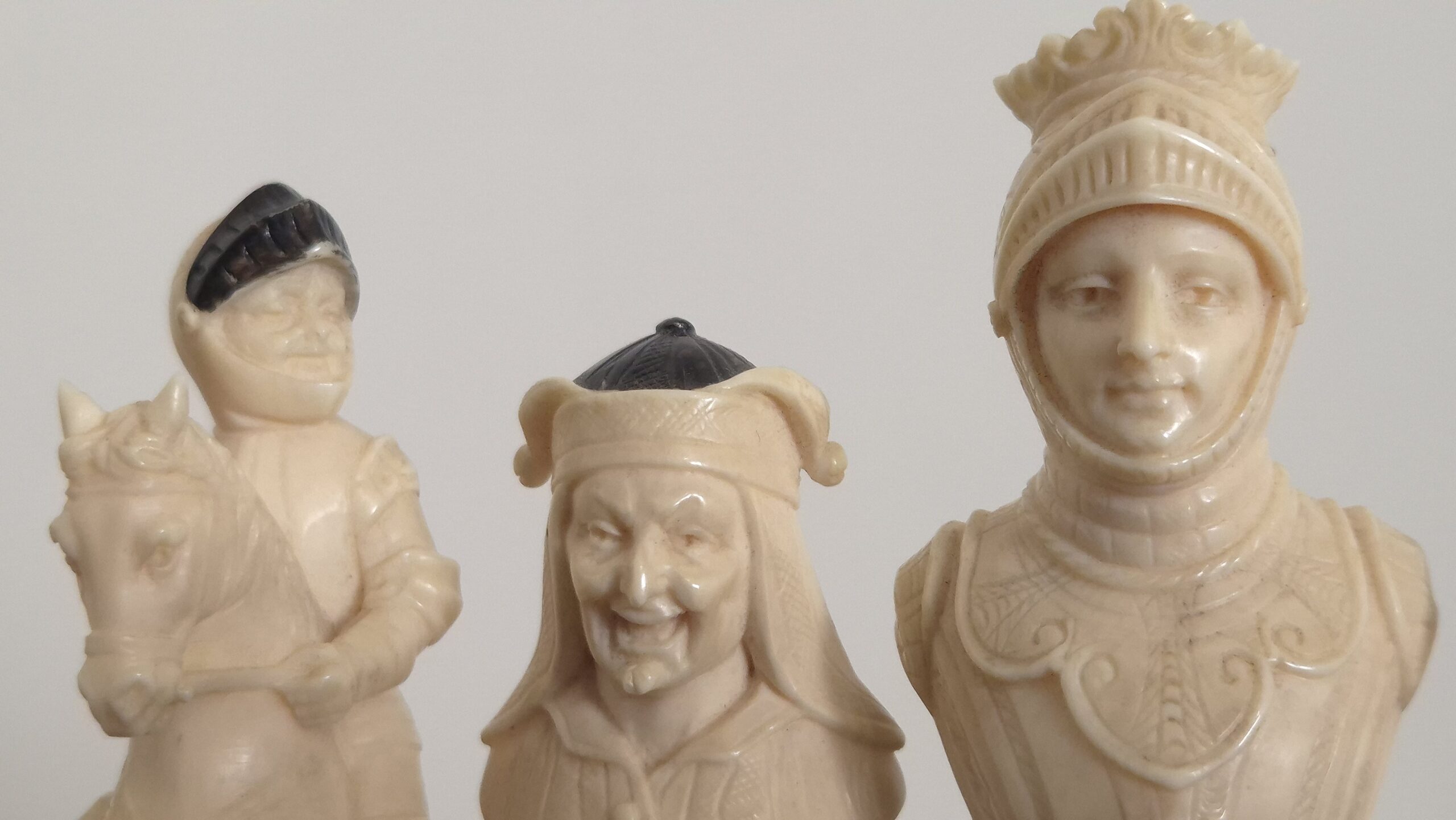
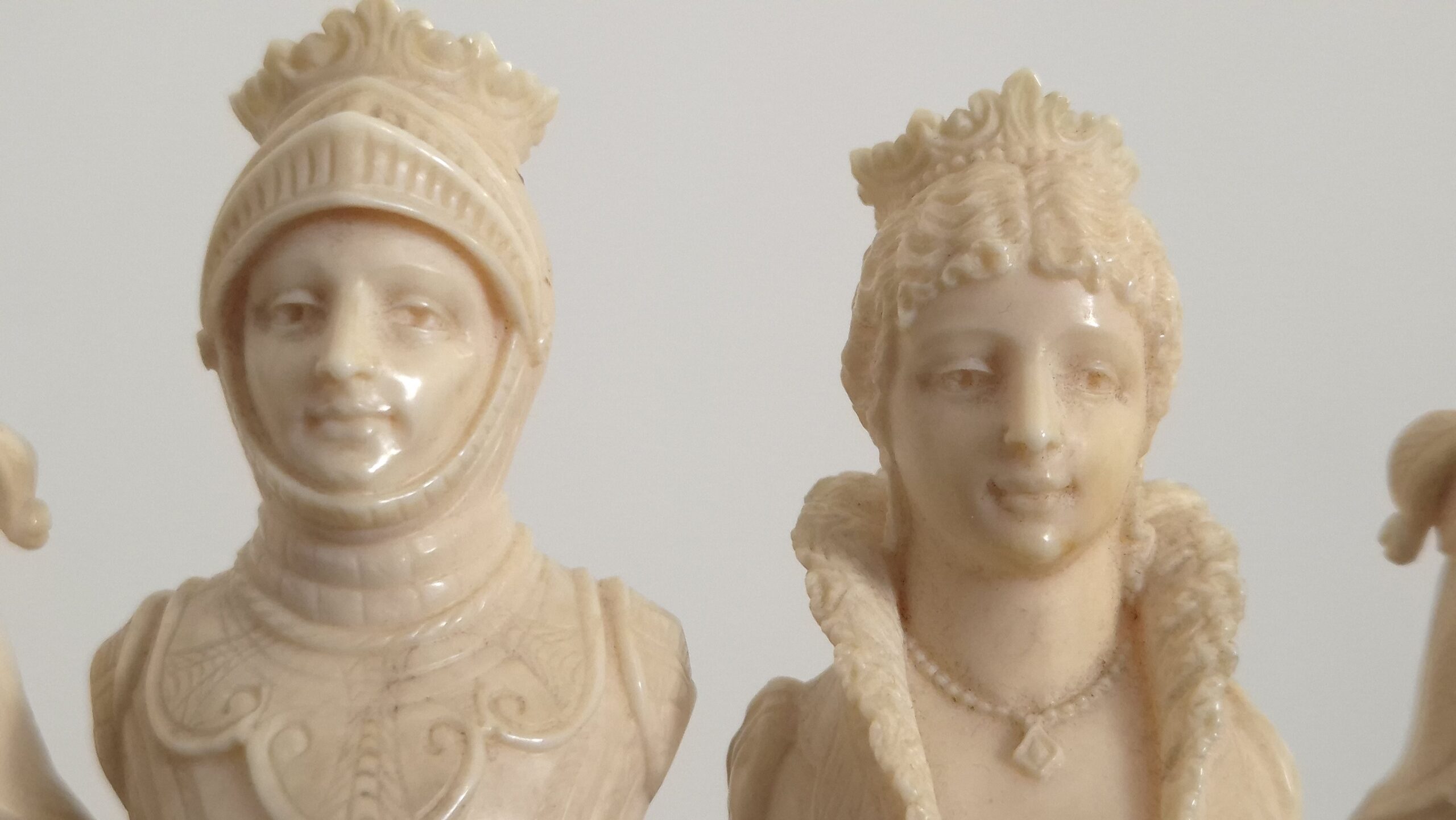
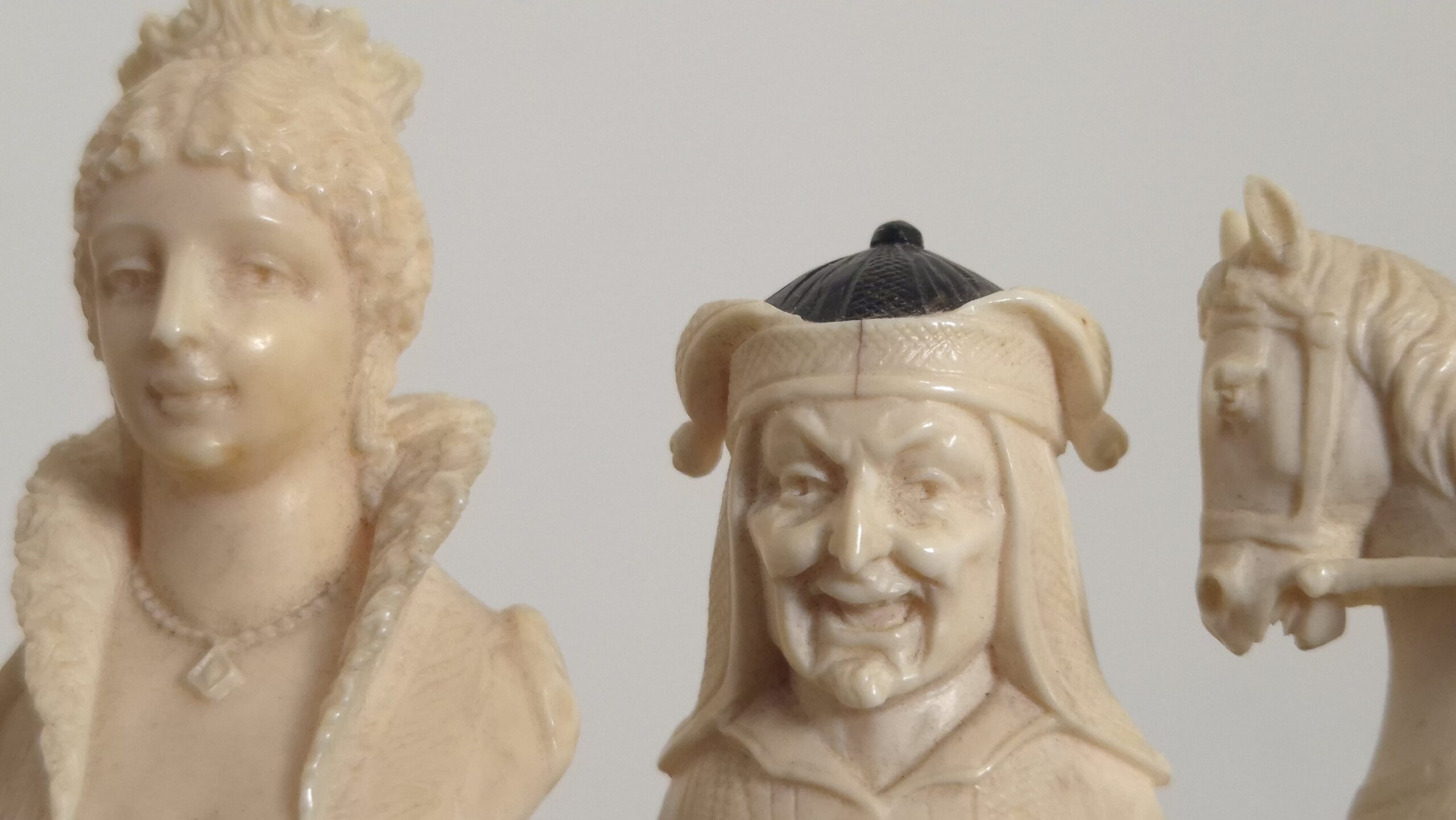
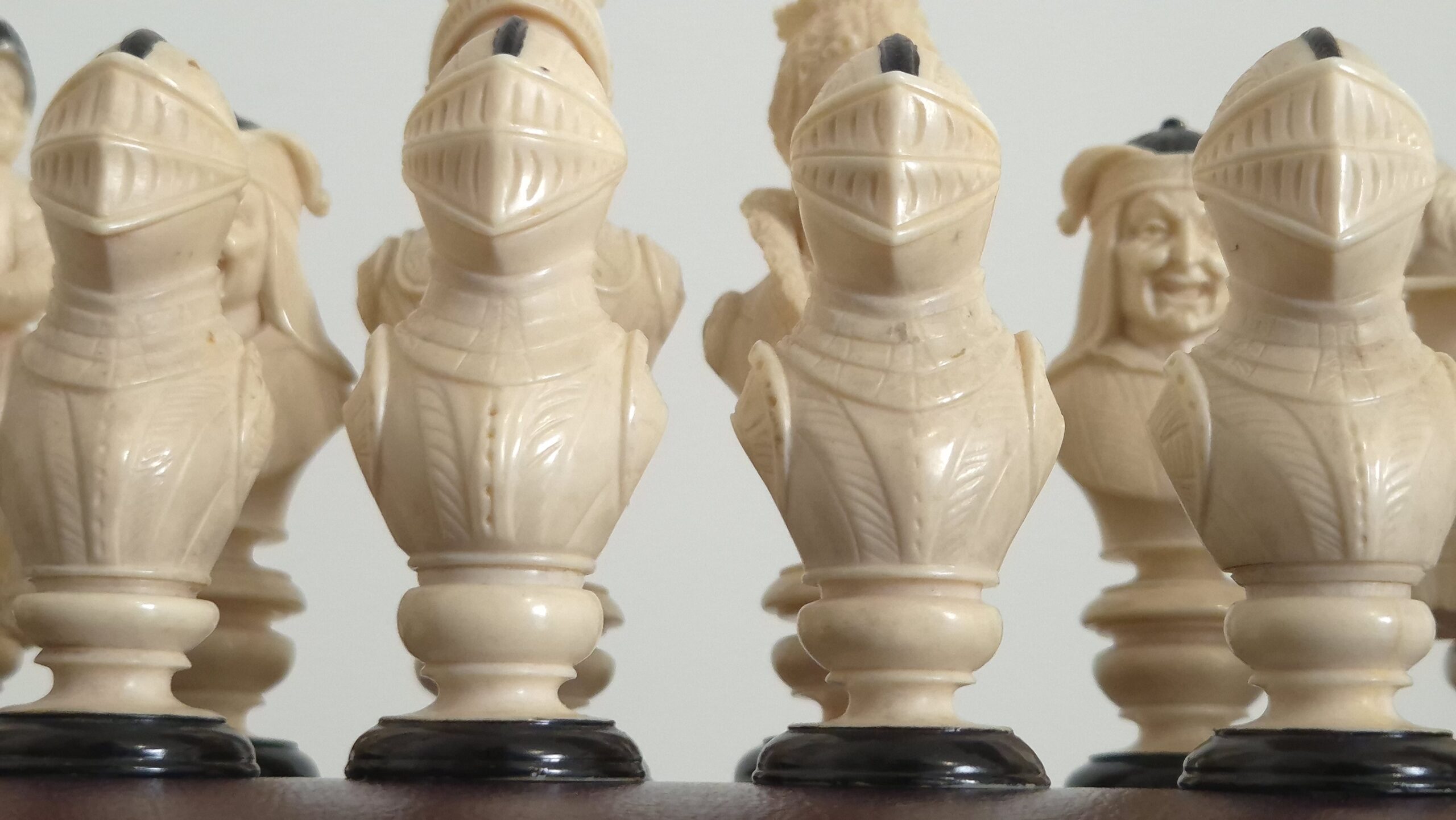
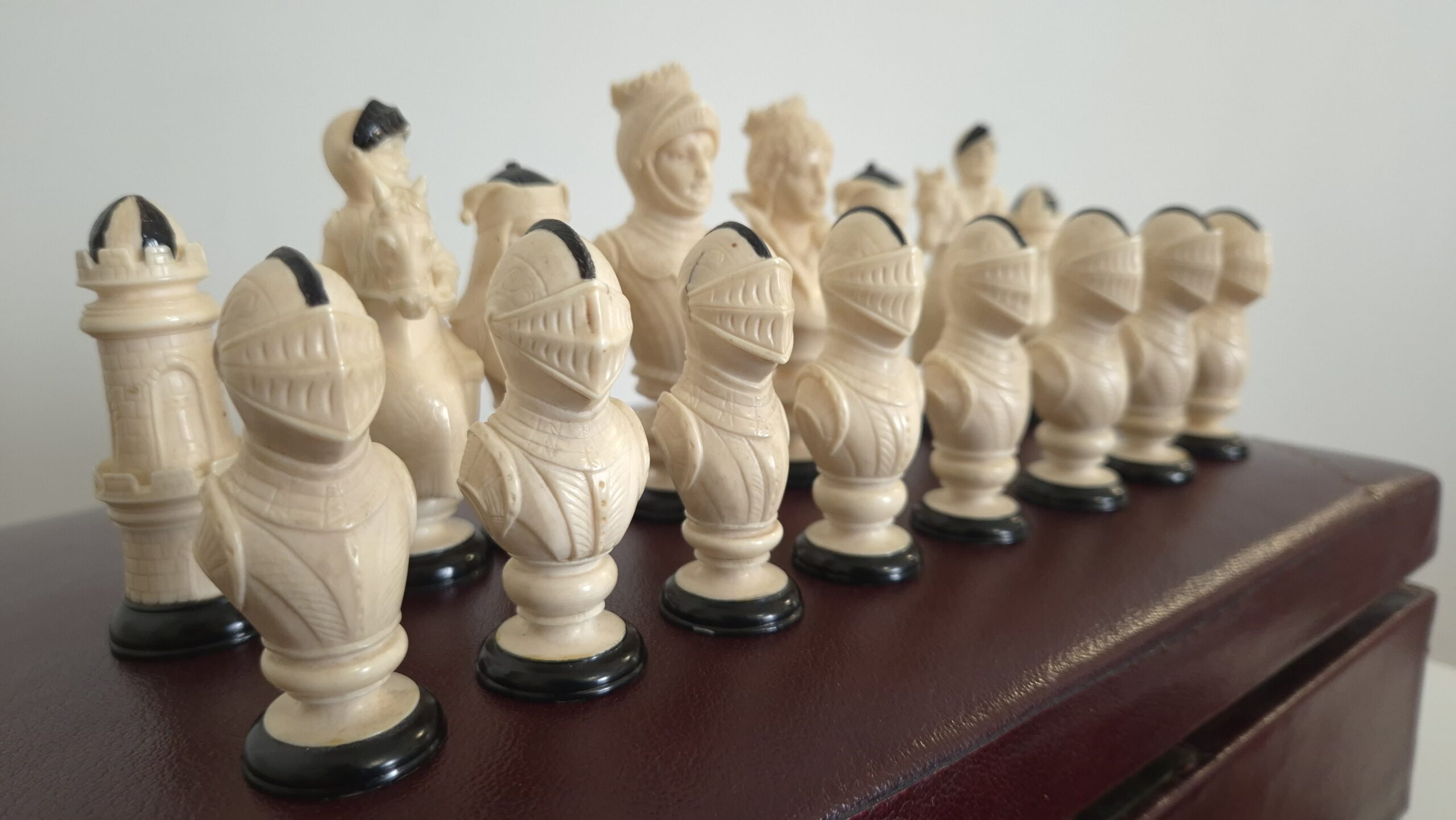
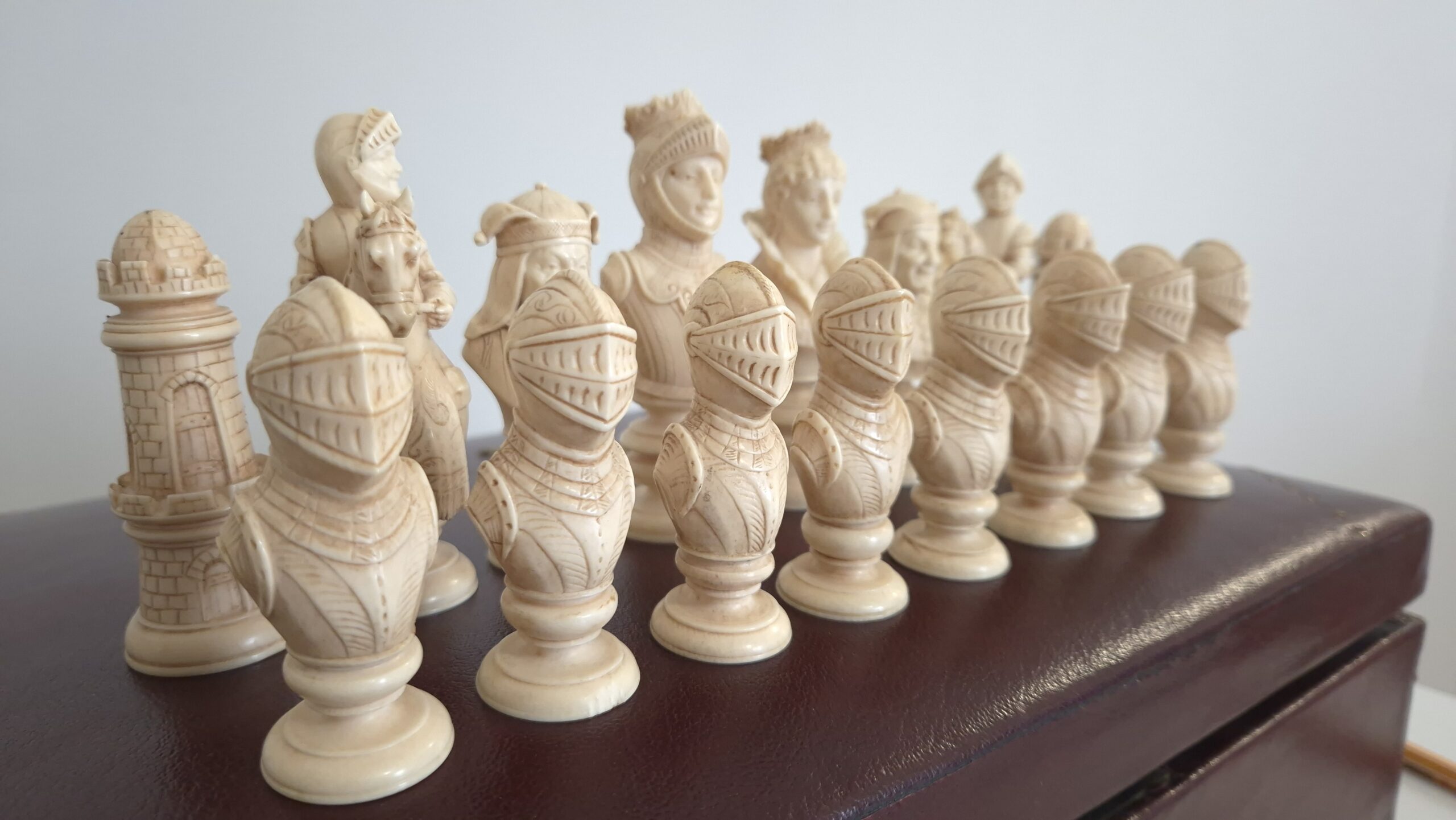
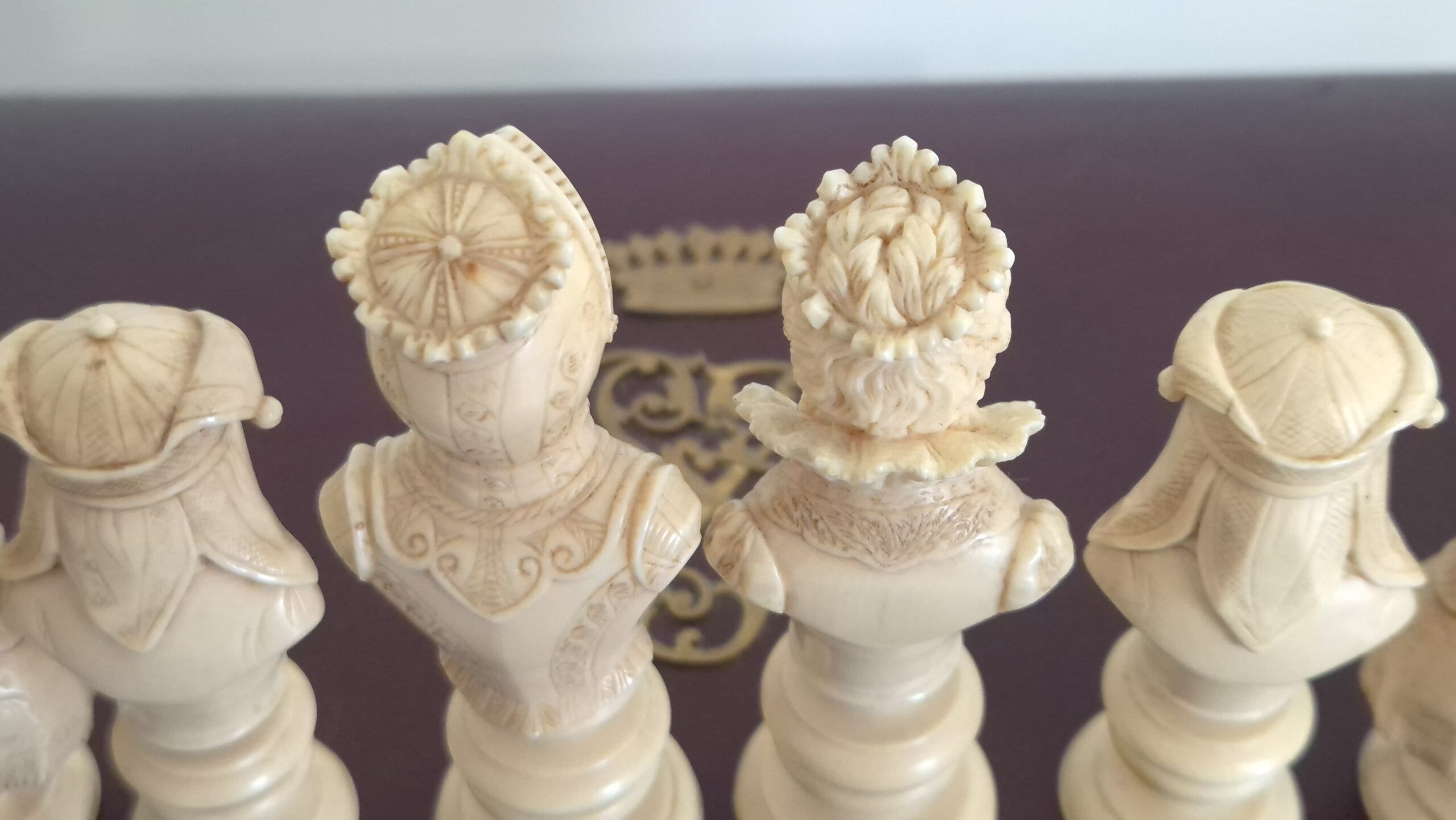
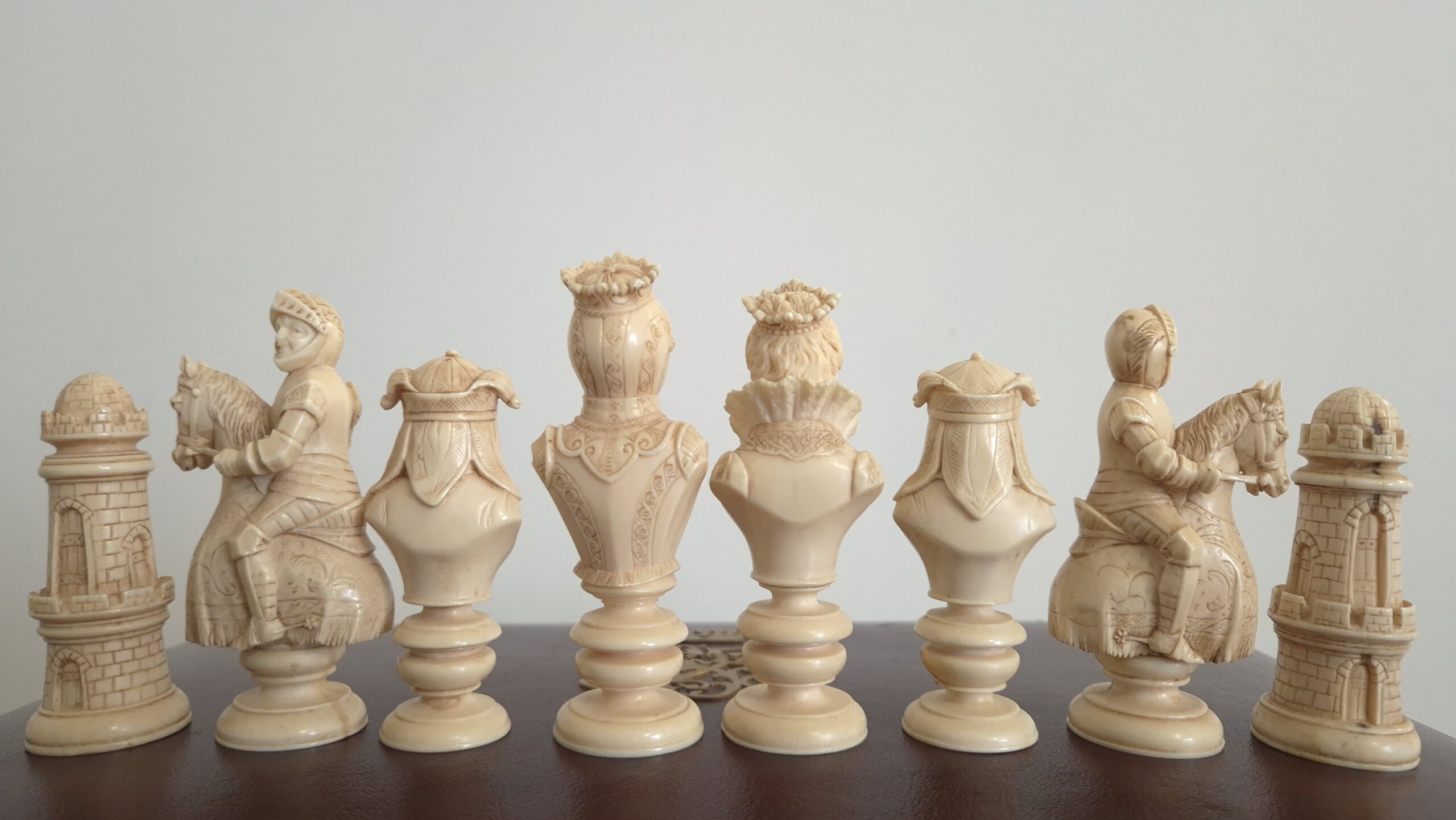
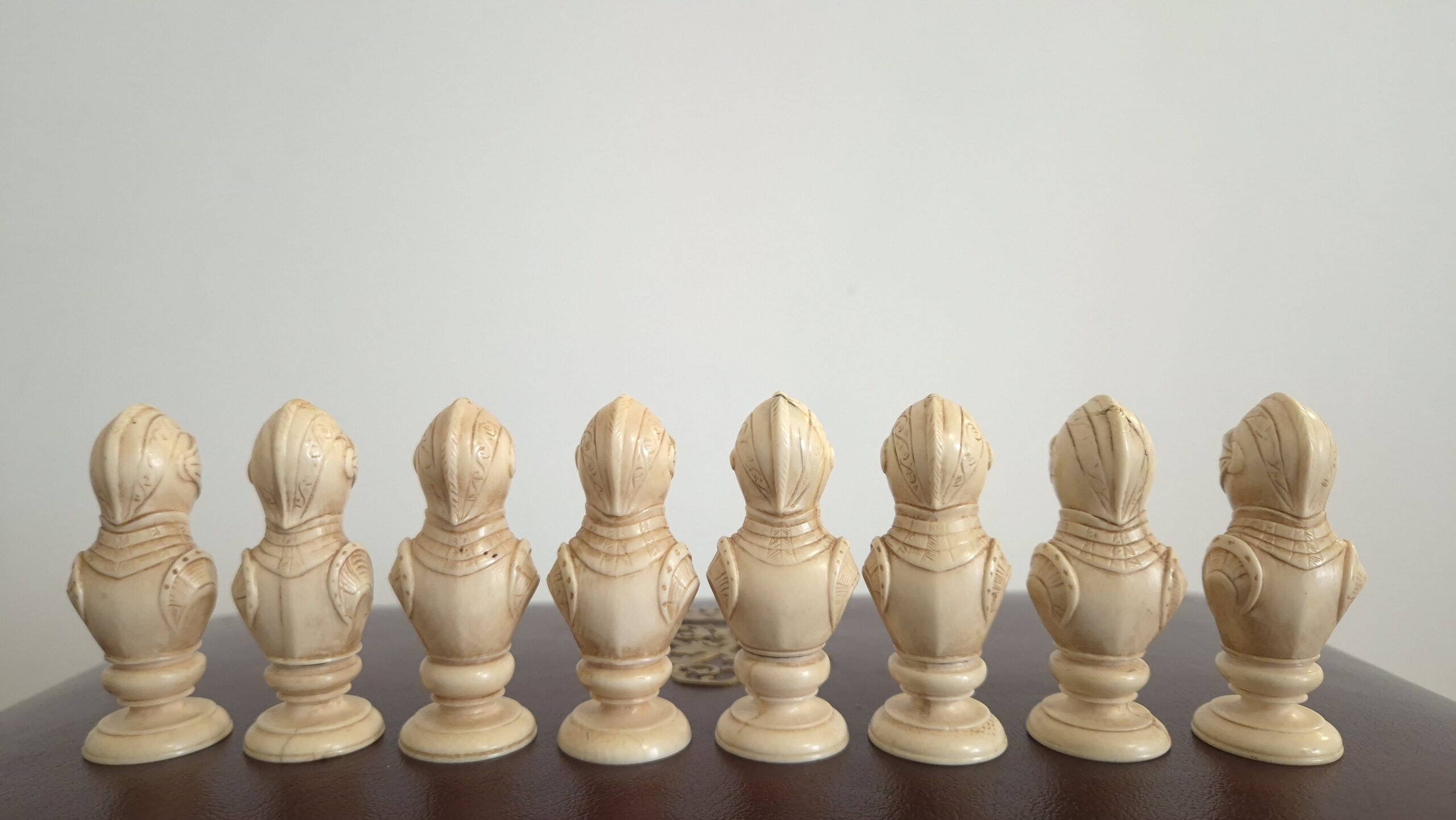
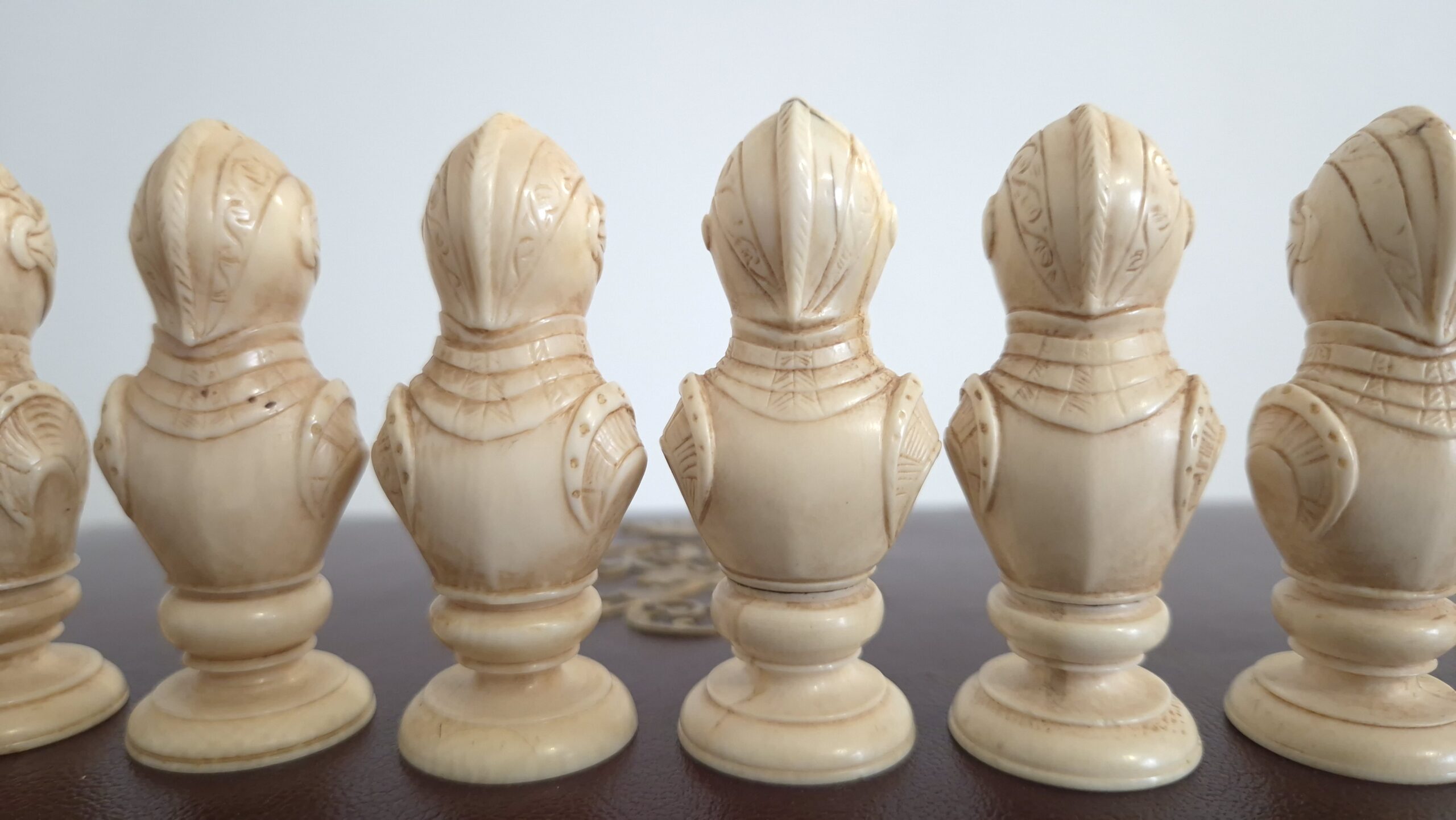
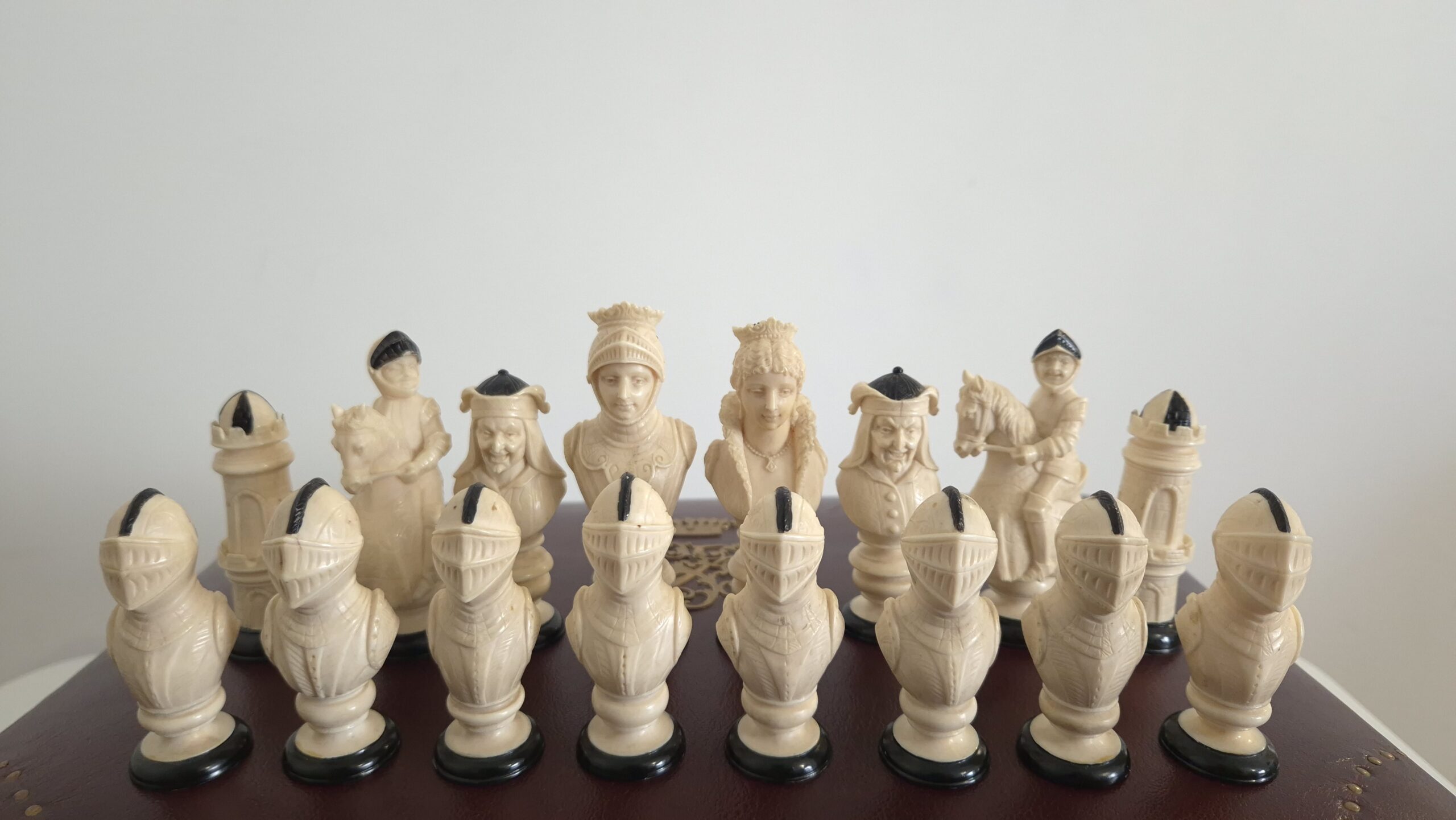
An antique 19th-century French chess set, it resembles a Dieppe set but apparently it is rather a set from the “Paris School” according to my research; these sets made at the time in the capital by artists and craftsmen are rarer and can be far more sophisticated than those from Dieppe.
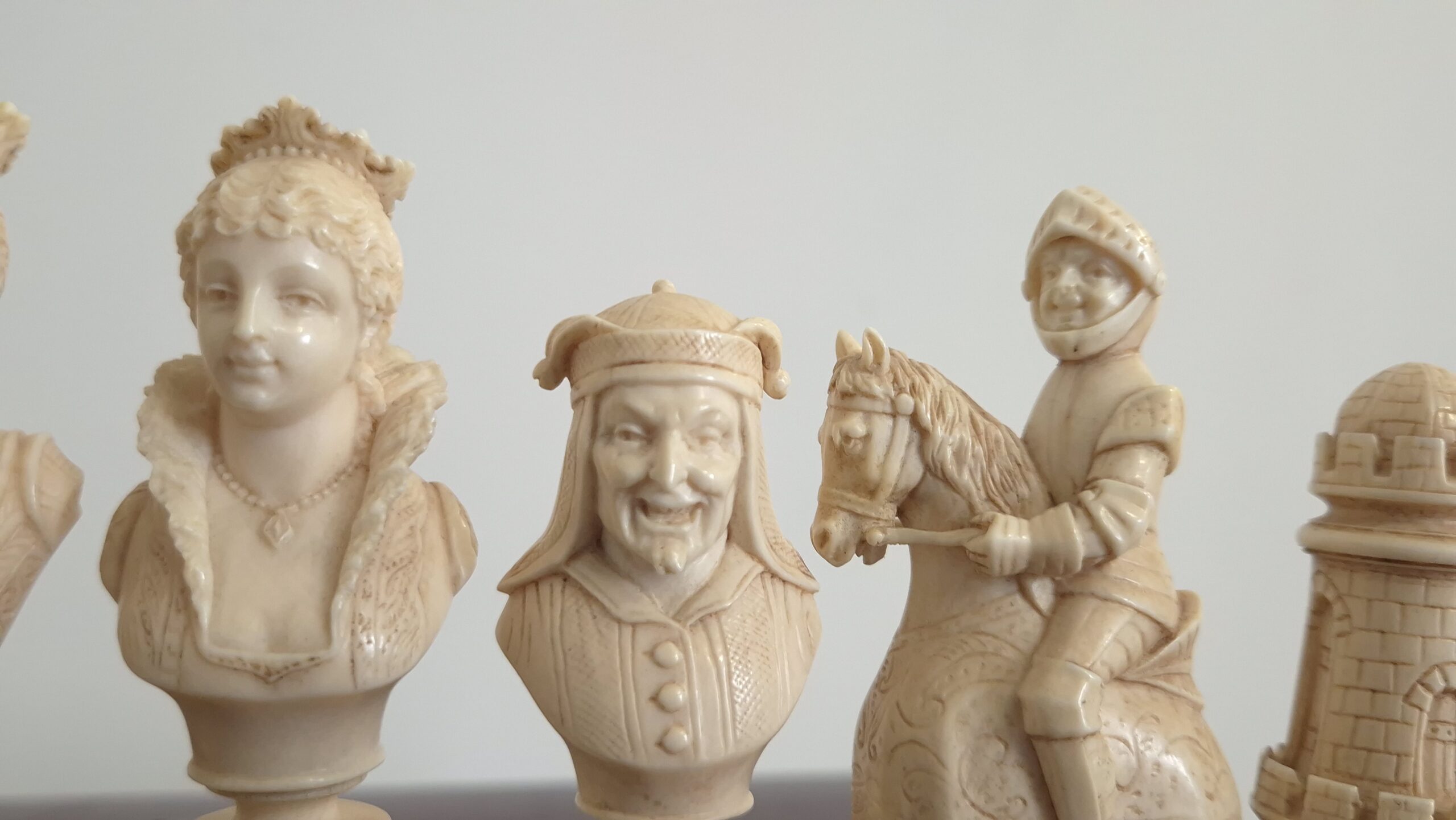
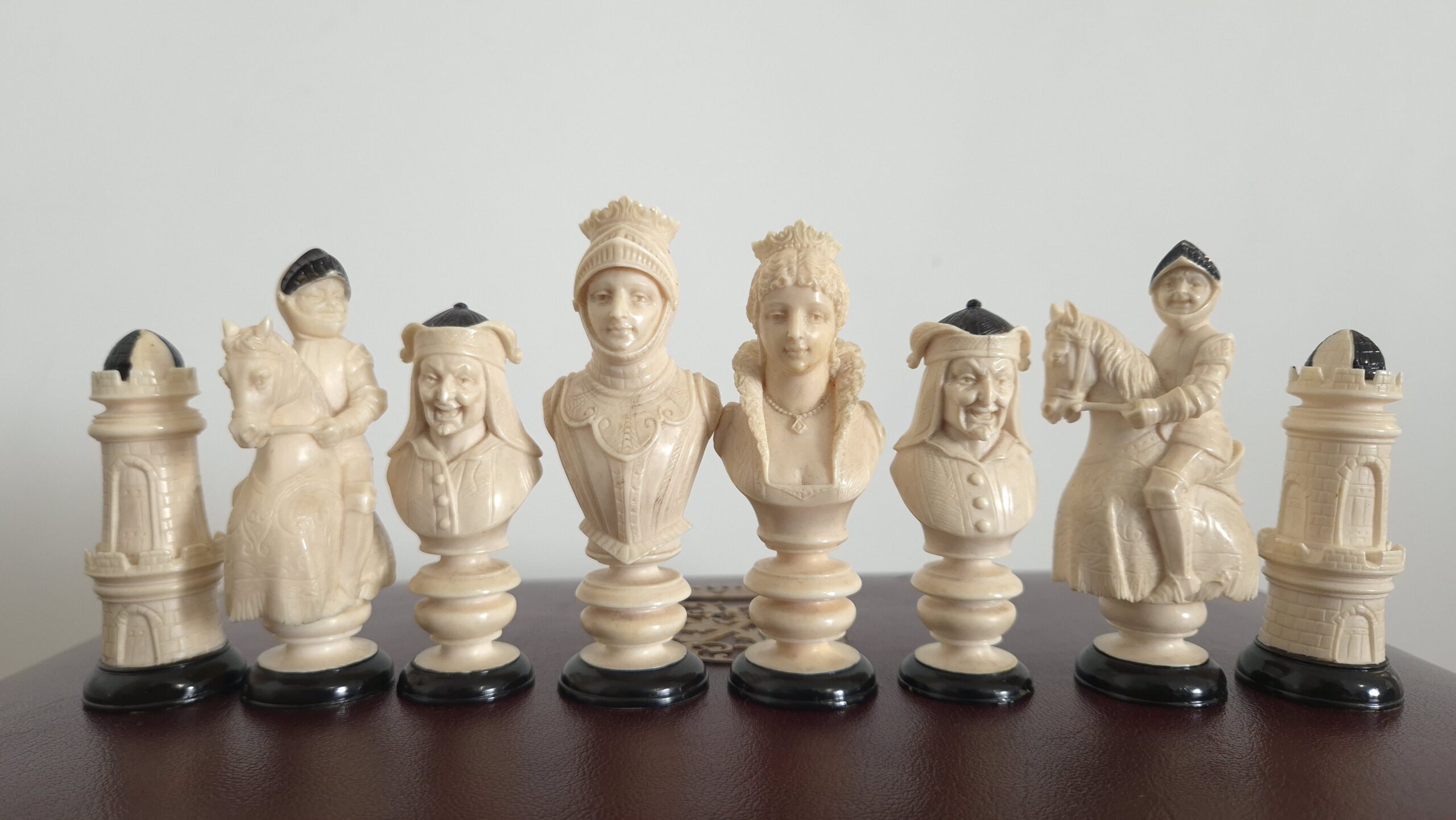
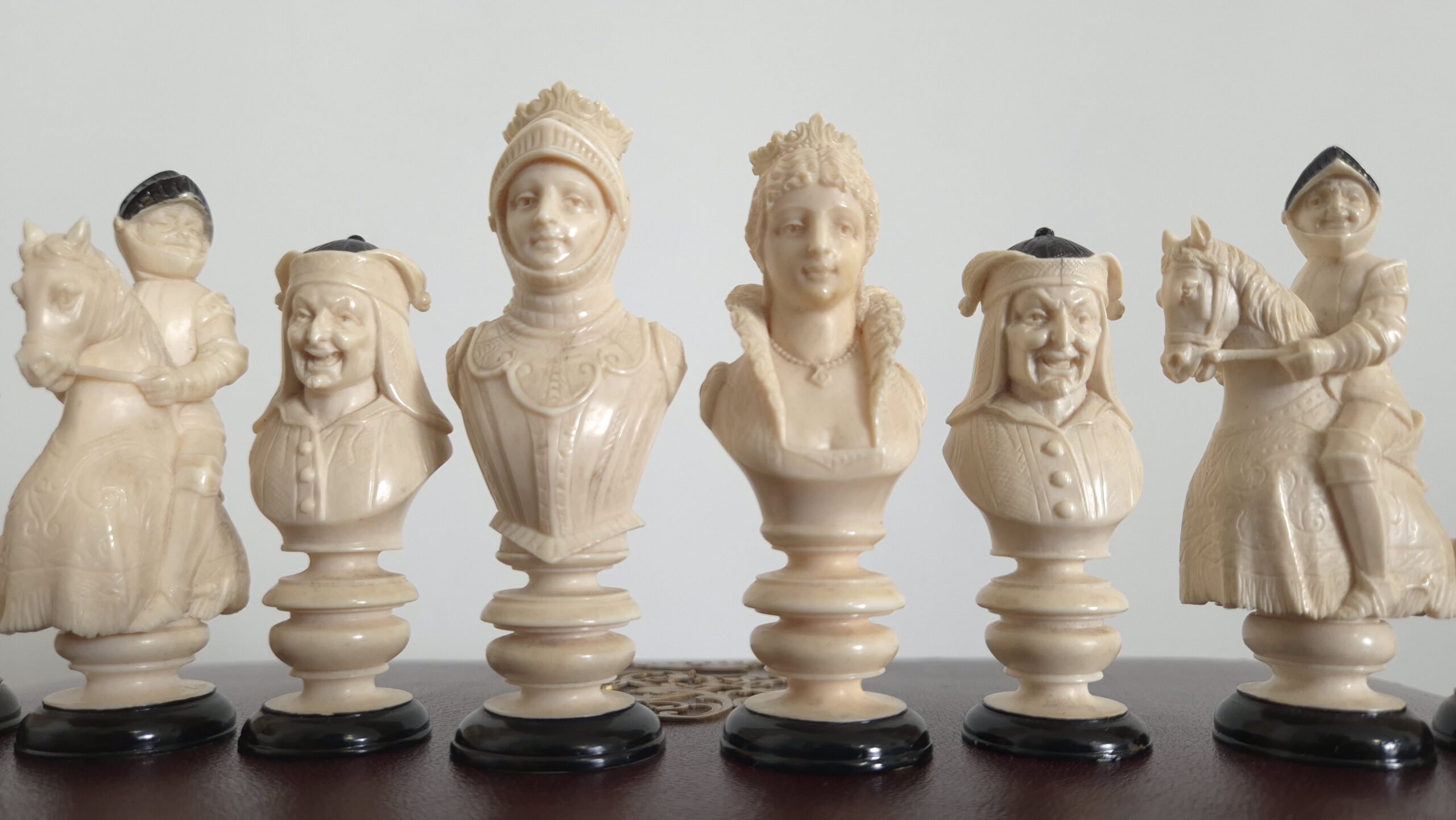
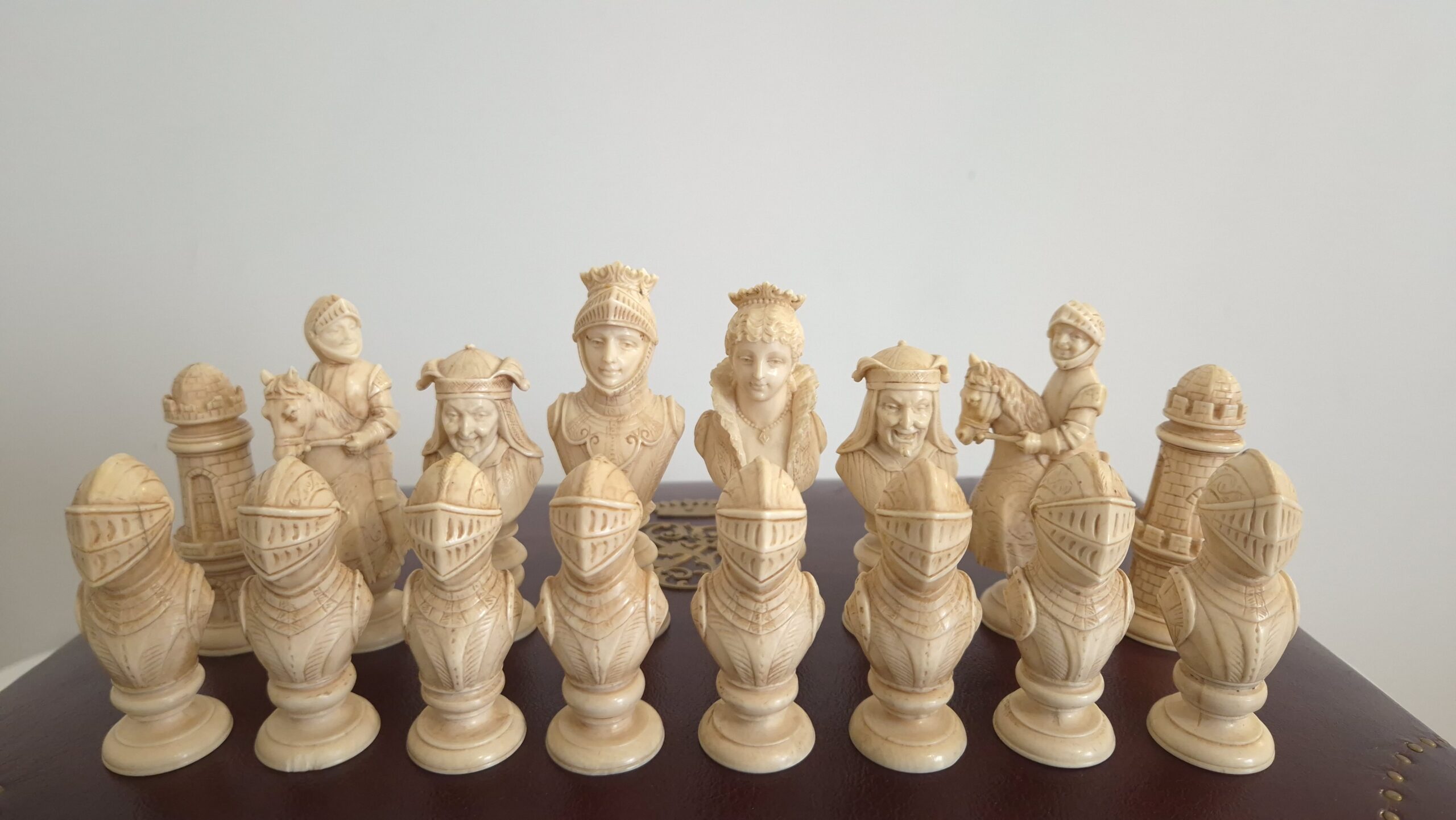
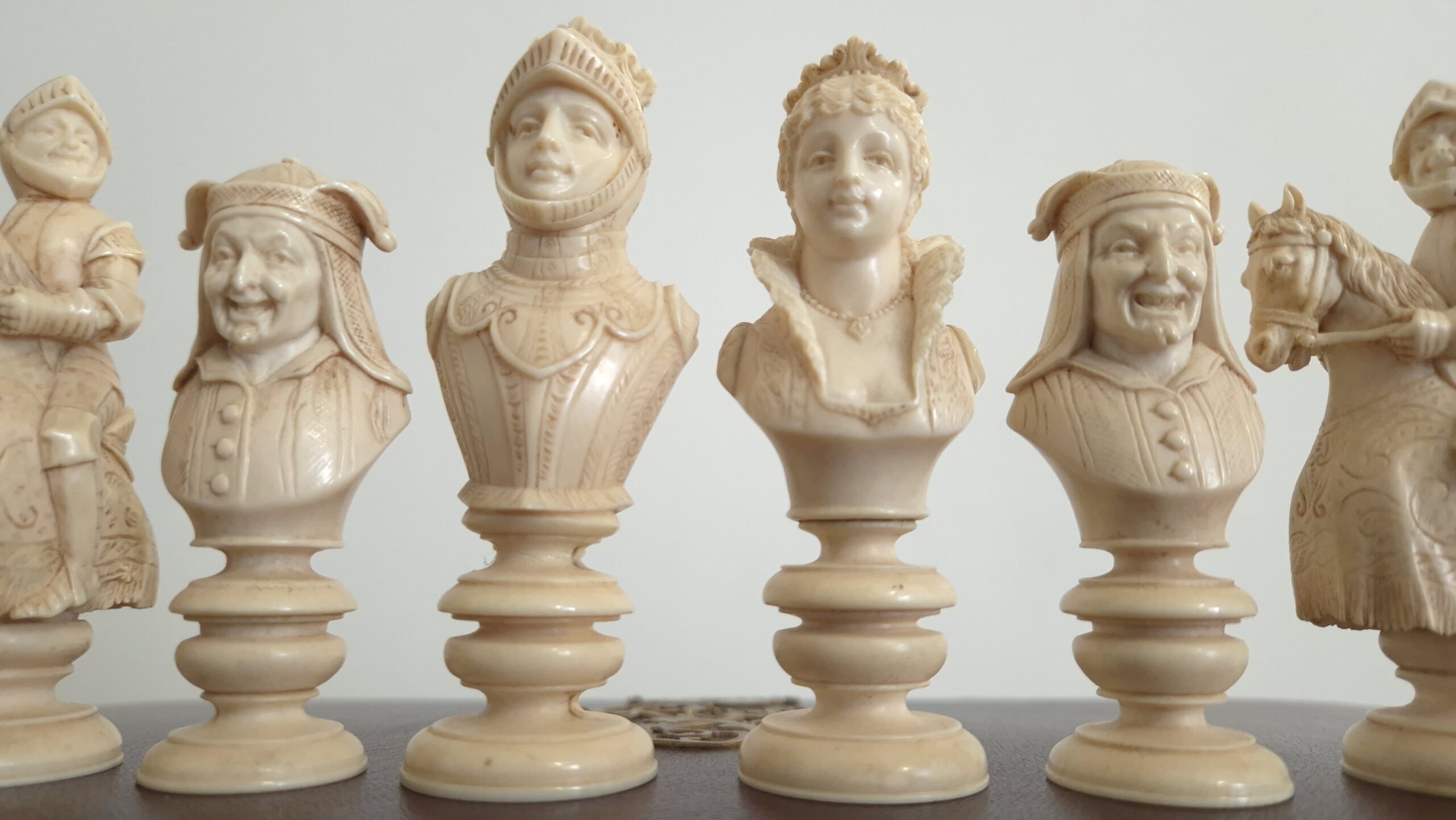
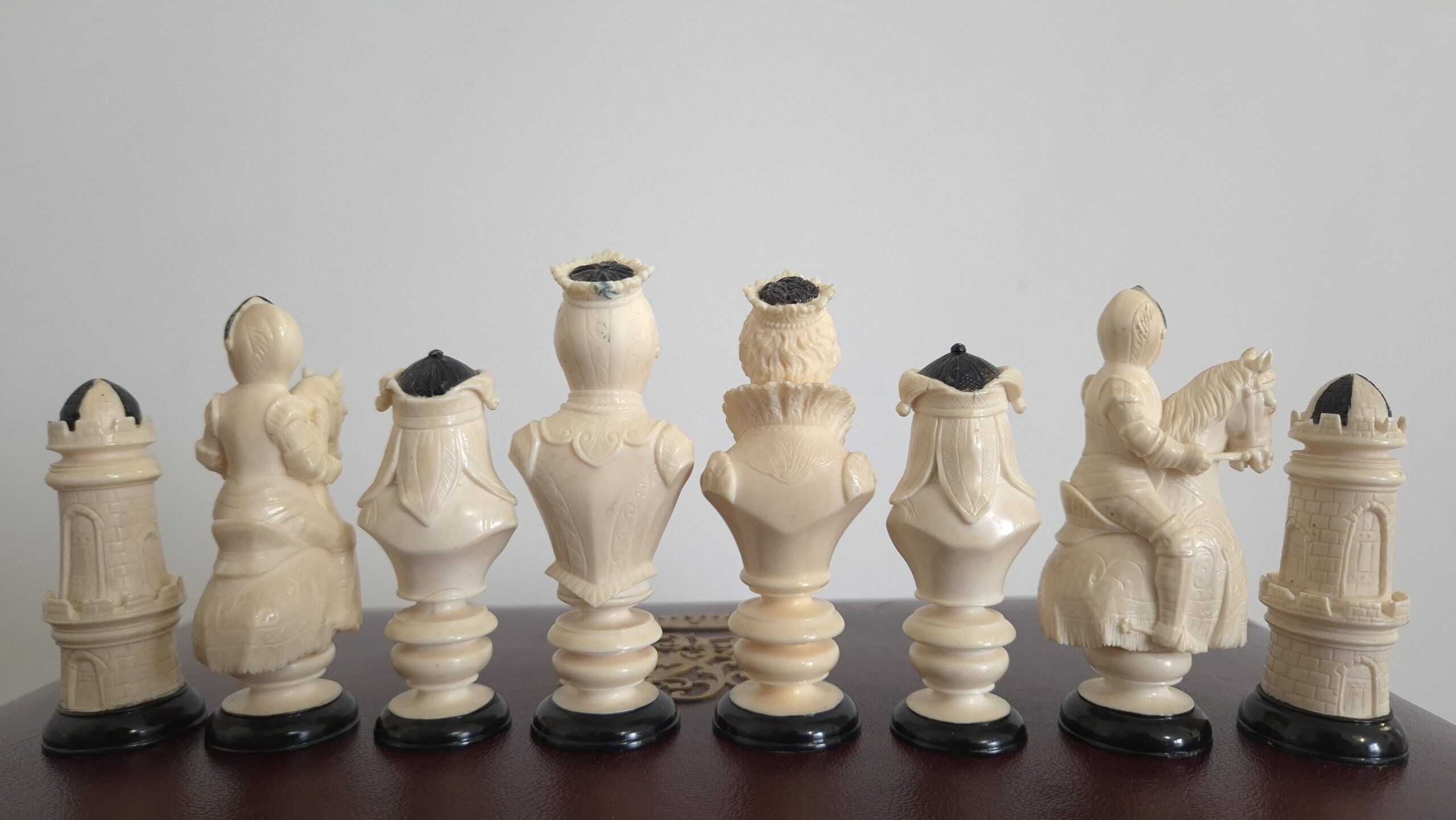
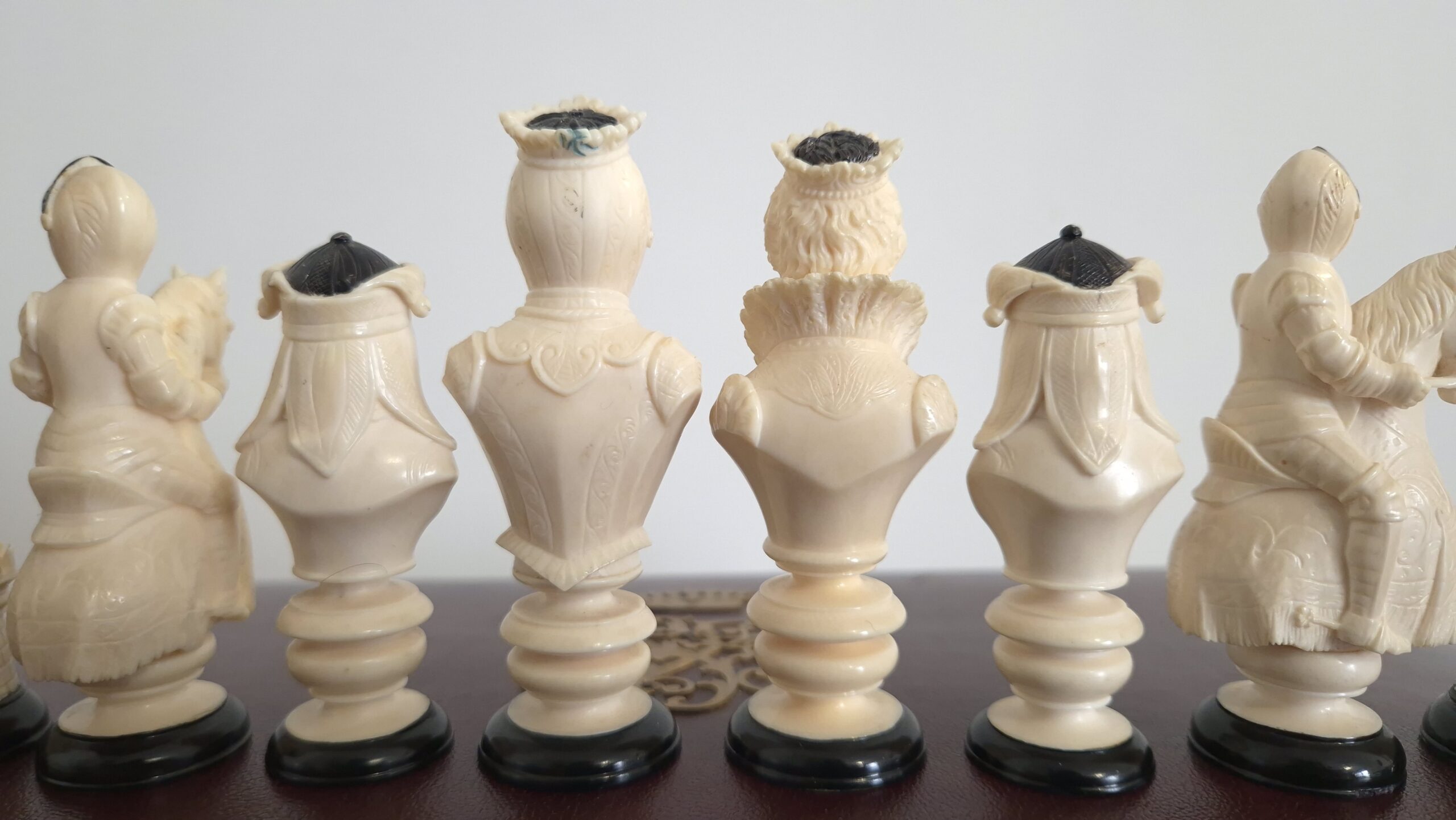
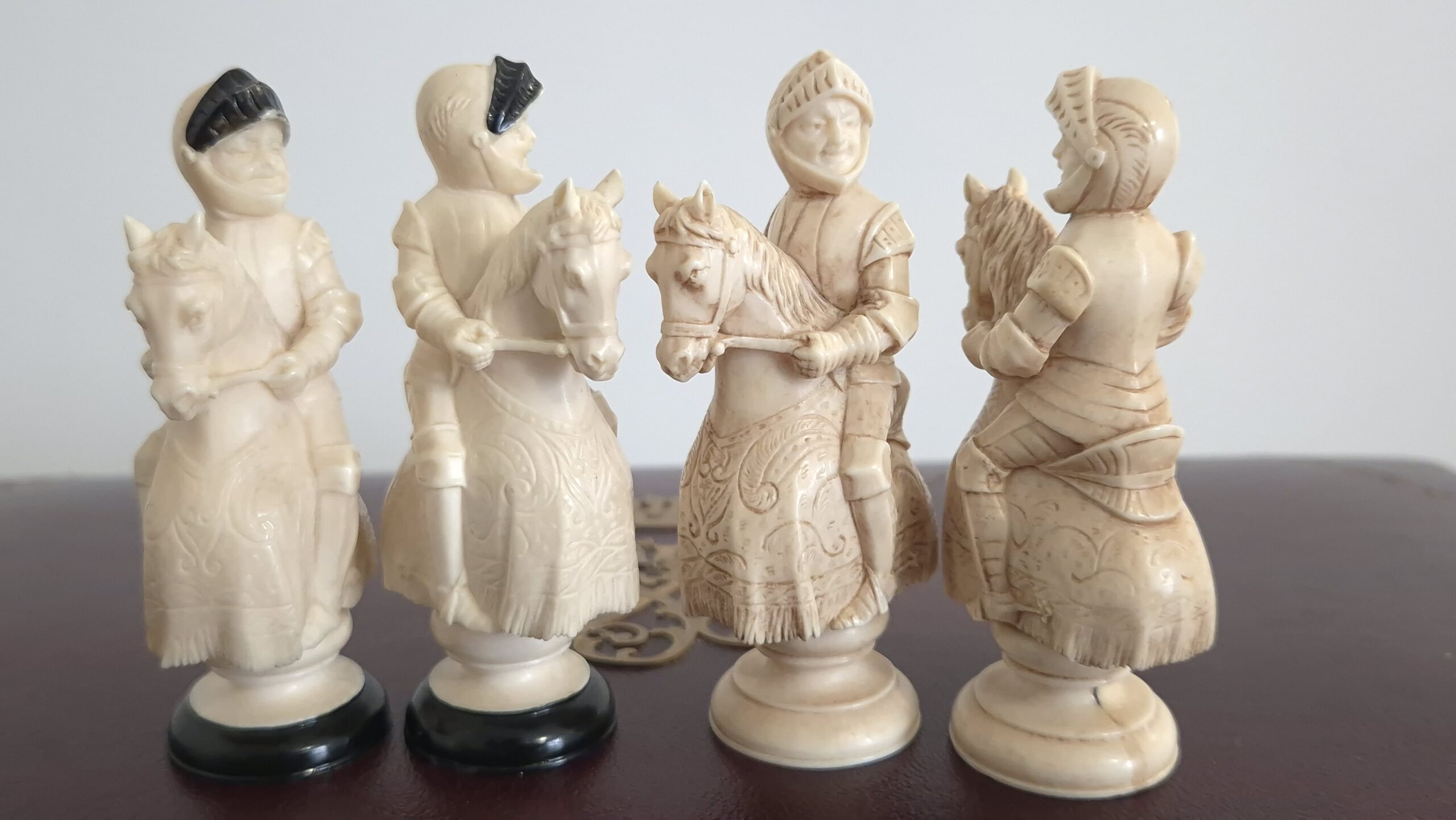
The pieces are of unimaginable sophistication and refinement. They depict medieval characters.
The knights are mounted on “hobby horse” style horses and are very finely worked.
The bishops are represented by the king’s jesters; during the anti-clerical wave in France, between the end of the 18th and the first half of the 19th century, bishops—generally depicted as bishops—were replaced by the king’s jesters on chess sets.
Half of the pieces are white and the other half is tinted with a pronounced beige.
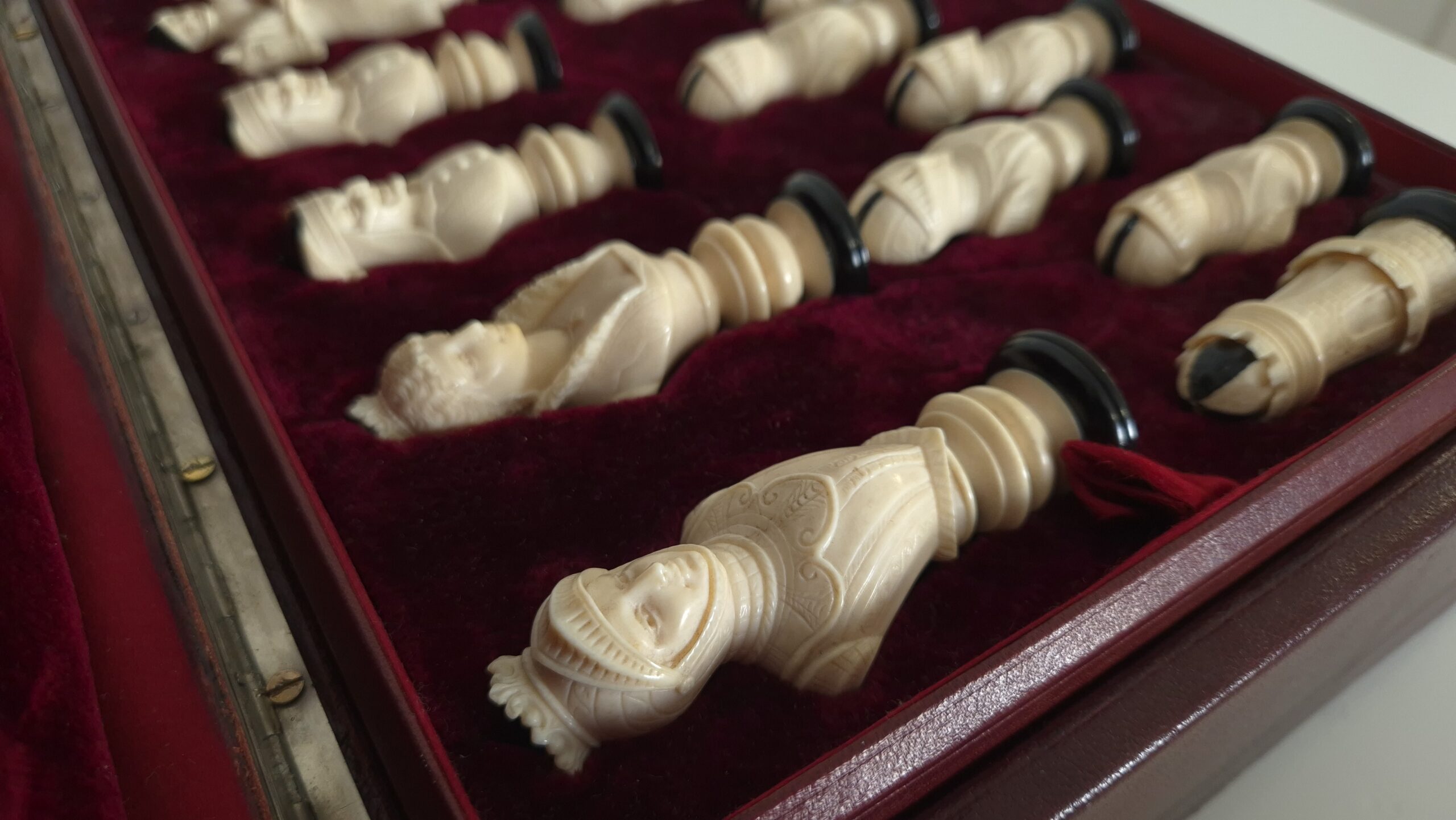
Black was also added on the white side to help distinguish them.
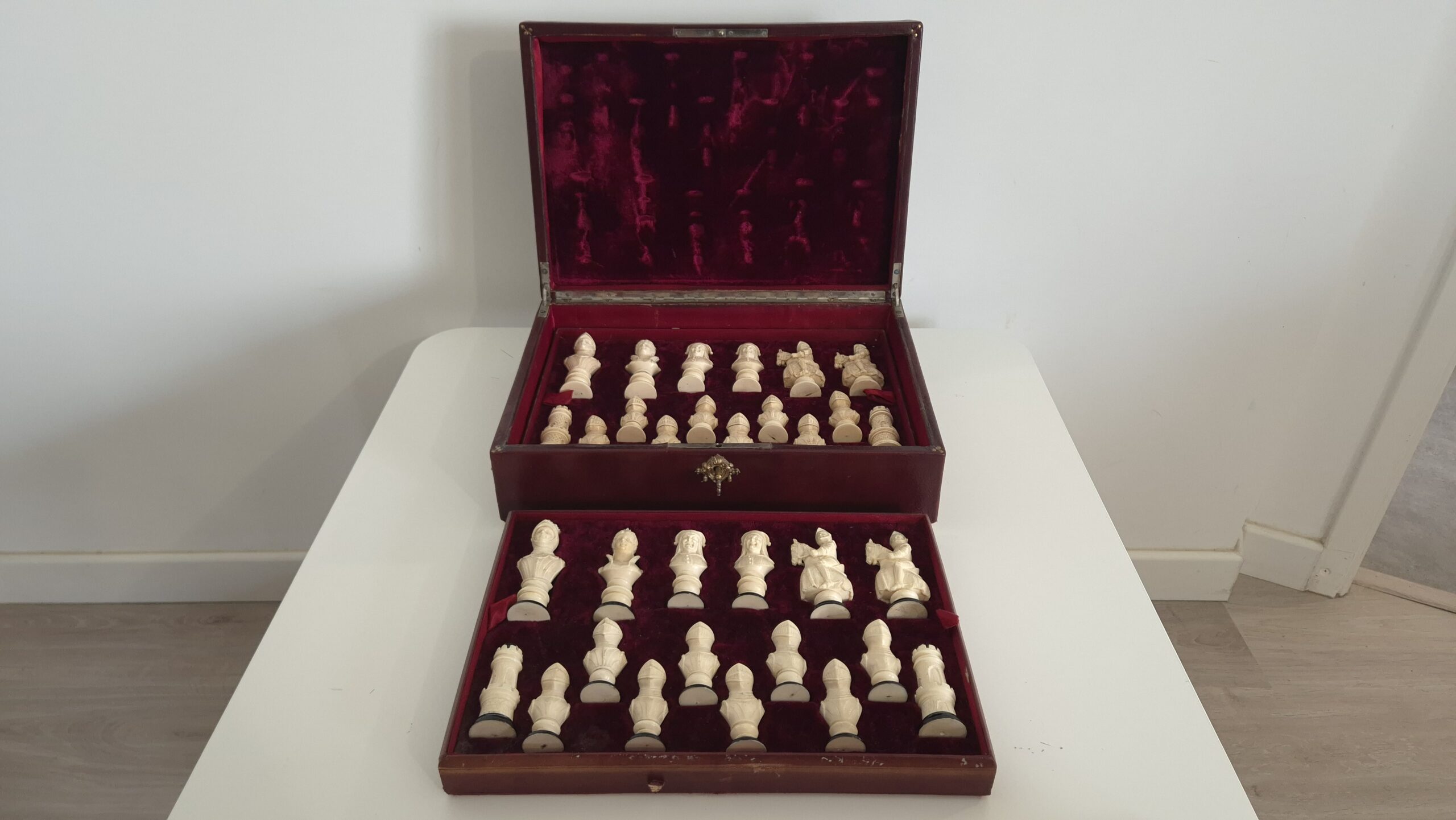
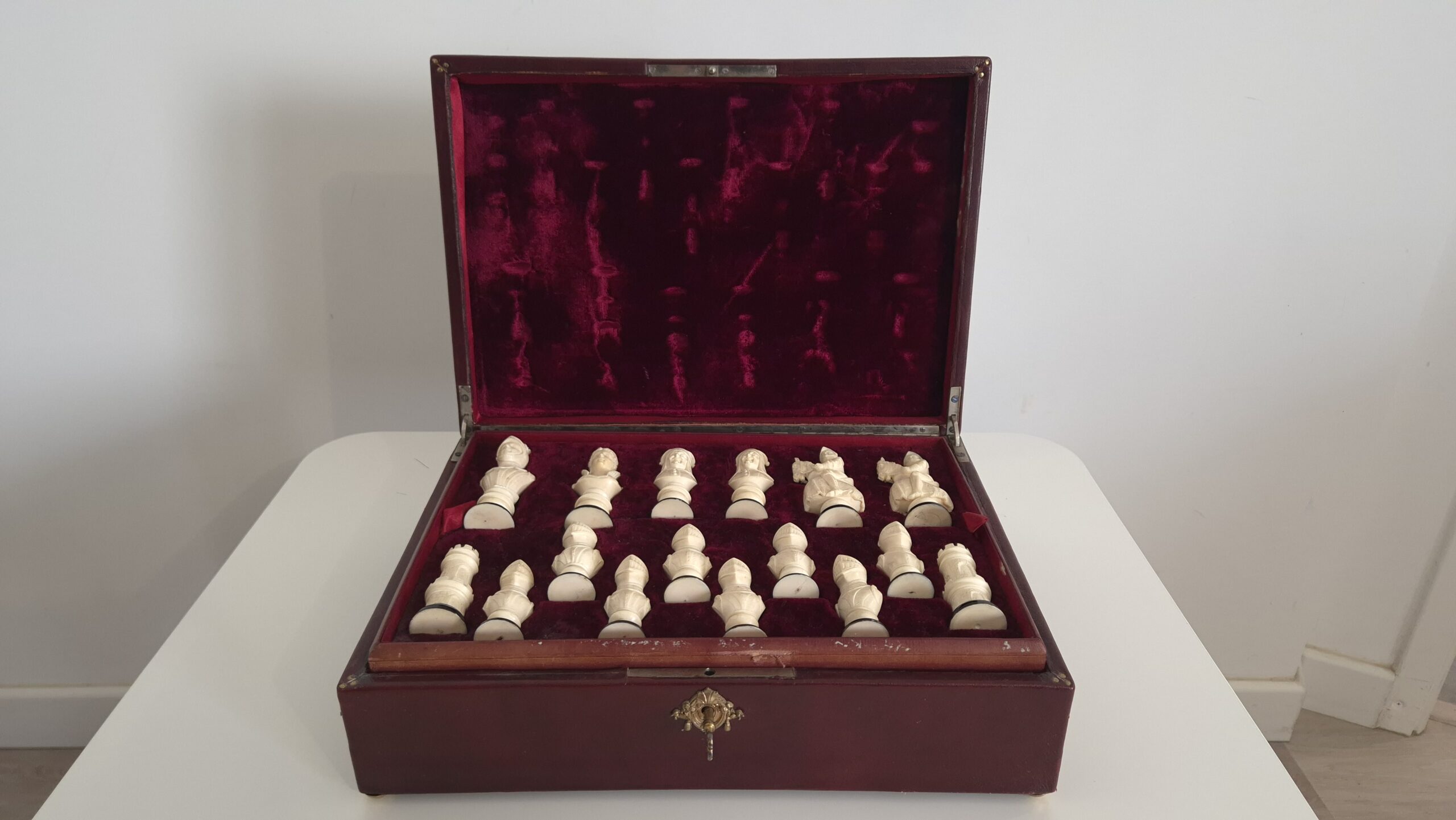
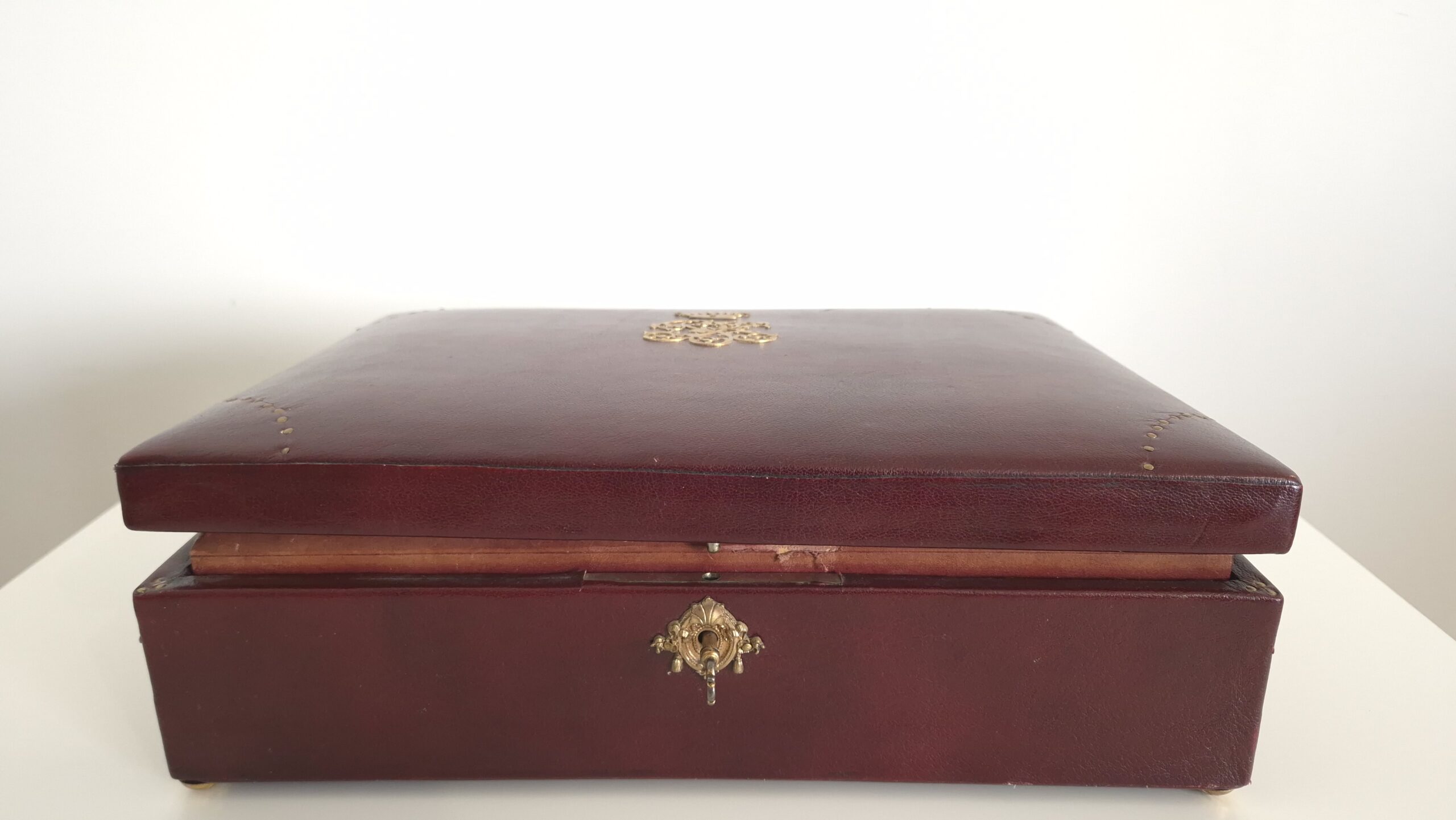
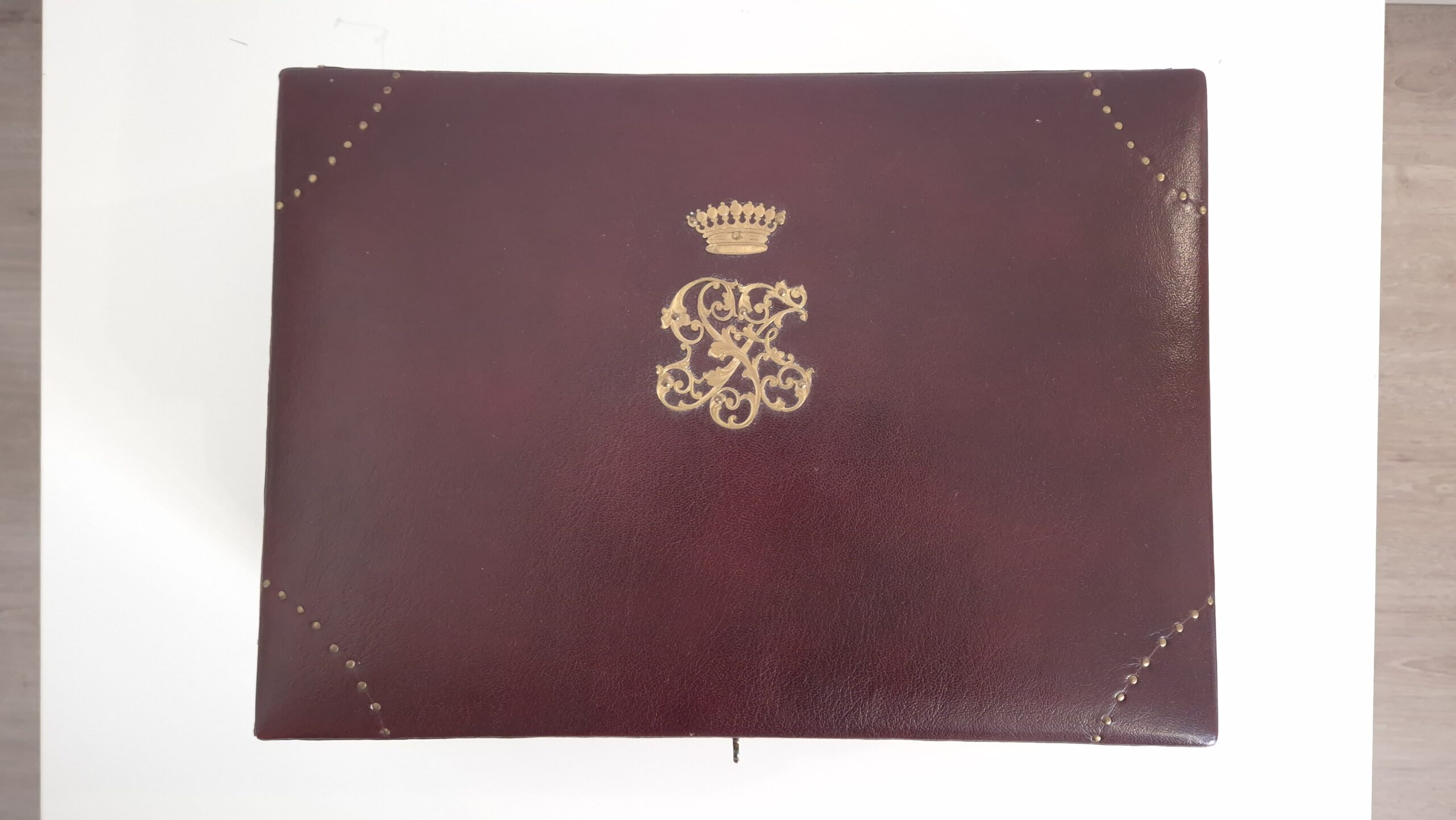
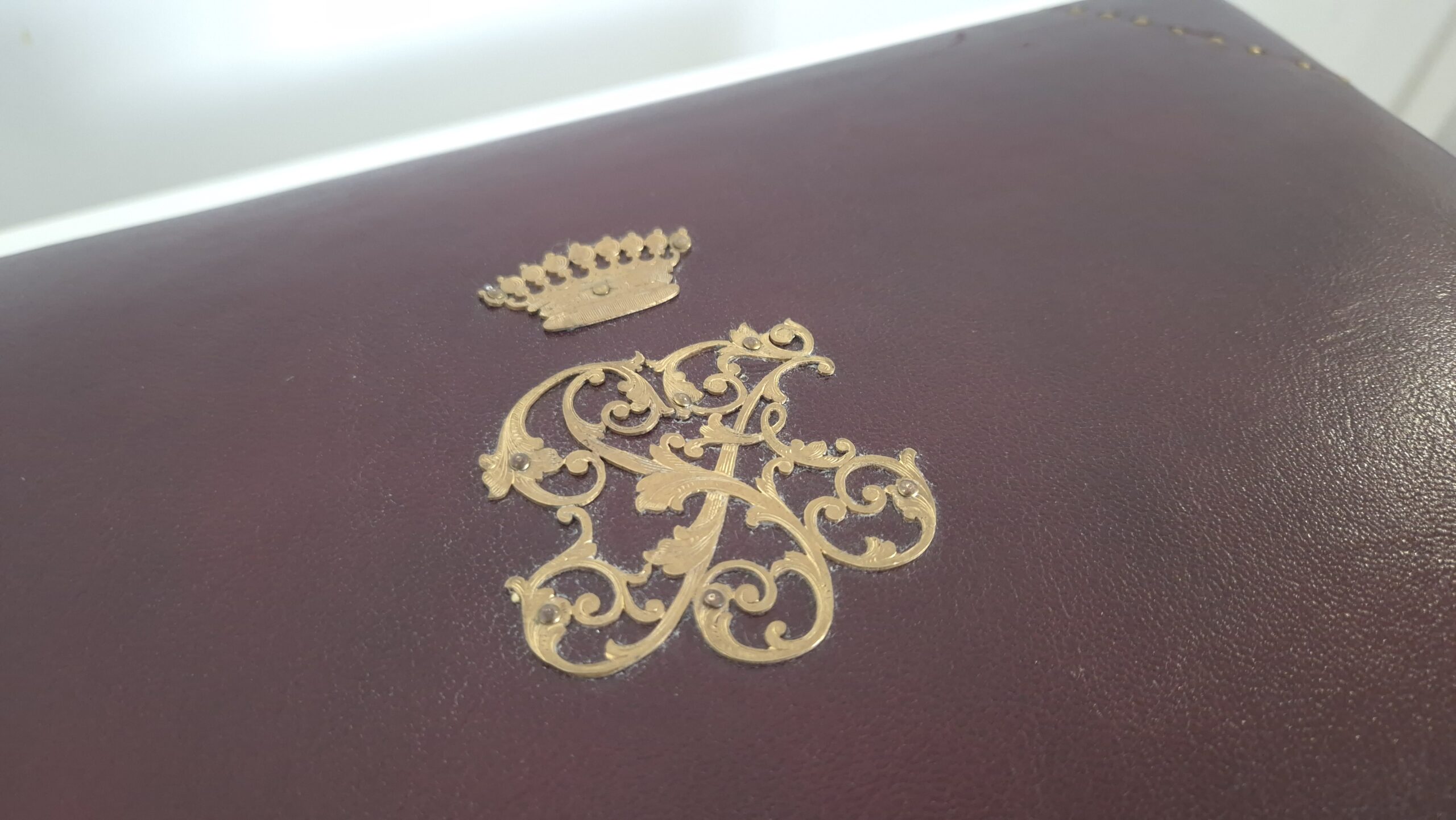
The pieces come with a magnificent, very substantial leather case with velvet and a gold monogram topped with a crown. It has individual storage compartments for the pieces.
Such a case is something extremely rare for a set from this period.
The king is 9.5 cm tall.
The knights are 8.5 cm tall.
The pawns are 6.3 cm tall.
The case measures 35 cm wide and 25 cm deep.
The pieces are in excellent condition, with no damage except for minor, insignificant chips on the rooks.
The case is in good condition but no longer closes; it still has its key, but the mechanism is broken.
The set belonged for several generations to the Lavi family in Switzerland, in the canton of Vaud. However, after speaking with heraldry specialists about the monogram on the box, it was possible to determine that it originally belonged to a count before being acquired by the Lavi family.
The crown above the monogram, with open points adorned with pearls, is the distinctive and recognizable sign of the title of count.
The letters of the monogram are “PF”.
Unfortunately, it is impossible to determine which count the set belonged to based on these two letters alone, as they could correspond to a name, an estate name, or the interlacing of the names of two married individuals.
Write / view comments
Leave a Reply Cancel reply
africa
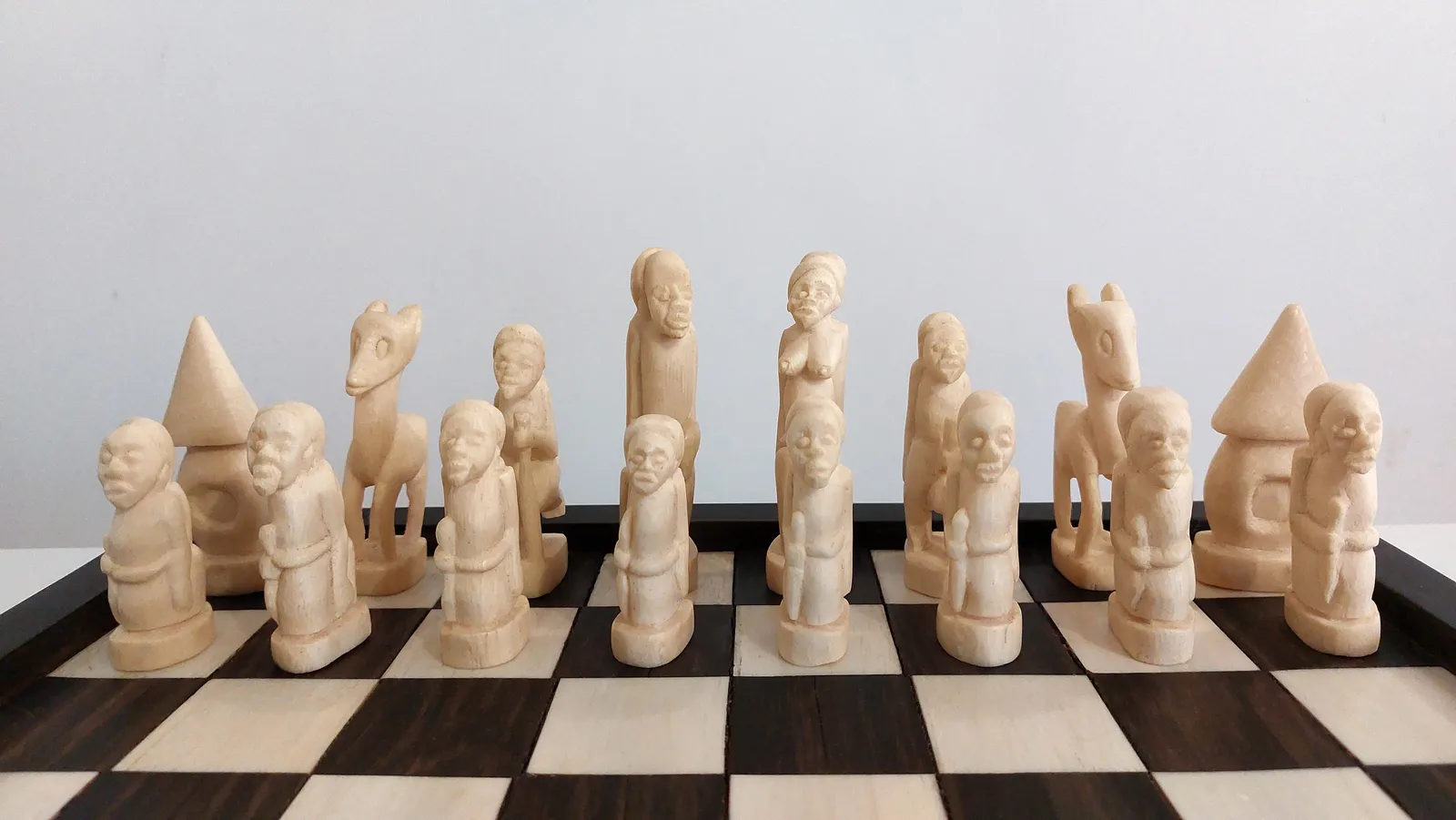
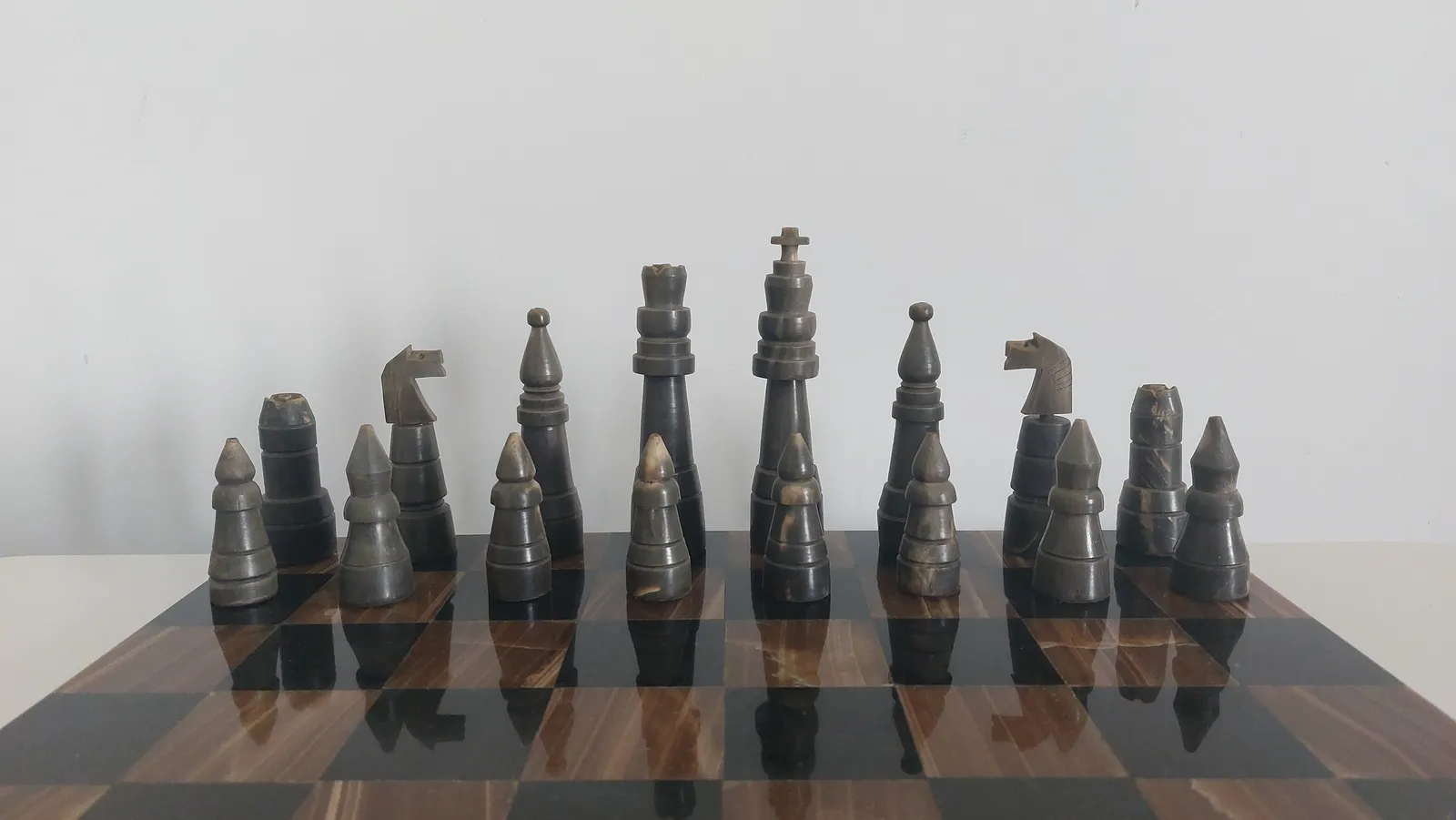
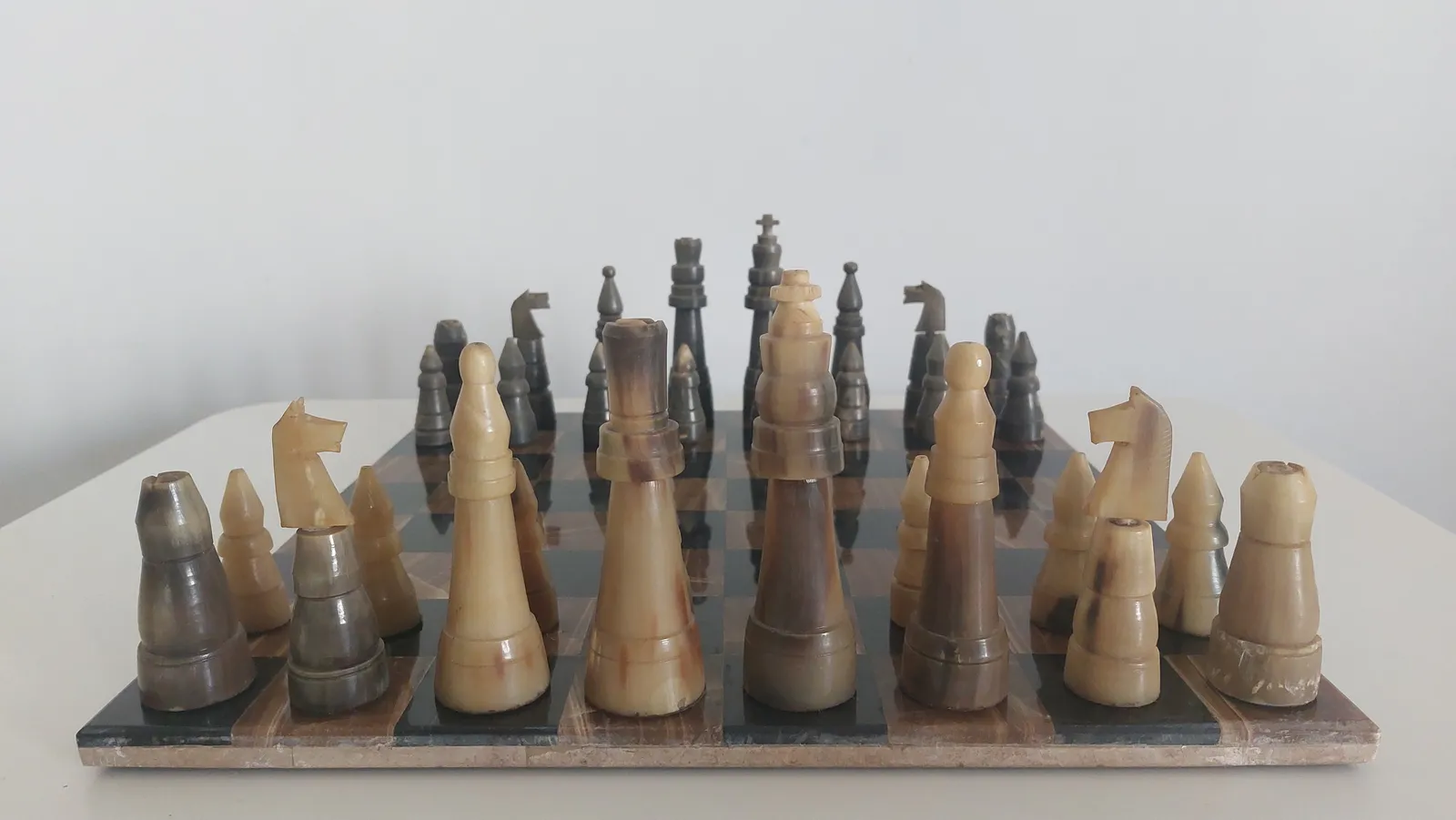
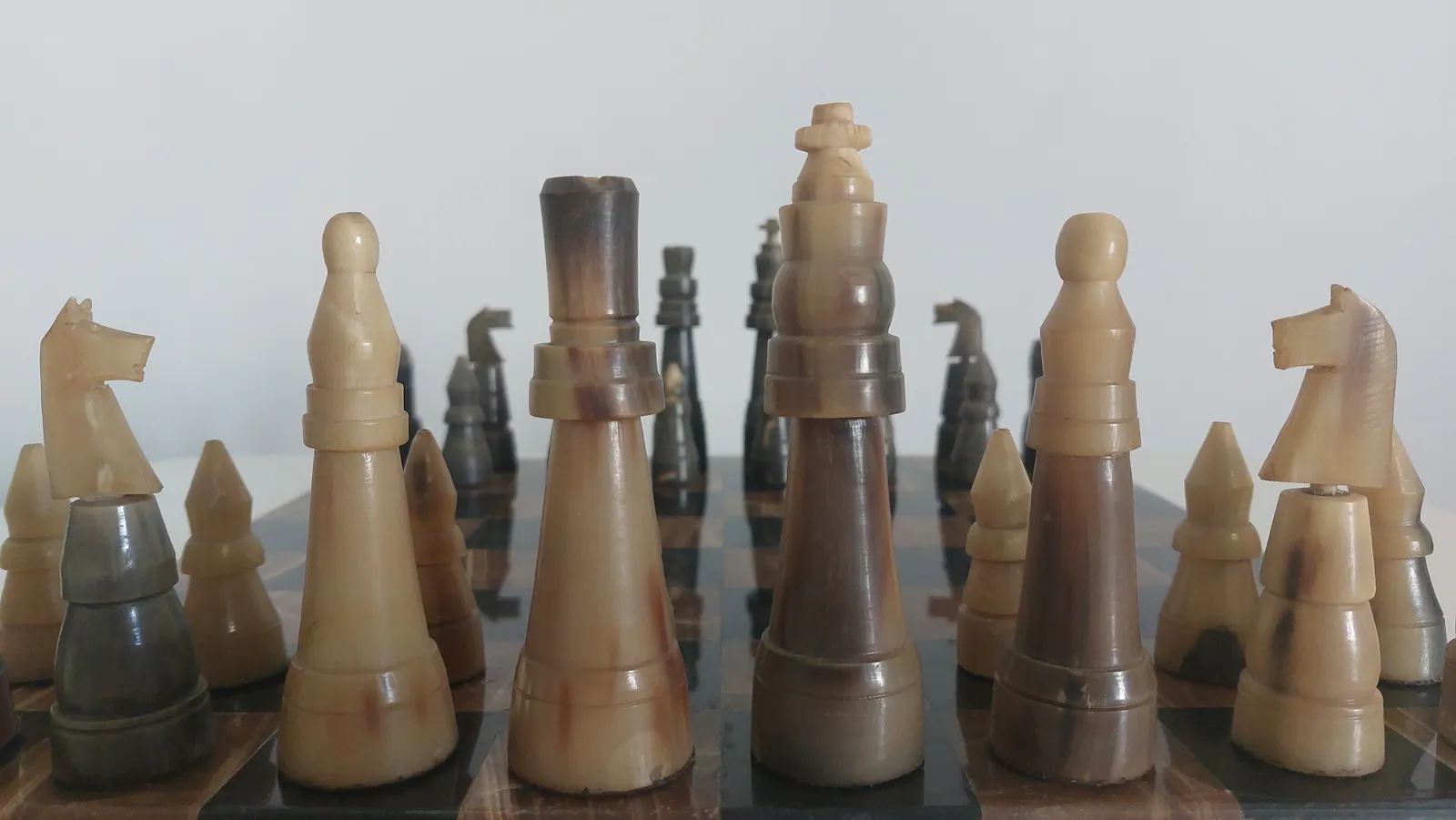
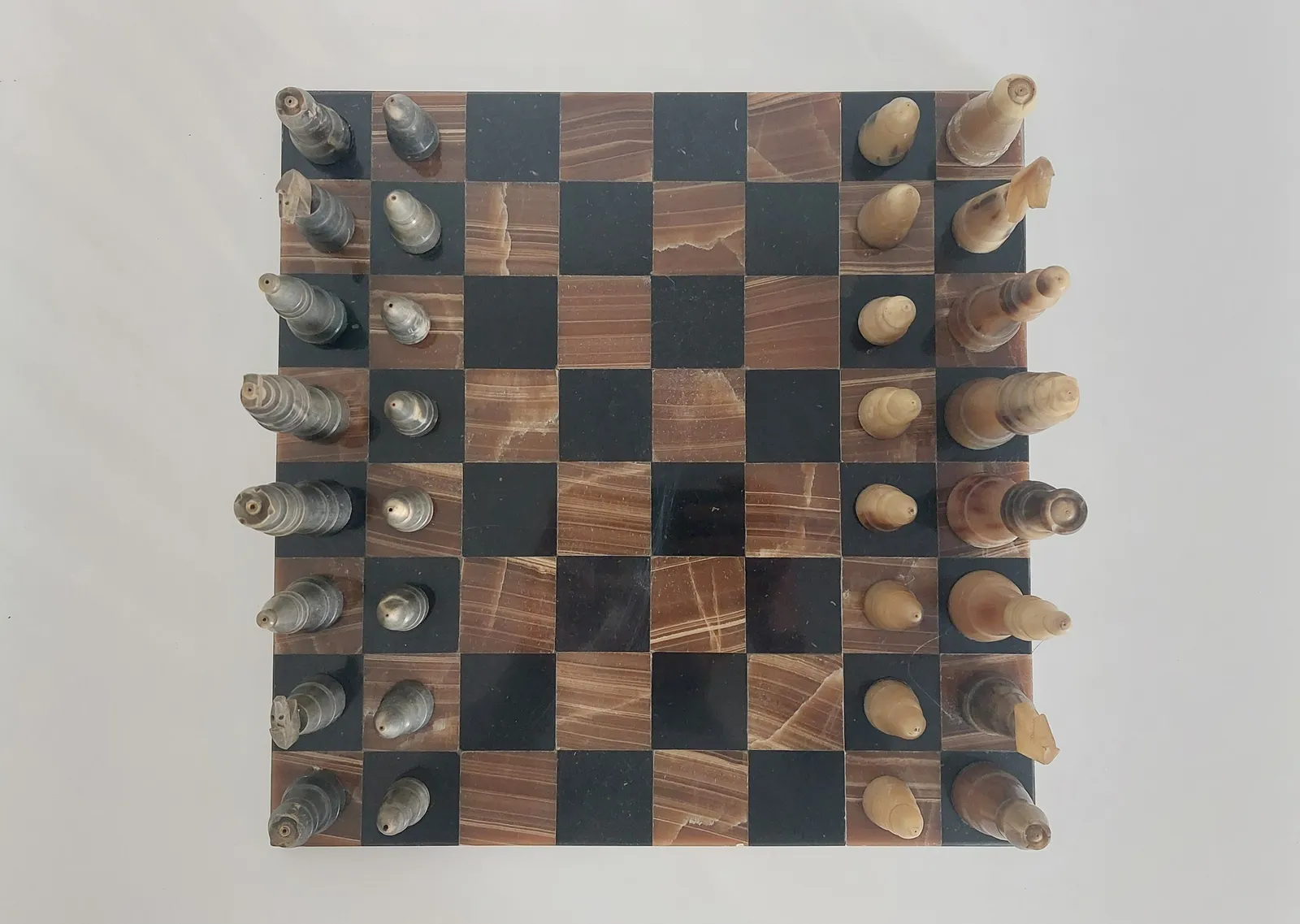
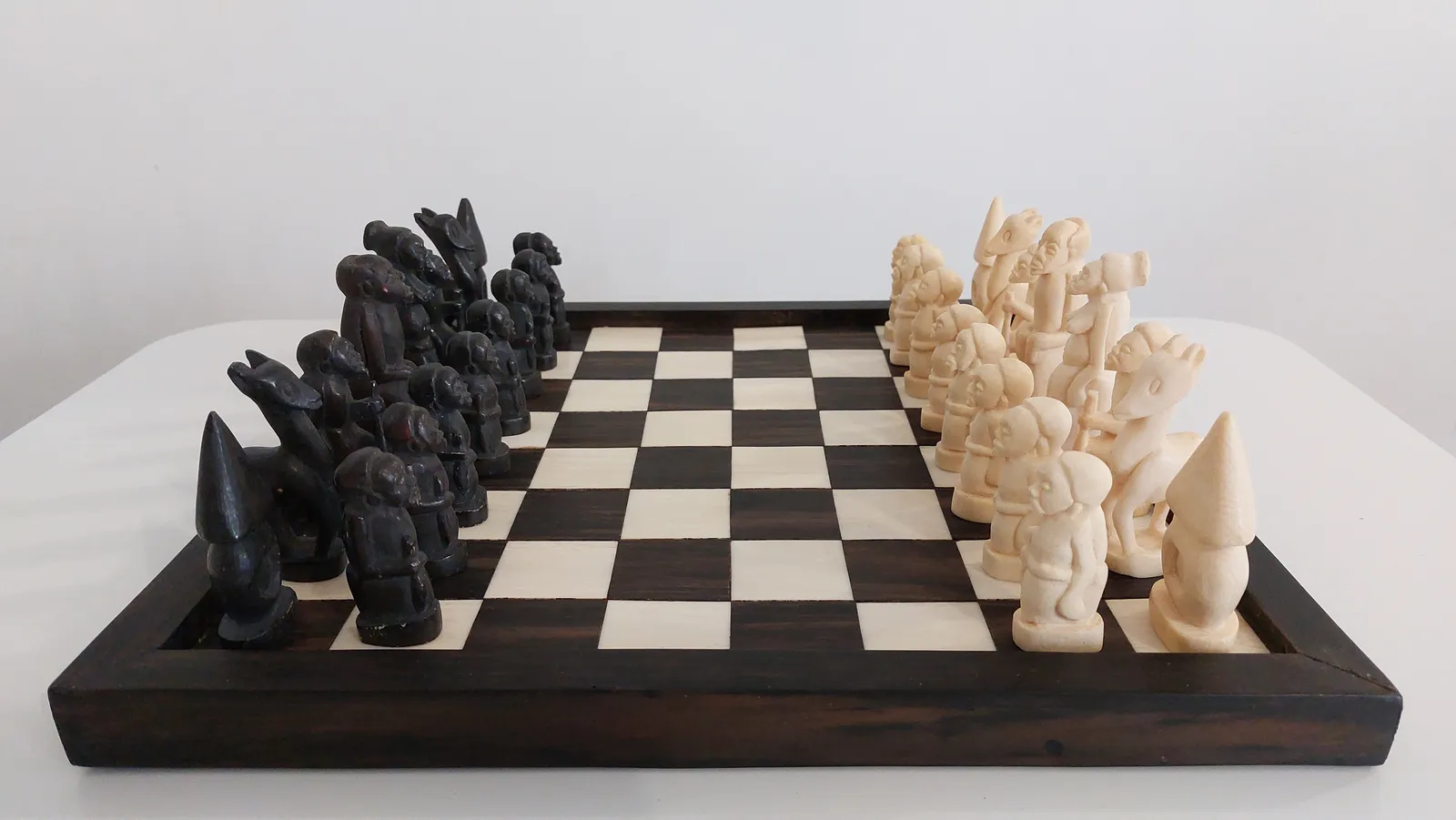
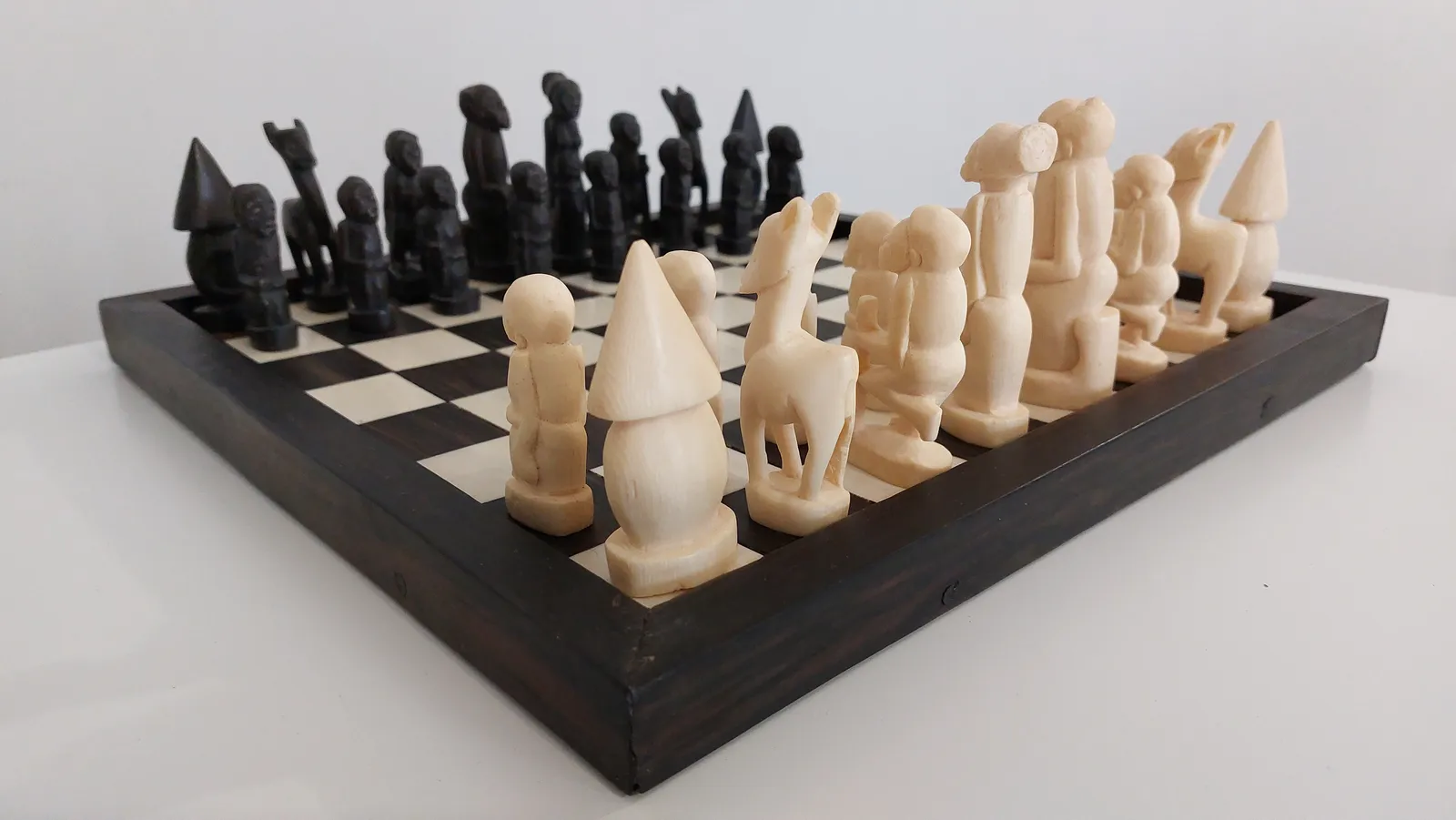
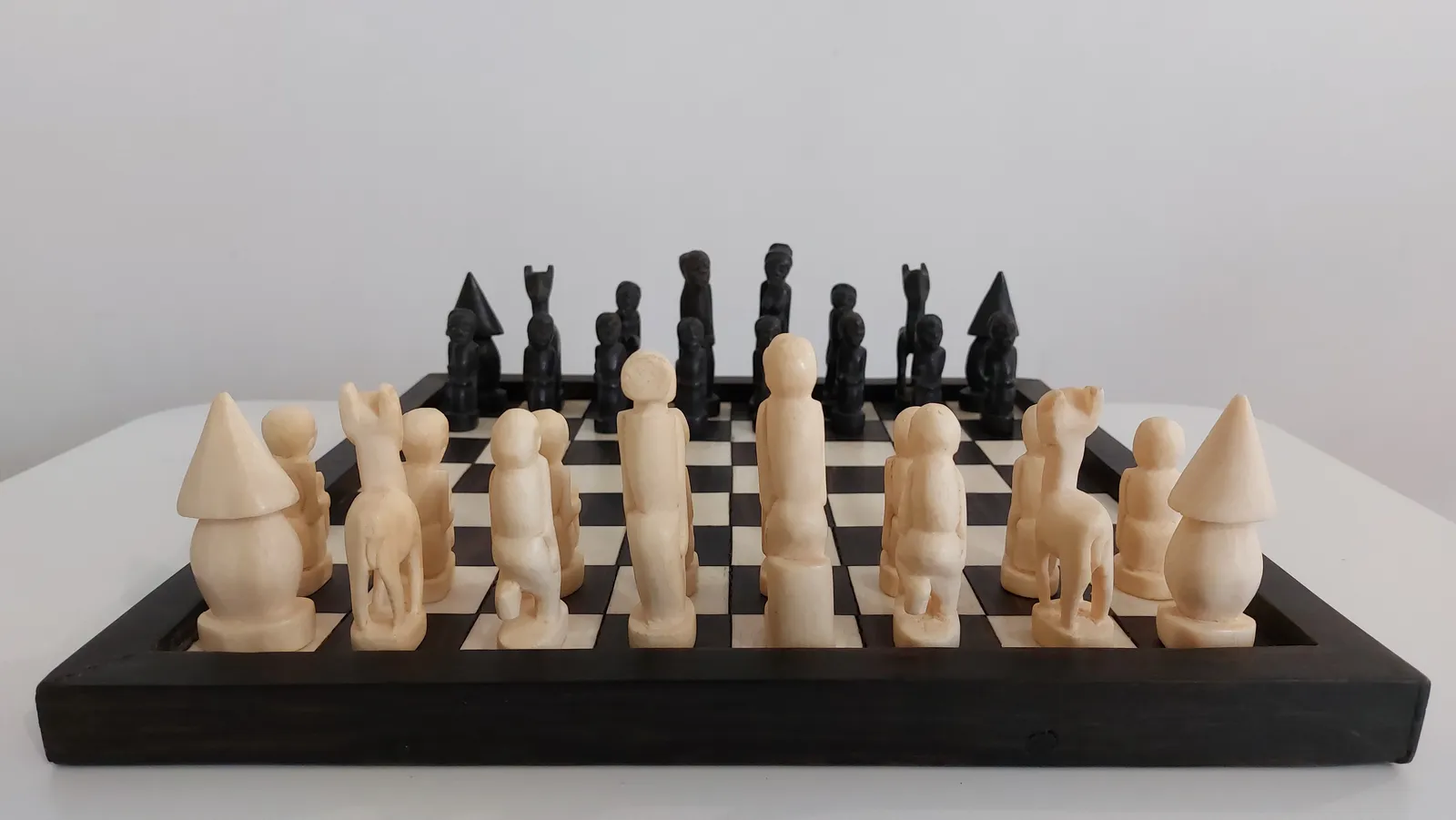
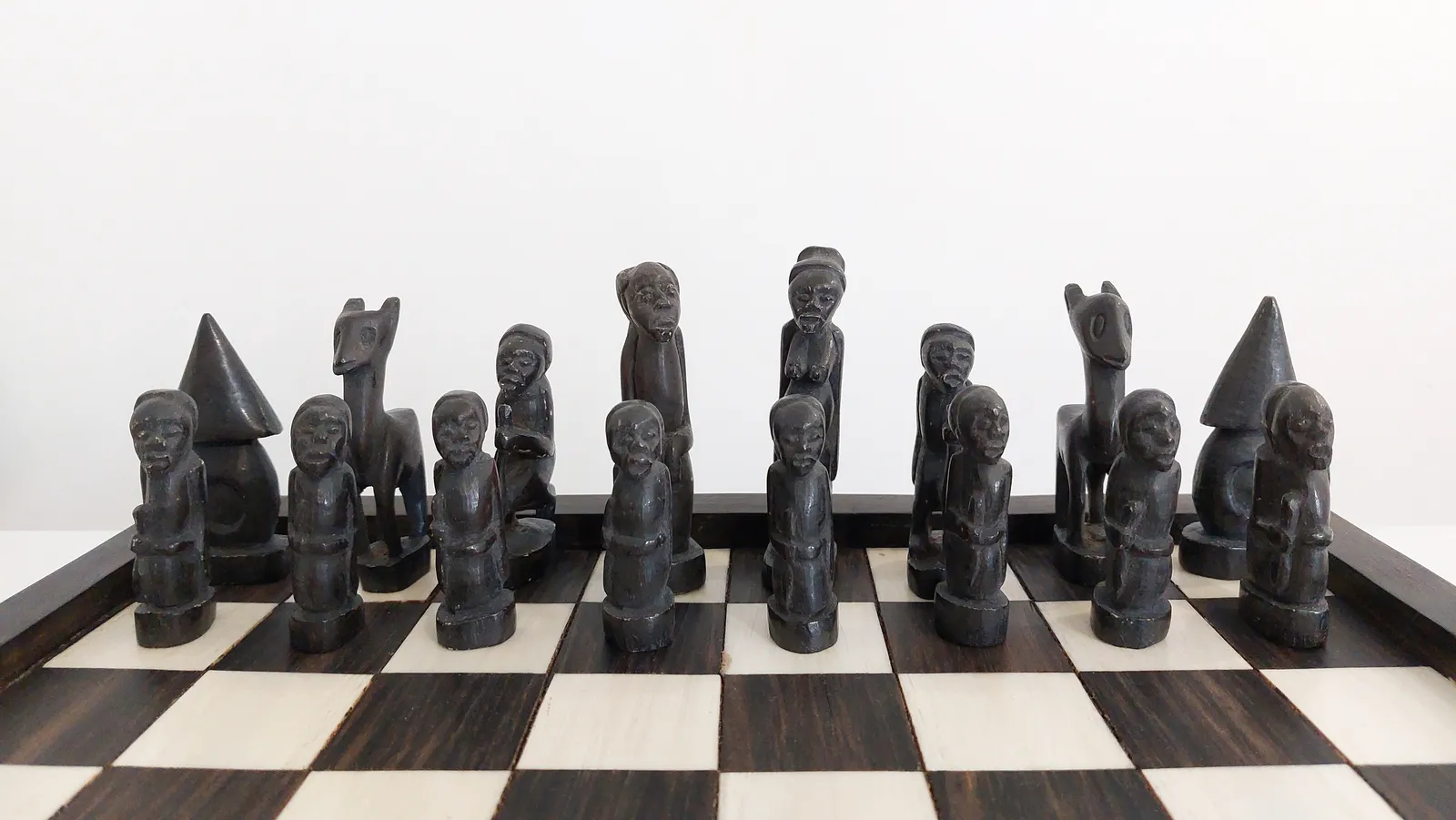
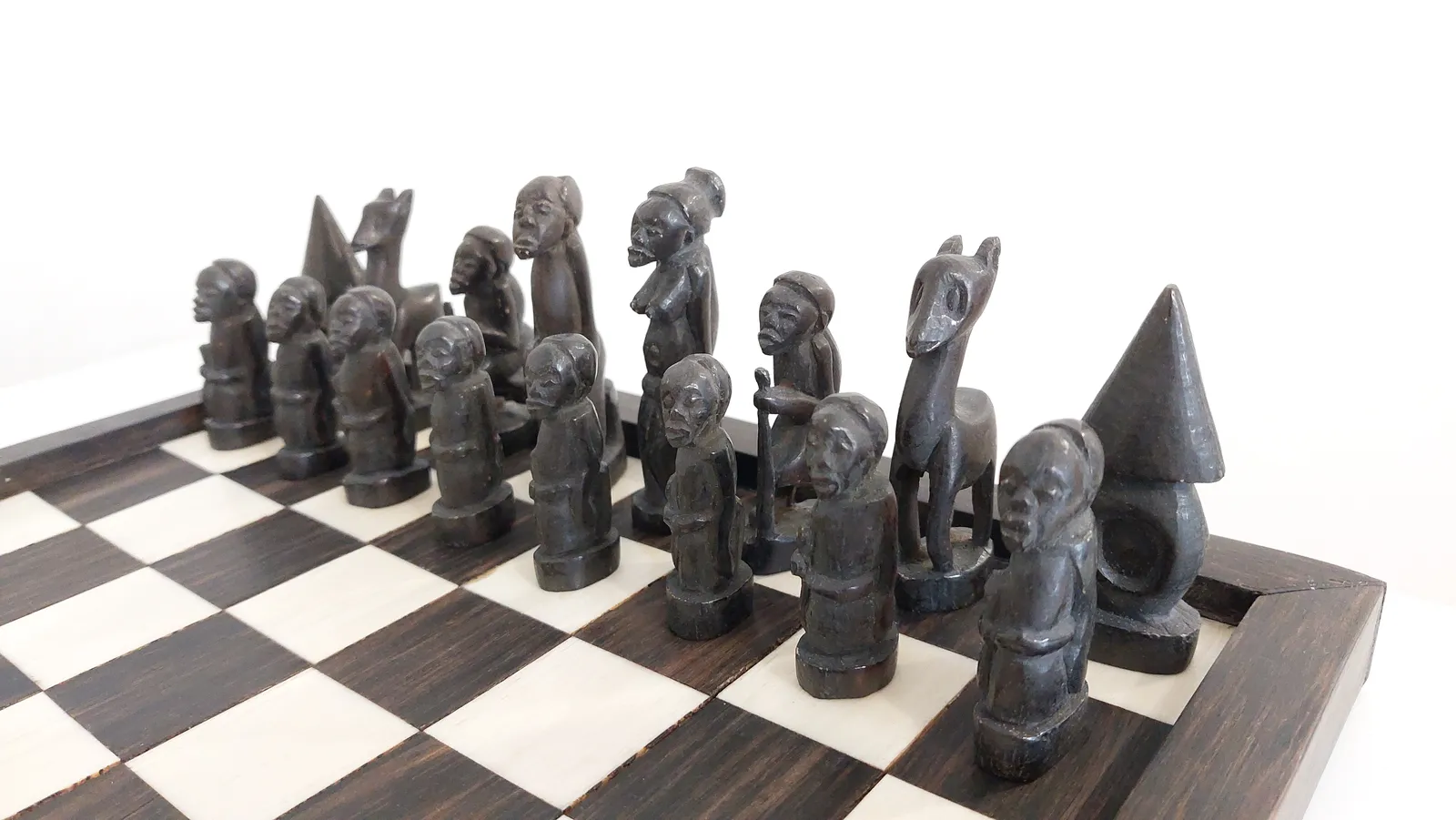
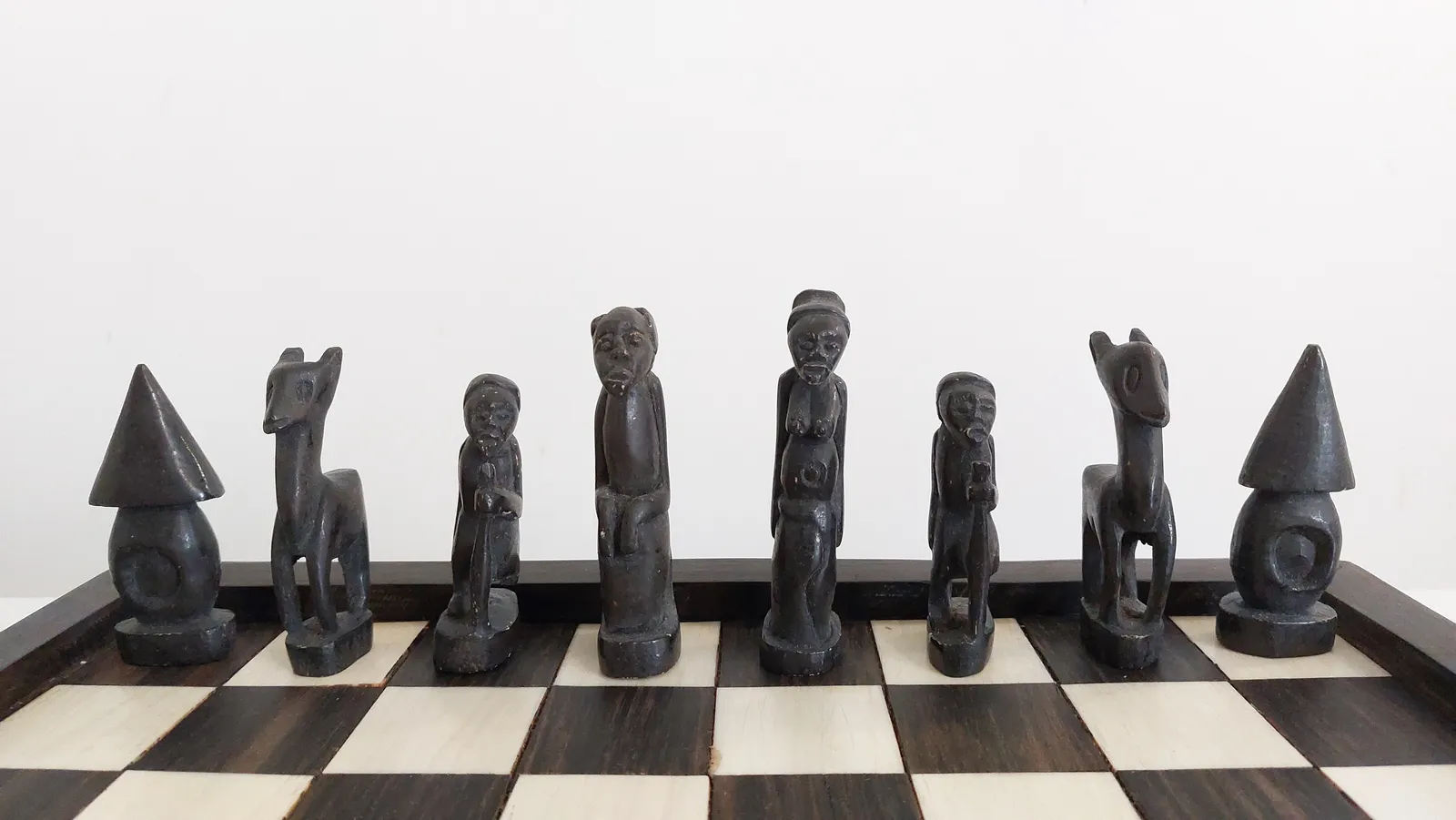
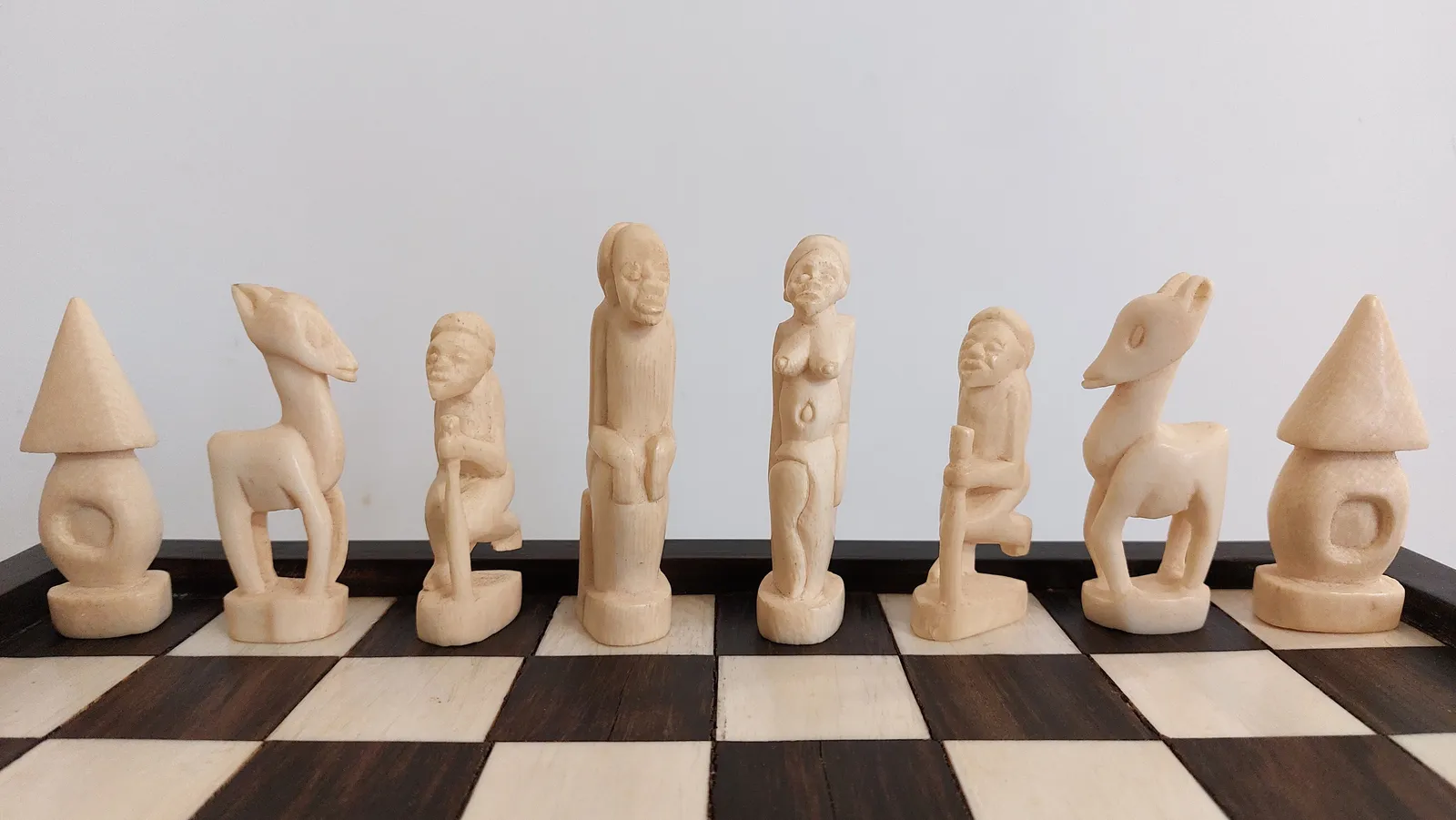
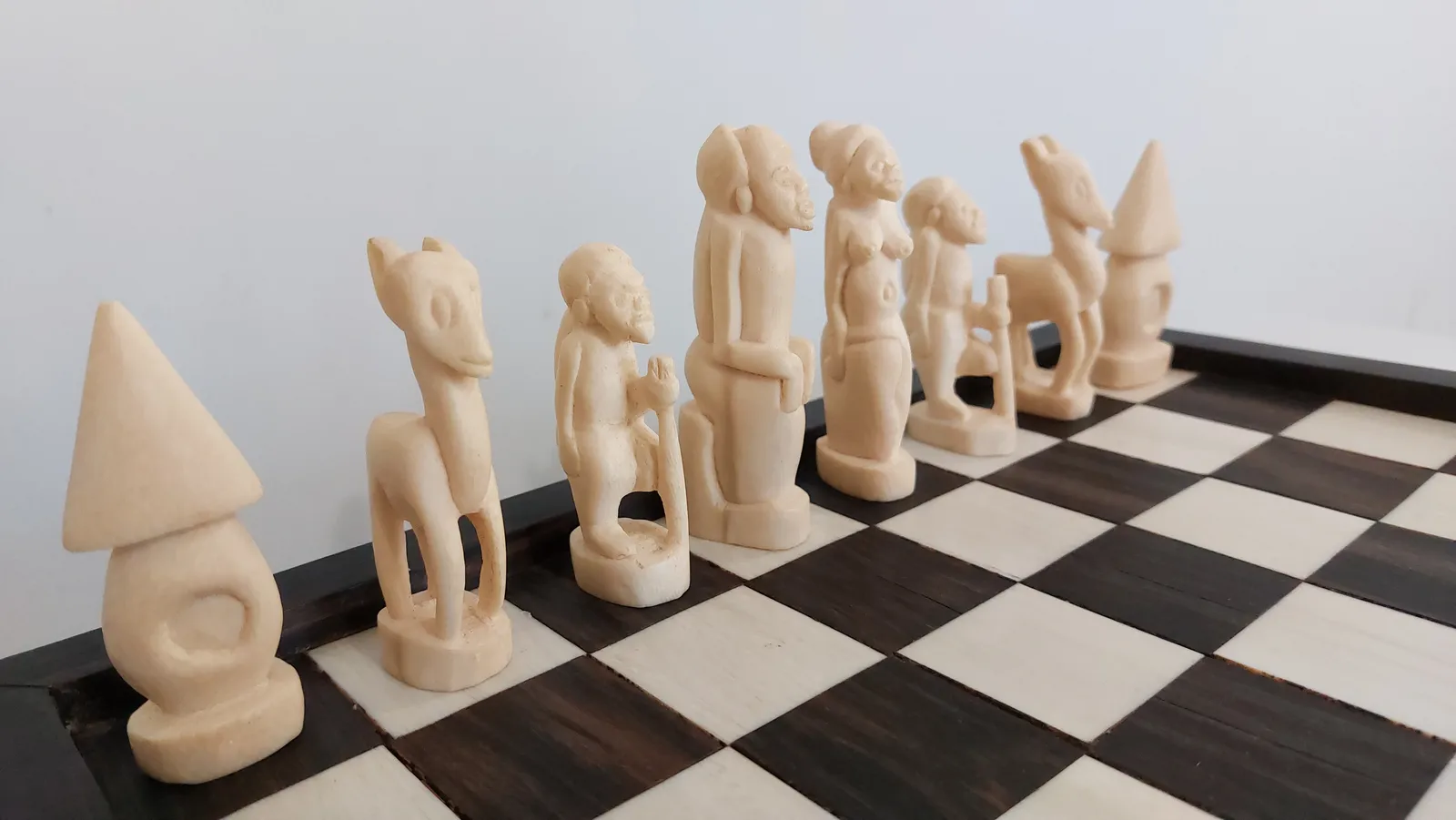
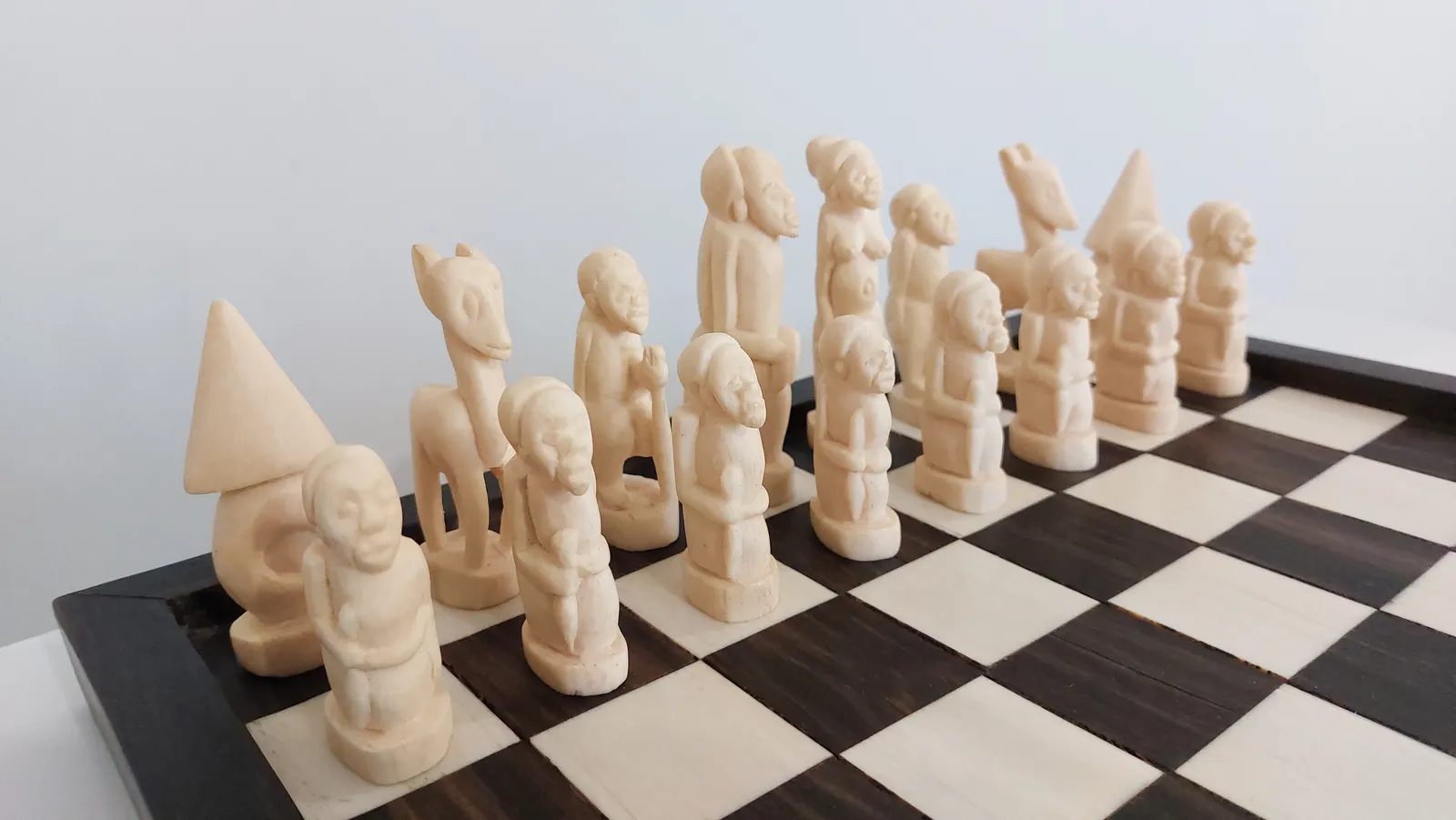
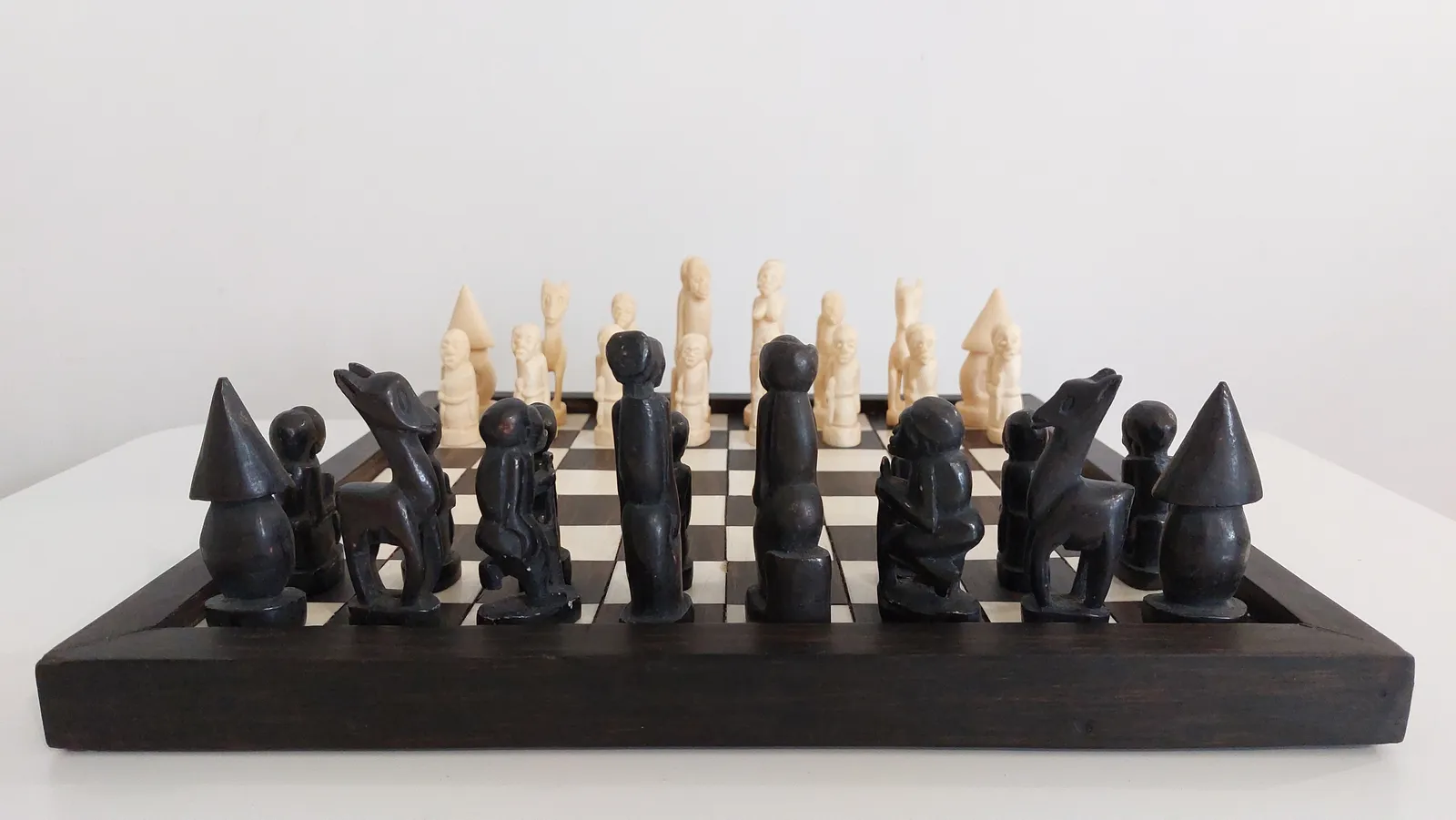
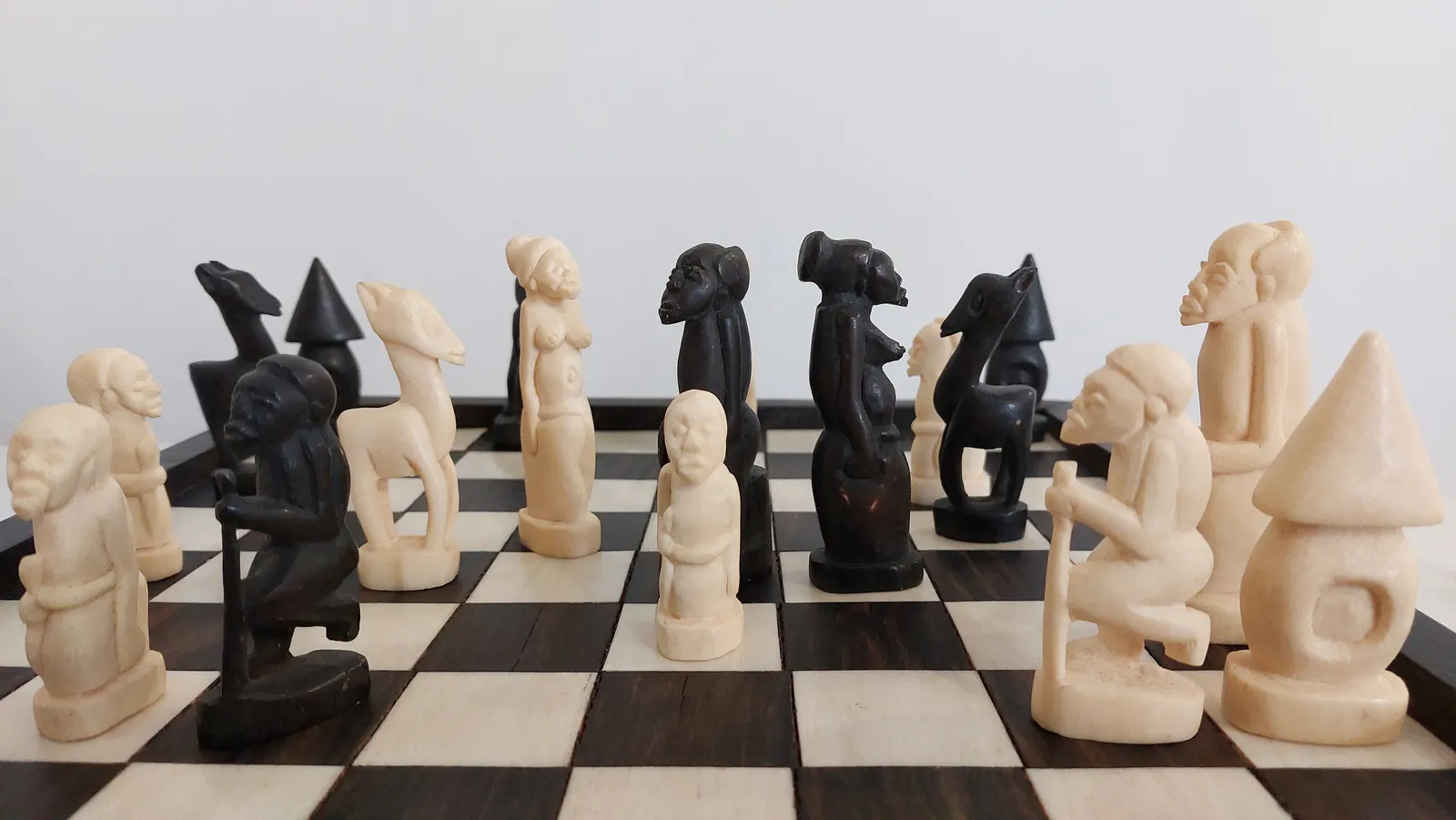
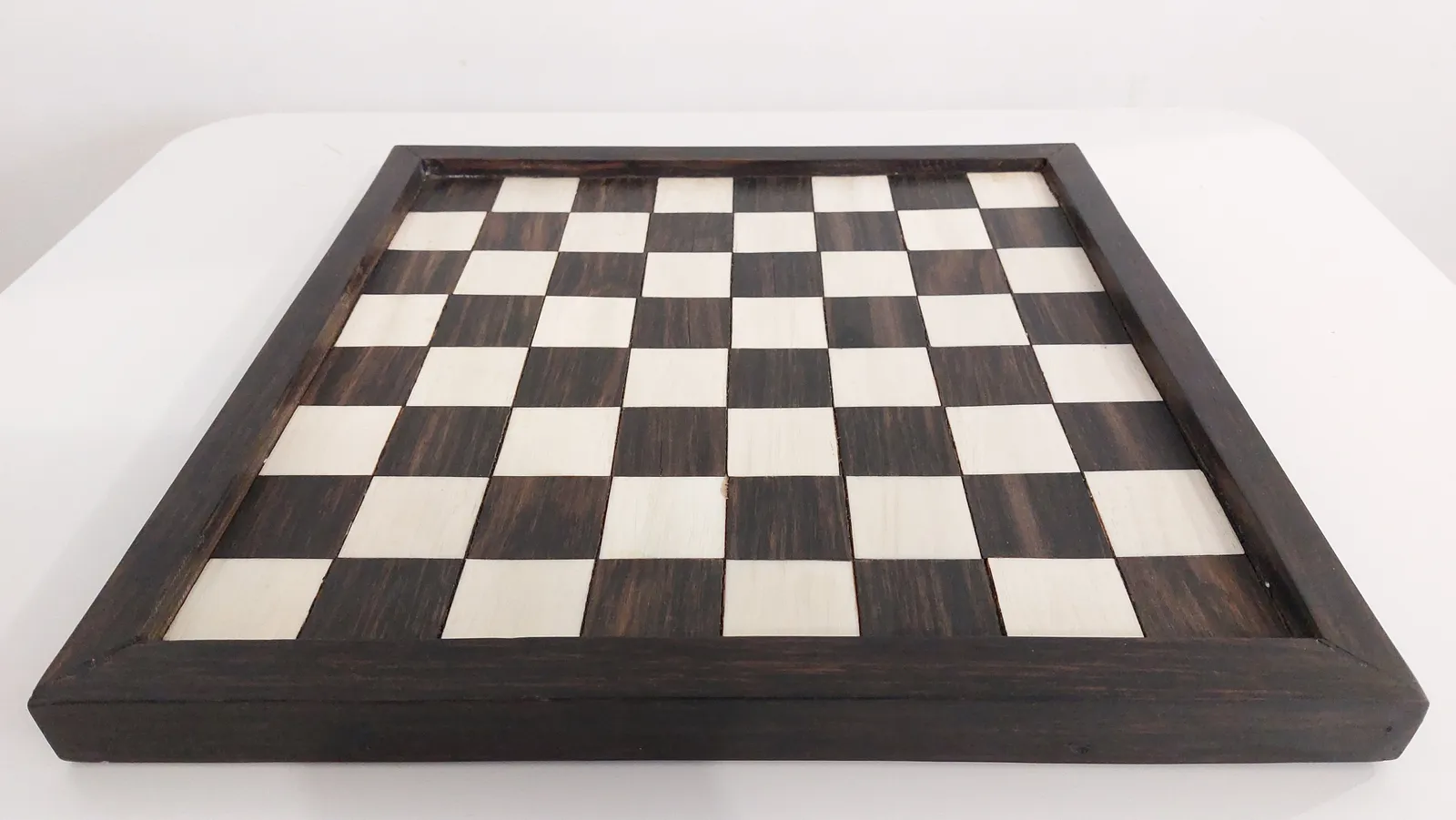
Noble South African chess set in bone and ebony
Noble South African chess set in bone and ebony
A refined African chess set, made in South Africa in the 1970s.
Not only are the pieces made of noble bone, but the board, crafted from genuine ebony wood, also features bone squares.
The set is also quite large for an African bone set.
The king stands 9 cm tall.
The board measures 34.5 x 34.5 cm.
Most of the pieces are represented by figures, with detailed faces, weapons and hair carved in bone. The king stands out with a partially bald forehead to illustrate his more venerable age; he is seated on a throne, as is often the case in African sets. The queen features a bare torso and a bun hairstyle.
The bishops are represented by figures standing on staffs in a symbolic posture, one foot raised as if to suggest movement.
The knights are the most interesting pieces in this set. It is not unusual for knights to be represented by gazelles in African sets, but it is rare for them to have fully carved bodies. This attribute greatly contributes to the beauty and rarity of this set.