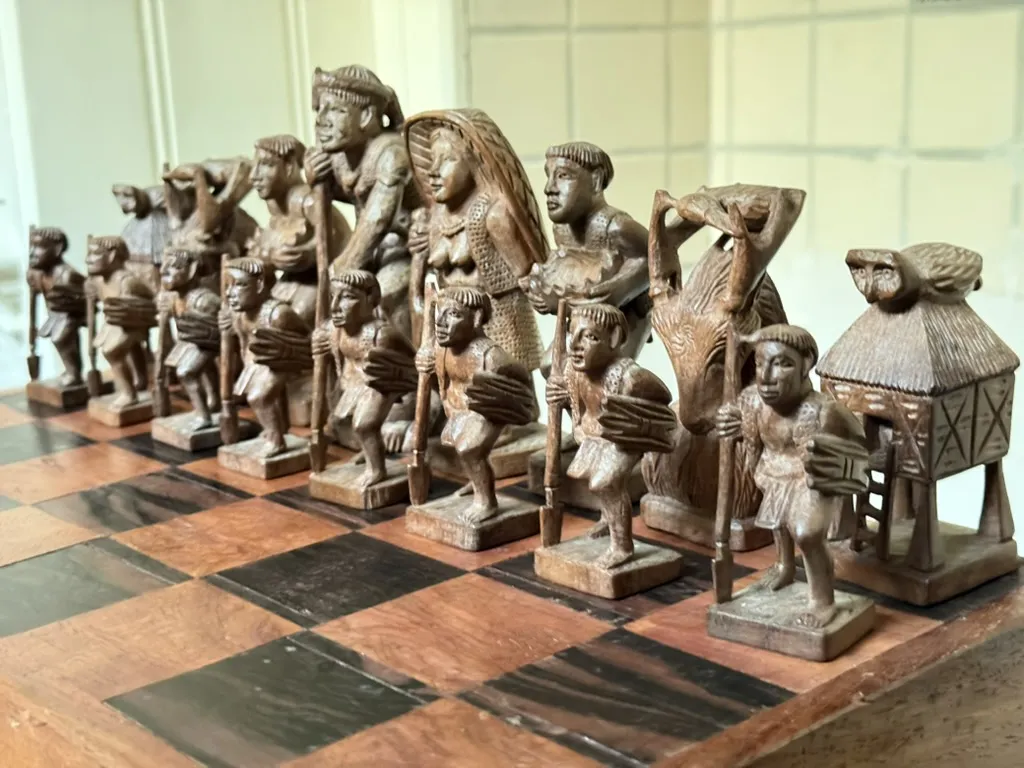
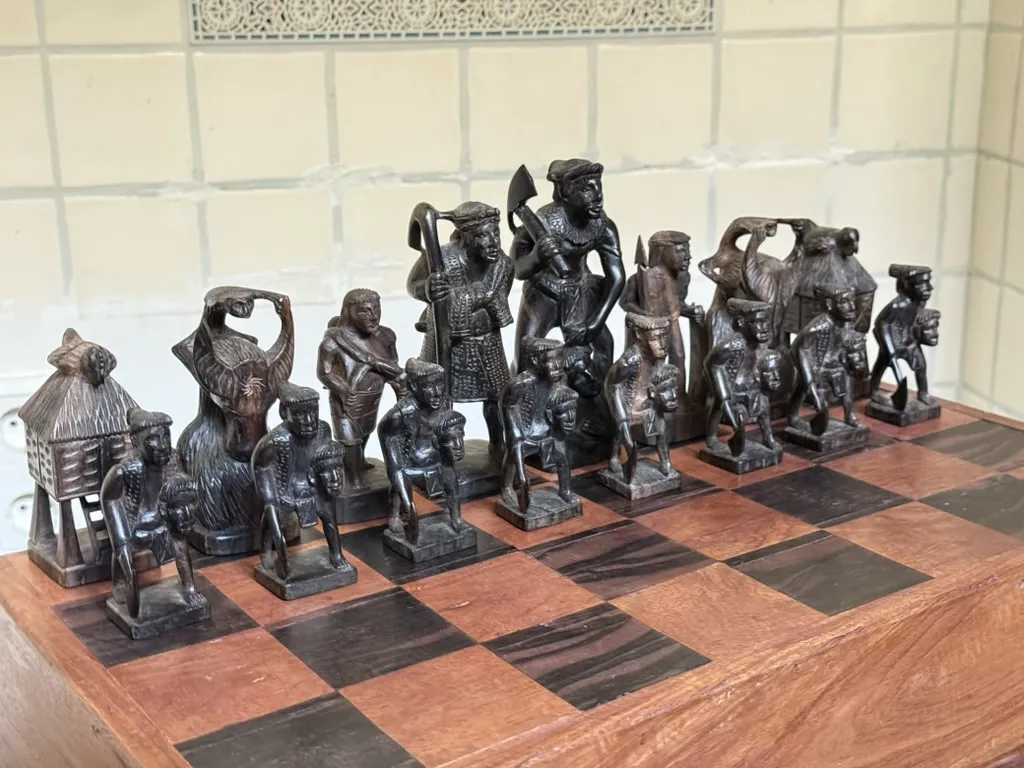
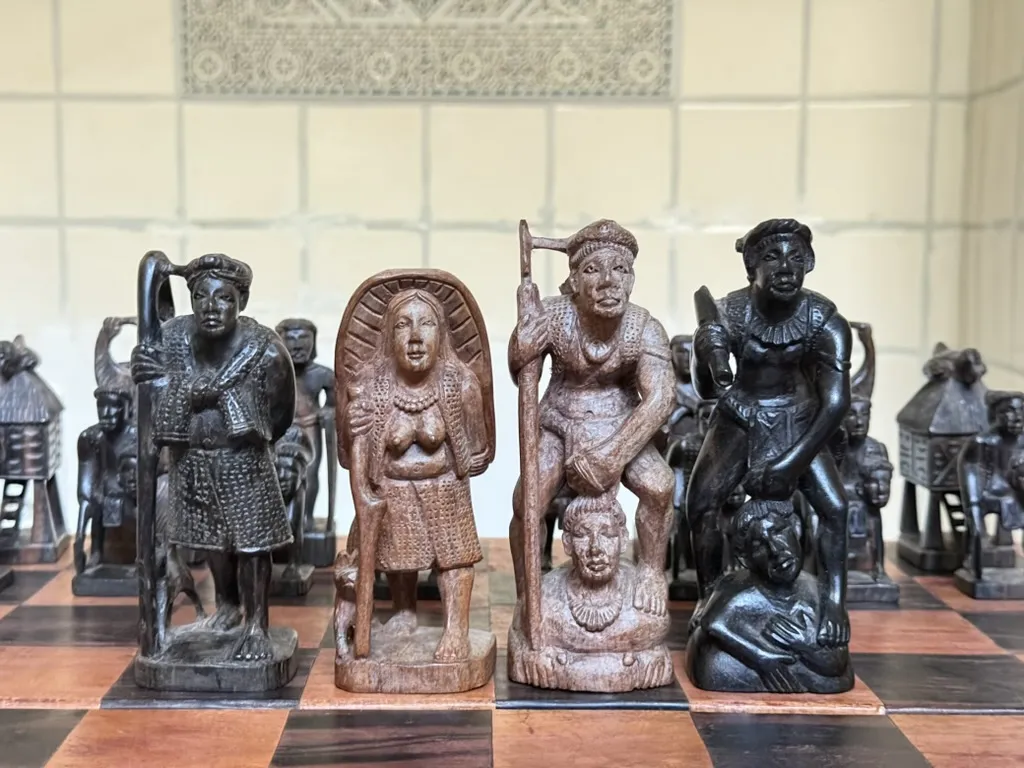
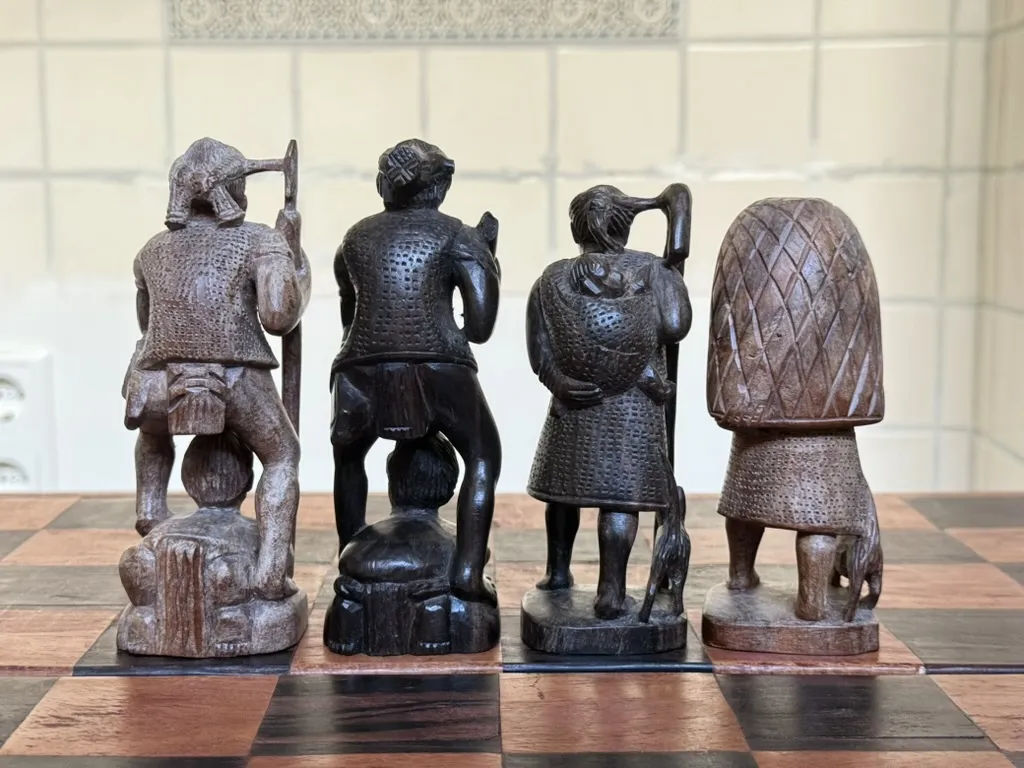
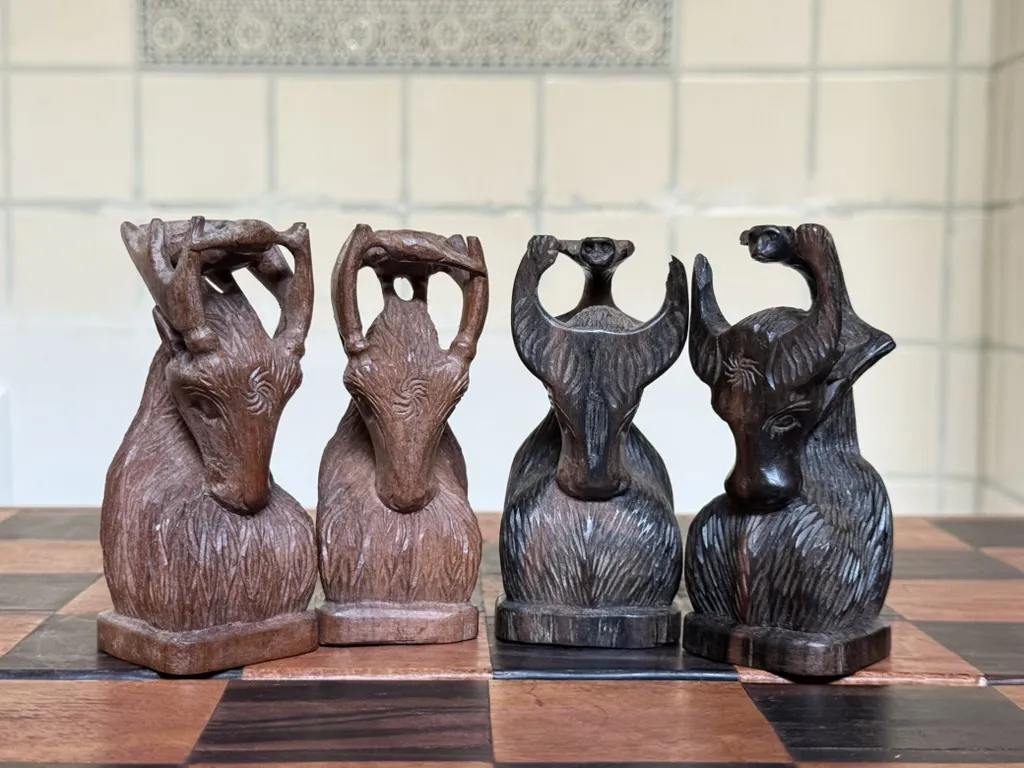
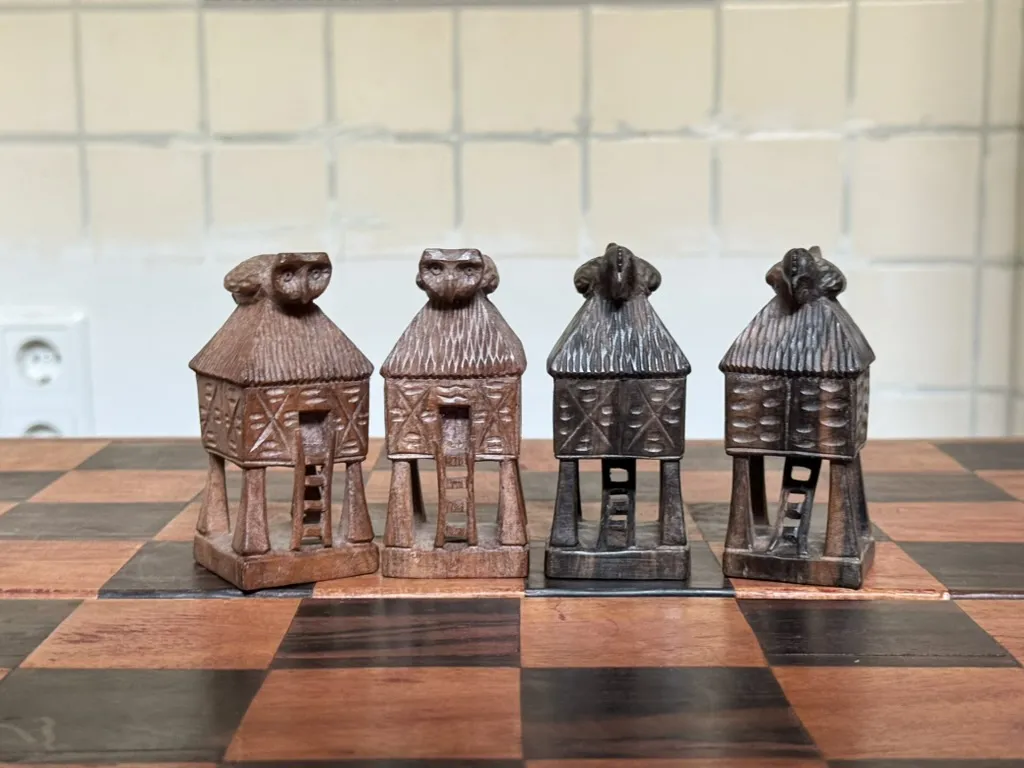
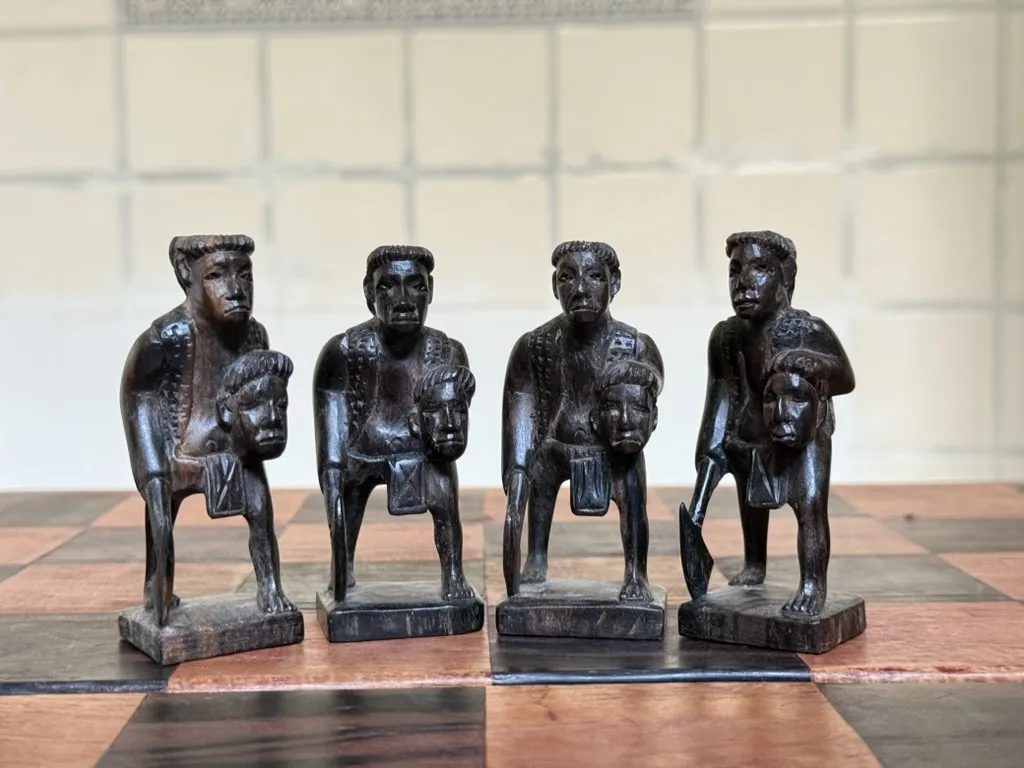
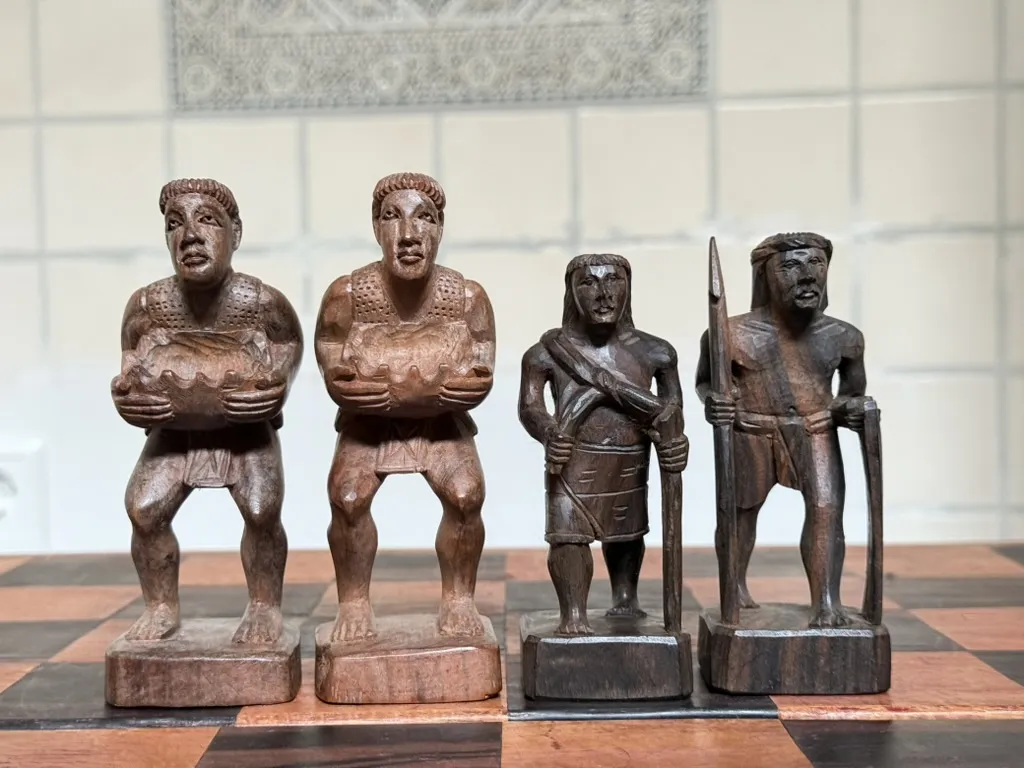
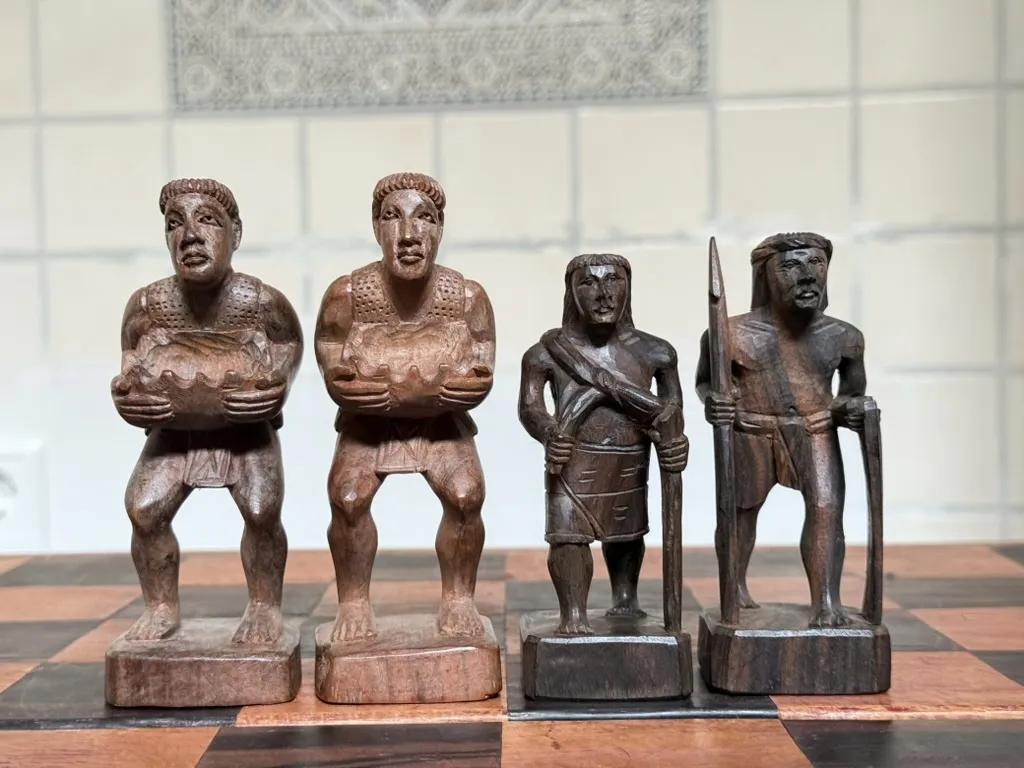
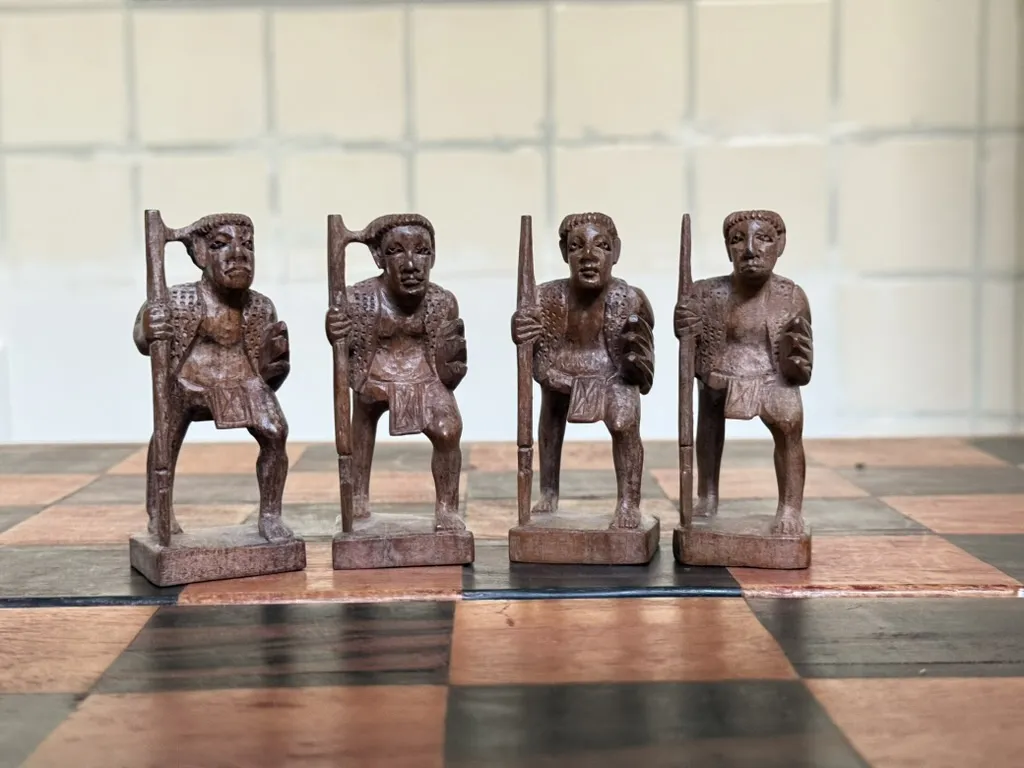
To this day, chess sets are carved at the rice terraces of Banaue, Philippines. However, very few can match the quality of the sets made in the 20th century by Emiliano Blass. Unfortunately he passed away in 2014, but left behind some of the most impressive tribal sets ever made. I am very grateful that I could acquire a set and learn more about his work through a family member, who was able to identify the set in this post as an original Blass.
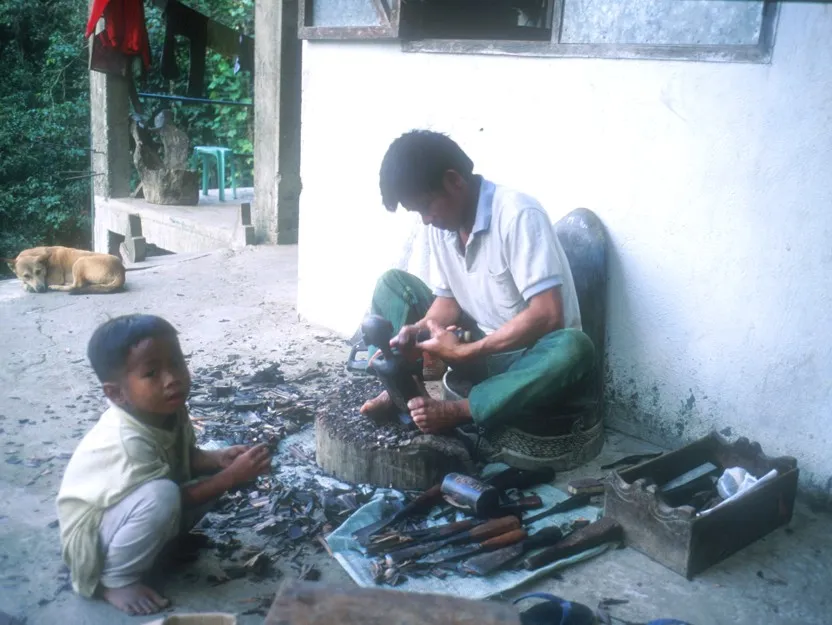
The Ifugao village of Batad sits among the rice terraces near Banaue. Built by hand 2,000 years ago, the Ifugao refer to the terraces as “stairways to heaven”. Batad Pension and Restaurant is located on the Chungchung hillside. It provides a stunning view of the rice terraces that lay beyond. Originally a souvenir shop, it was established by Emiliano Blas, the first wood carver in Batad, and his wife Mary in 1998. When the building still housed the souvenir shop, Emiliano could often be found outside, carving a Bulul (Ifugao rice god) or working on one of his characteristic chess sets.
Blass’ sets are recognisable by the individuality of every piece. His view was that the pawns should have different faces because they all represent a different person. He used Kamagong hardwood for both sides. The dark pieces are made of pure black or a mix of black and brown. The light side is made of the brown sapwood “sangilu”. The board is made of Kamagong and Nara wood. Due to the attention to detail, Blass would only produce around three of these chess sets per year. If you have seen similar sets before you may notice something unusual among the dark pieces in this set.
© Bram Ueffing