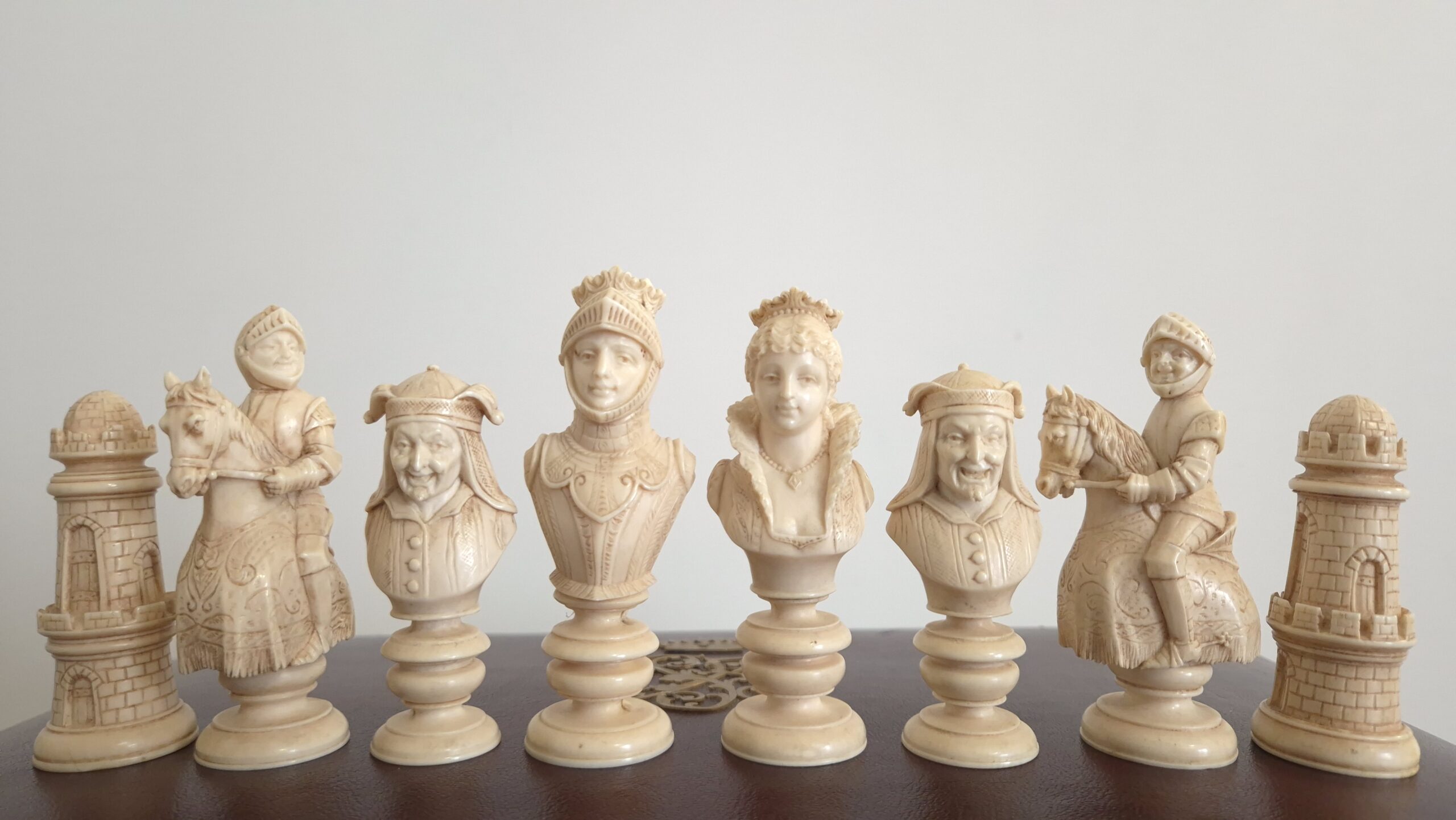
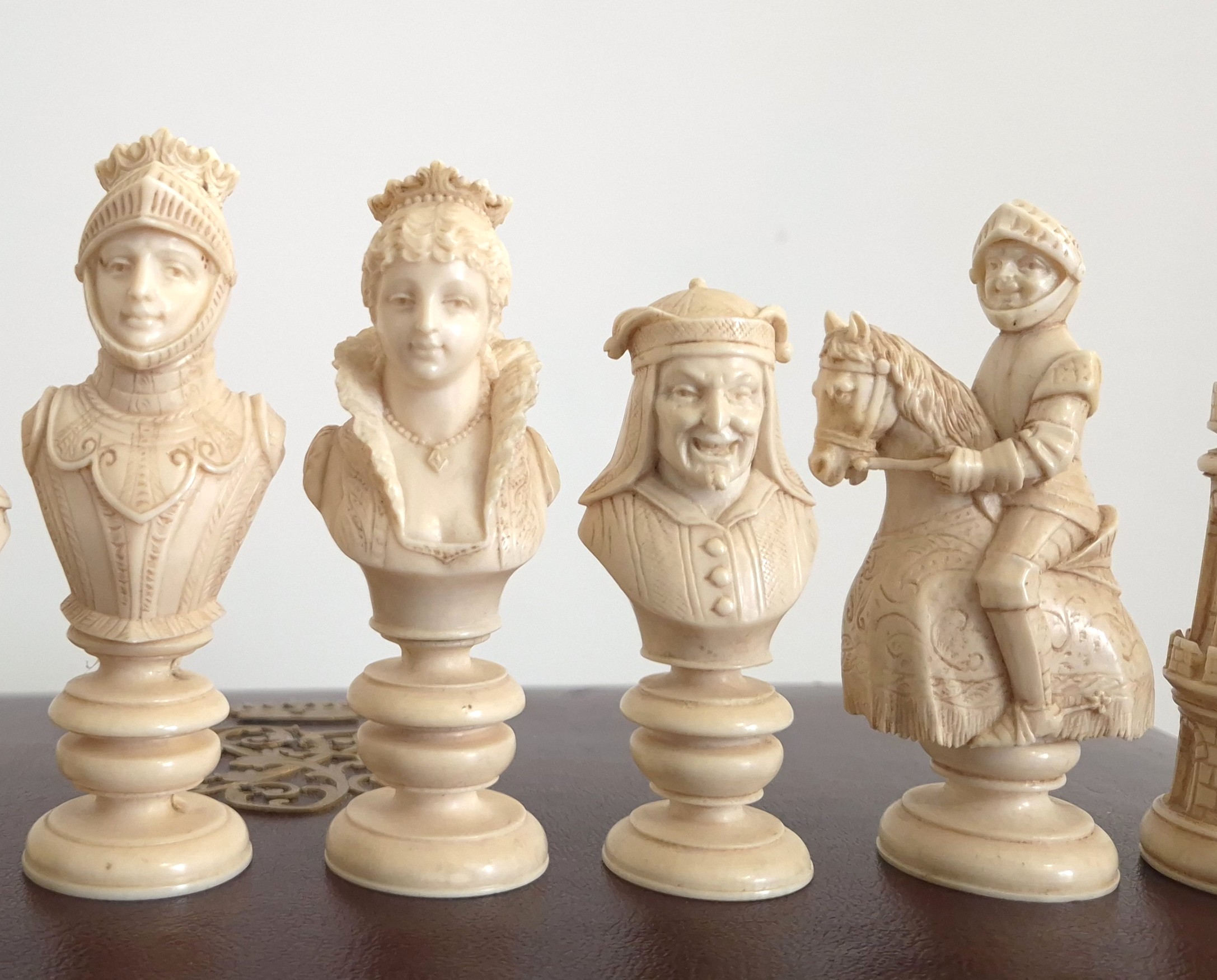
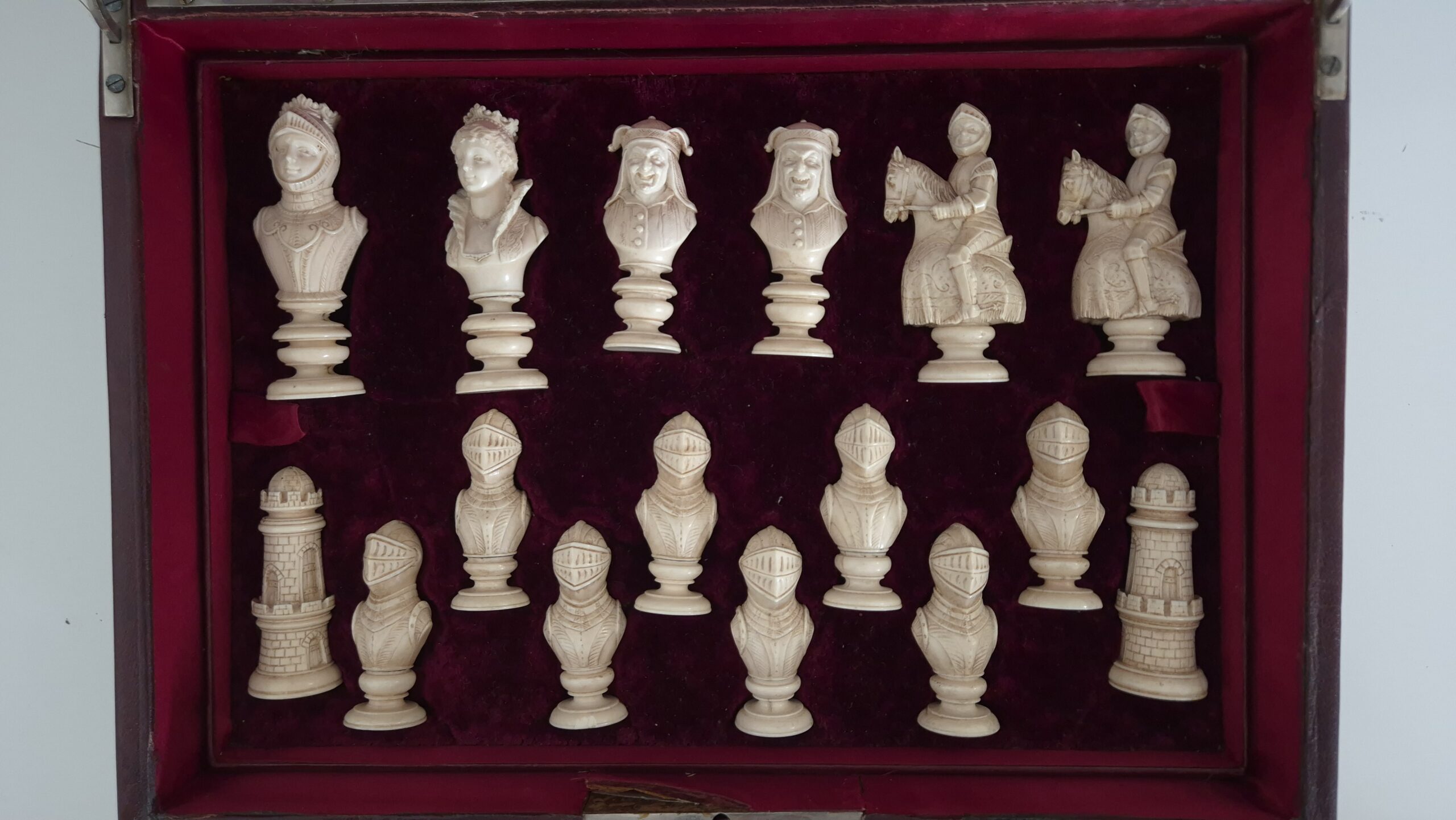
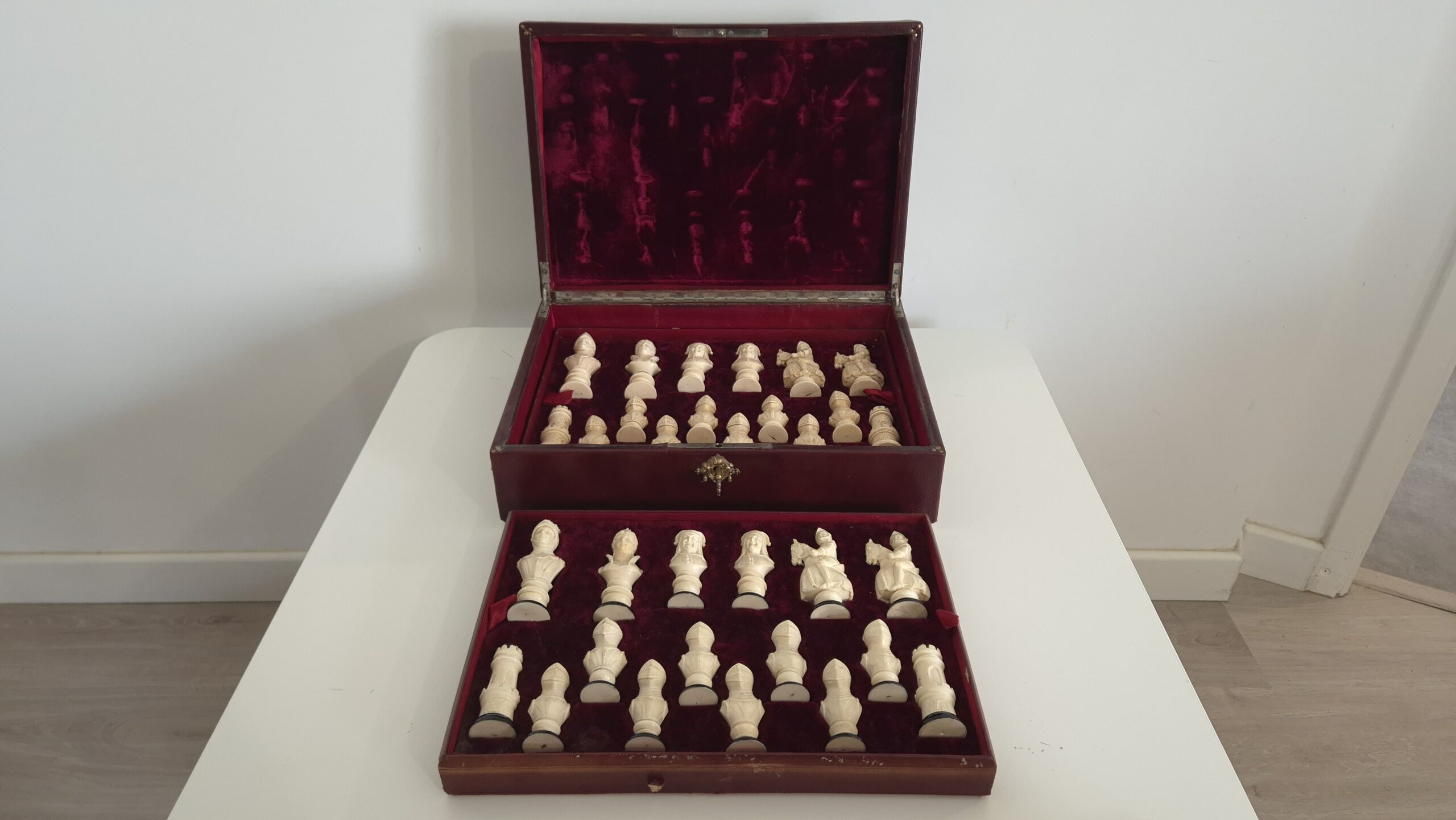
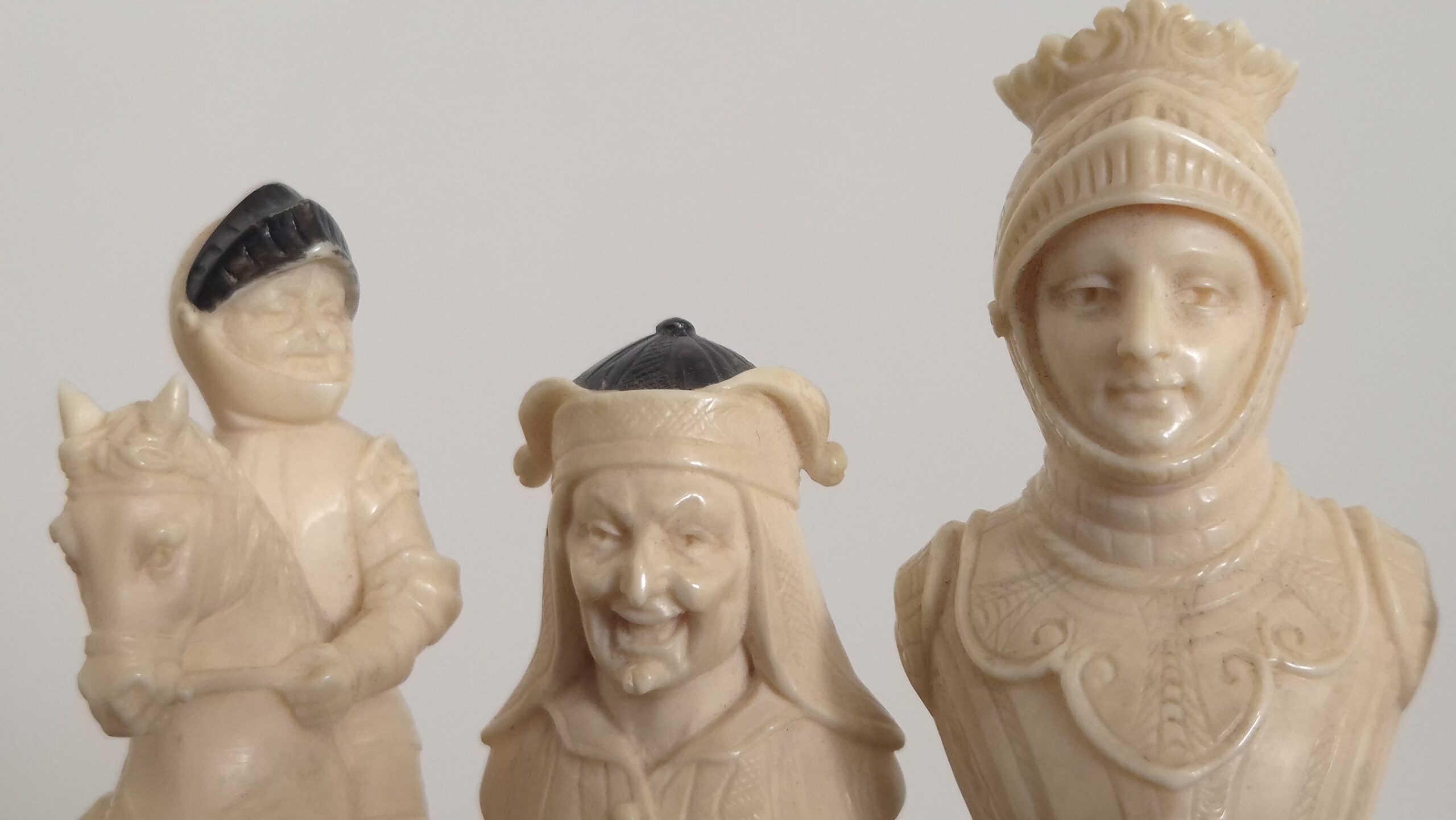
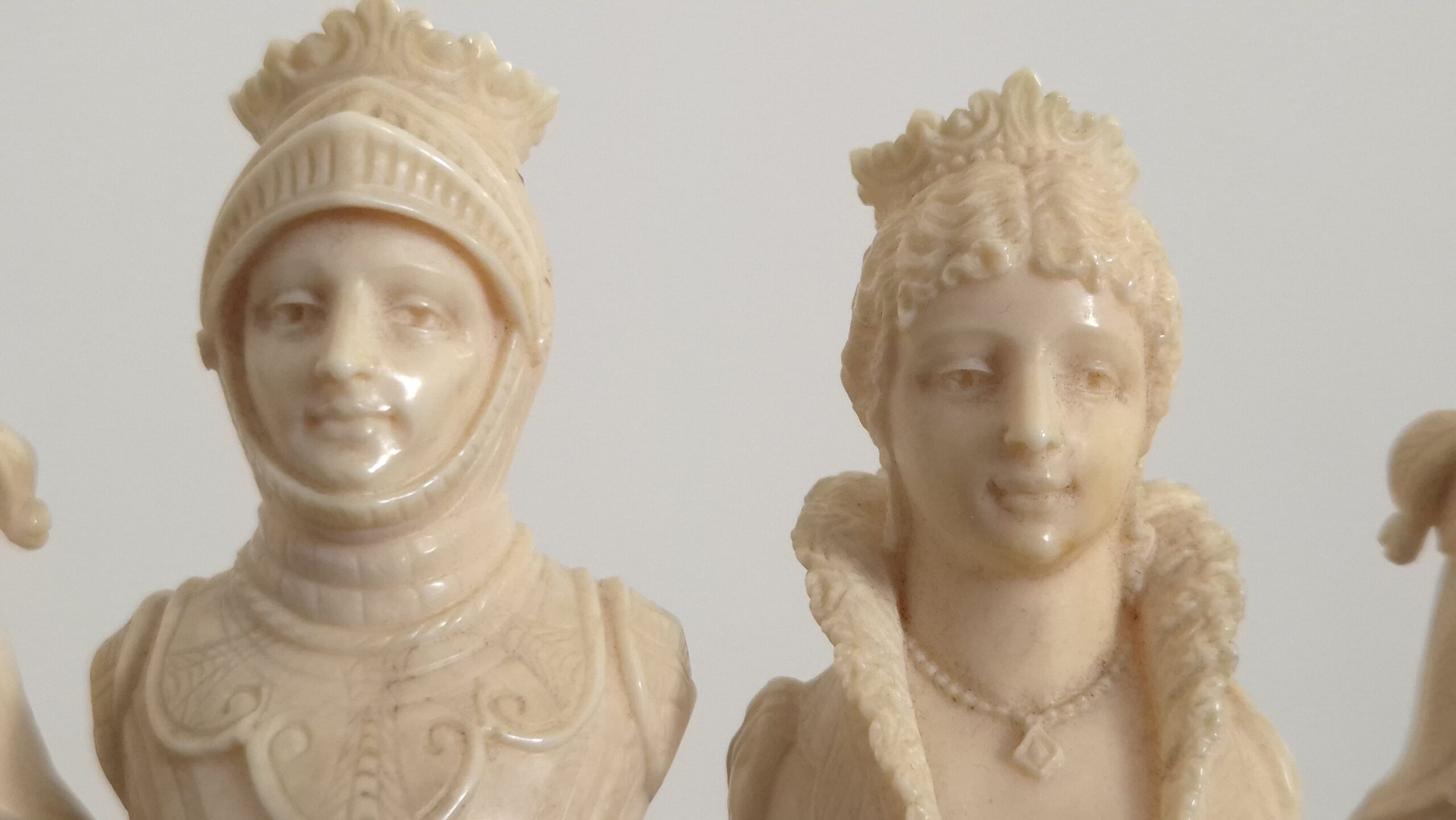
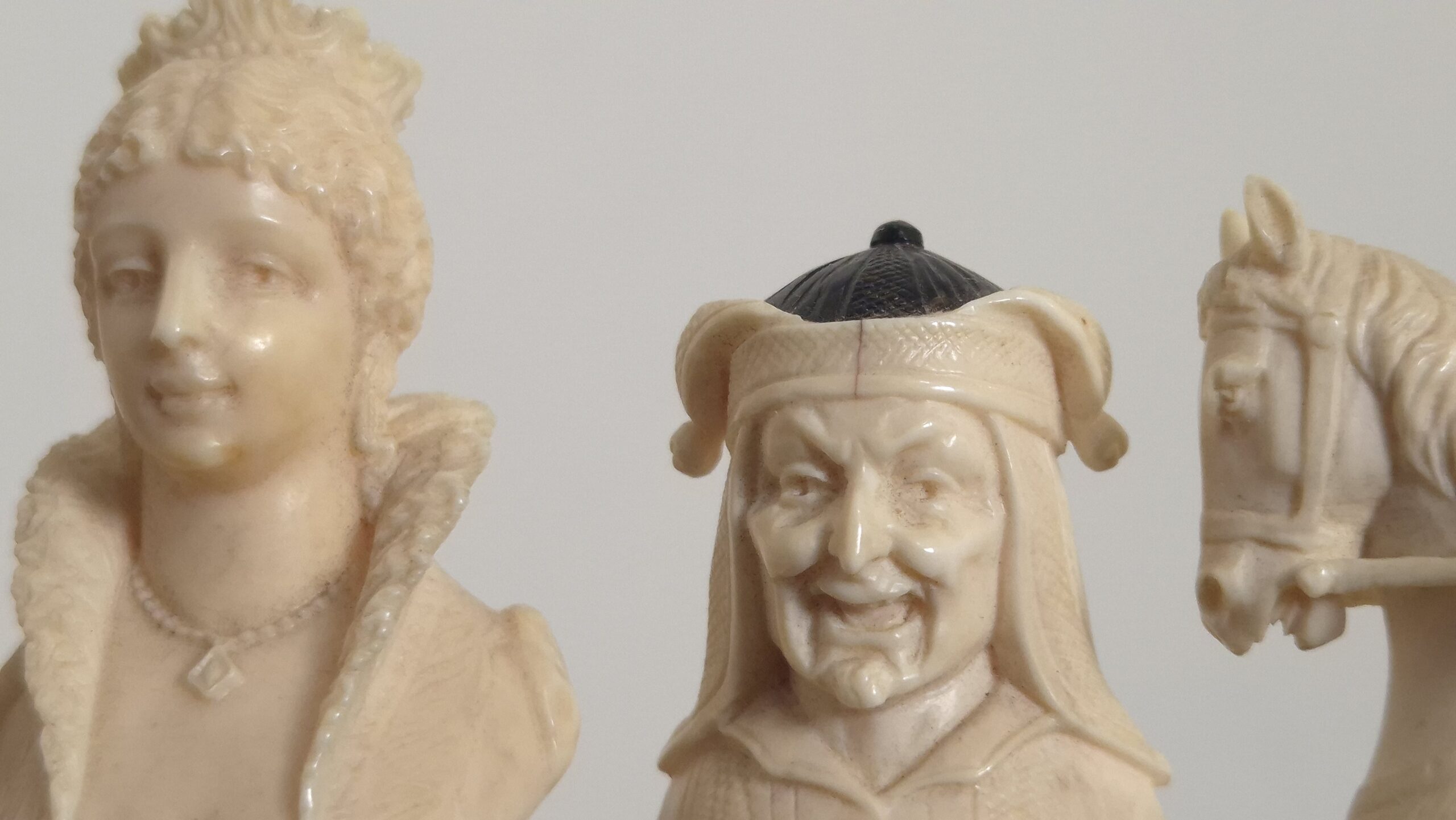
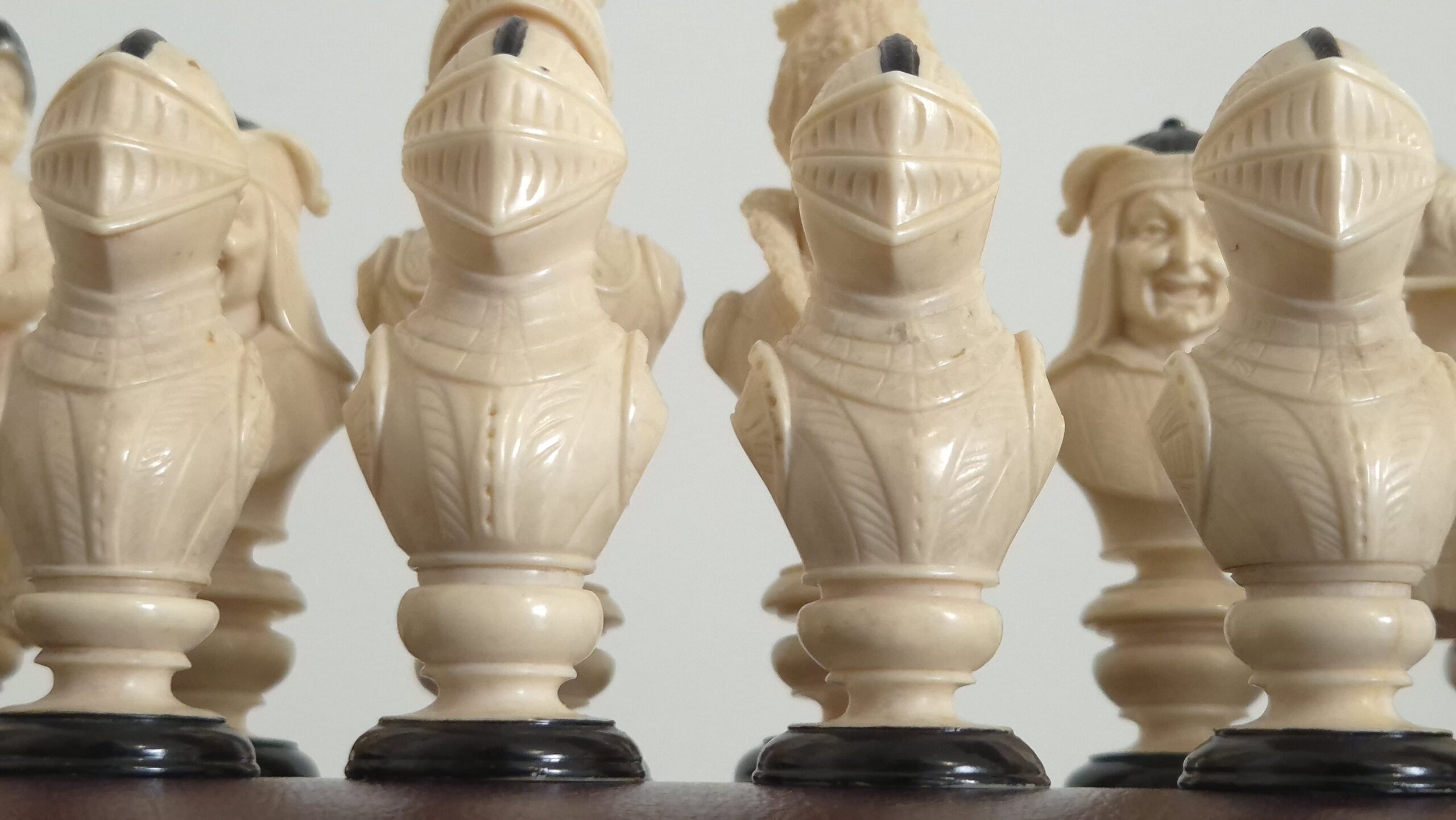
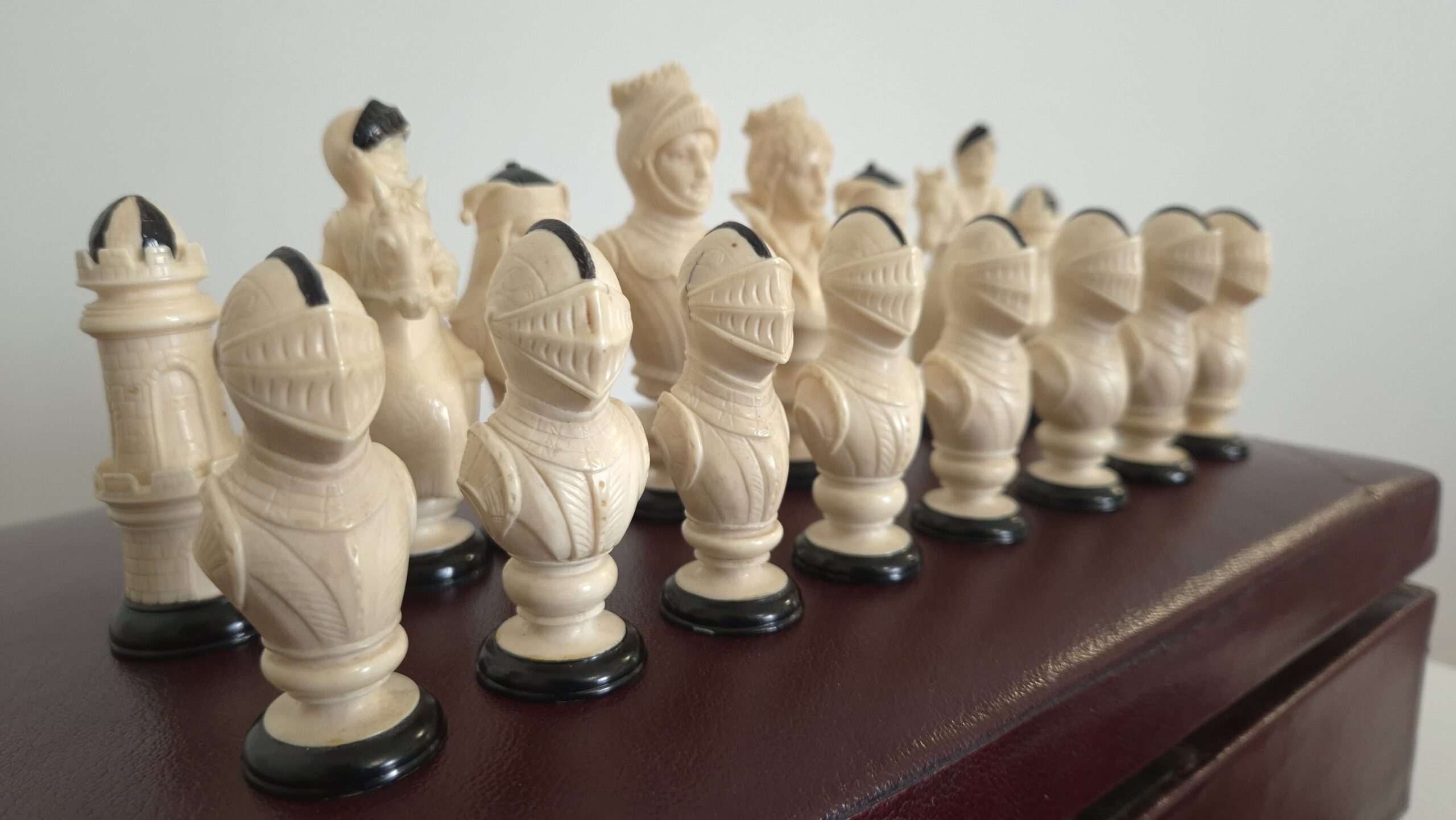
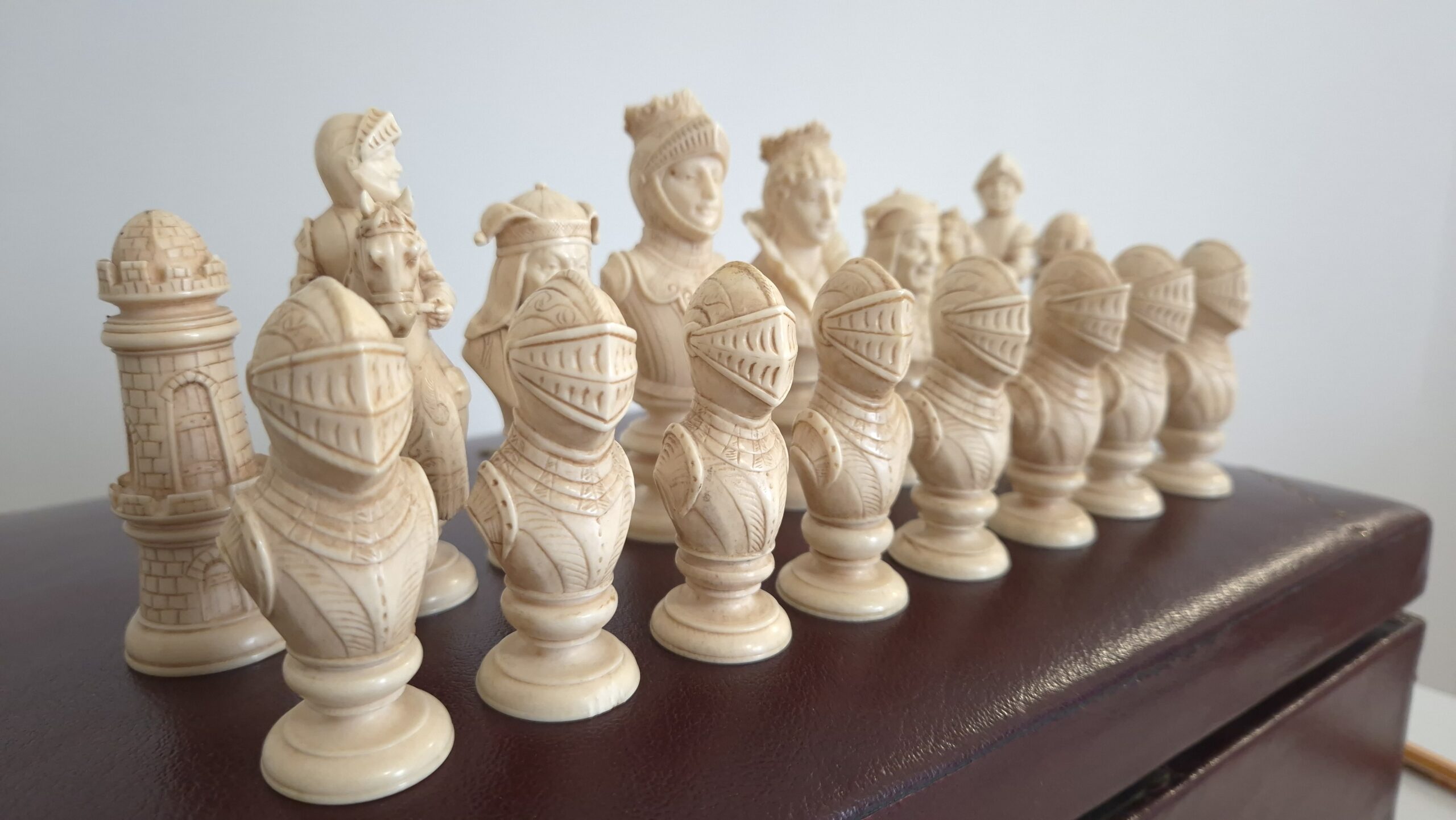
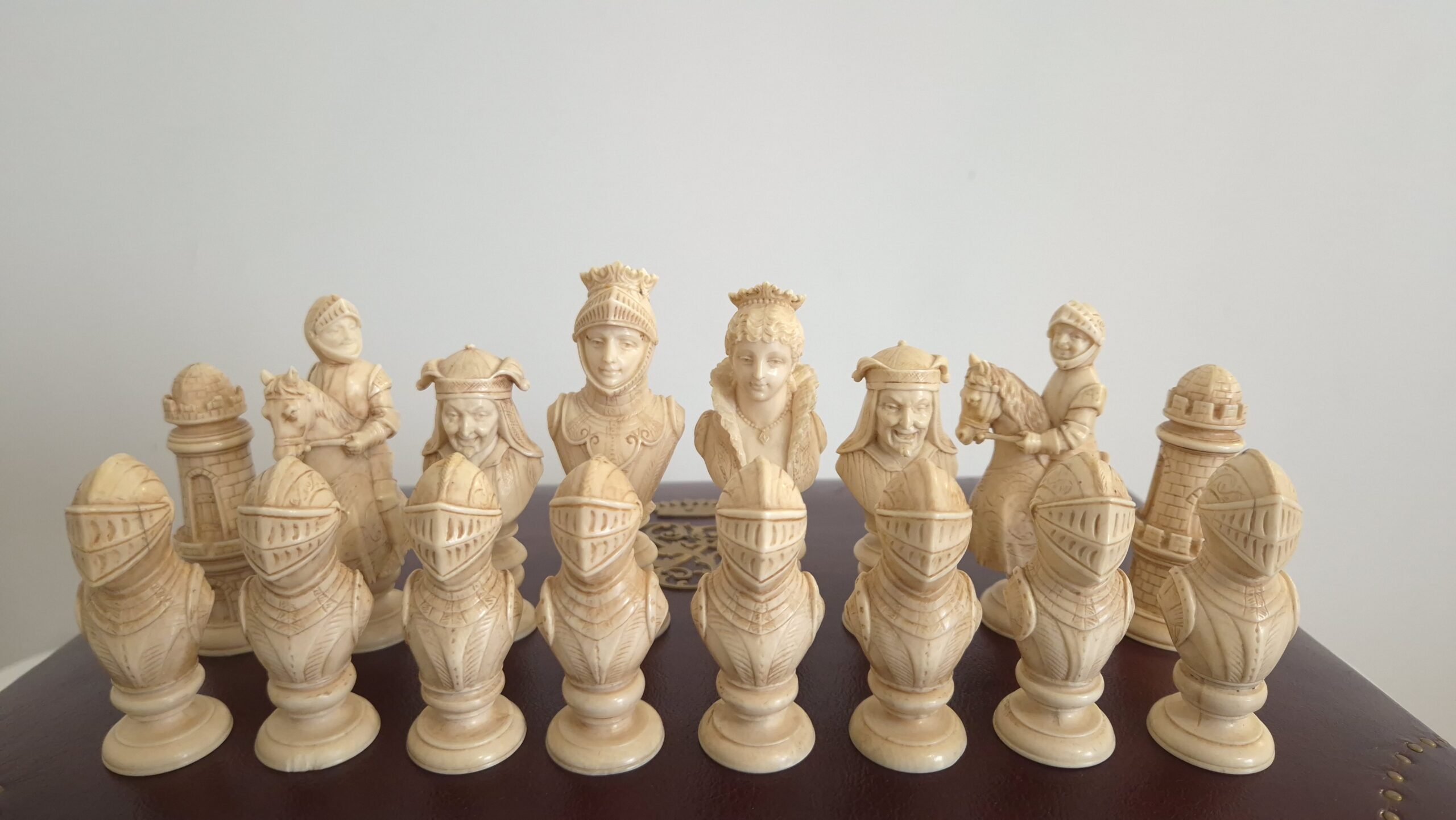
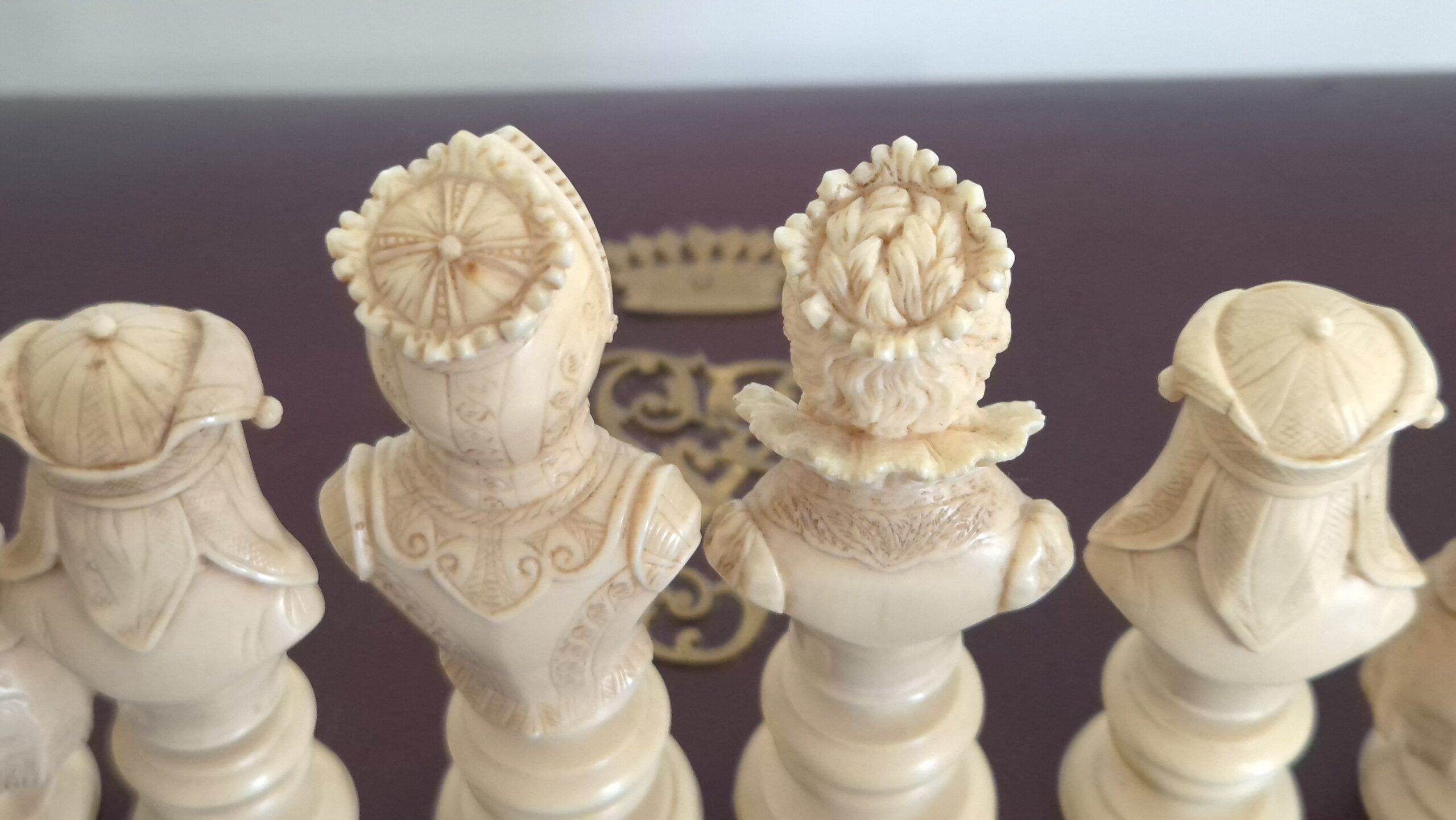
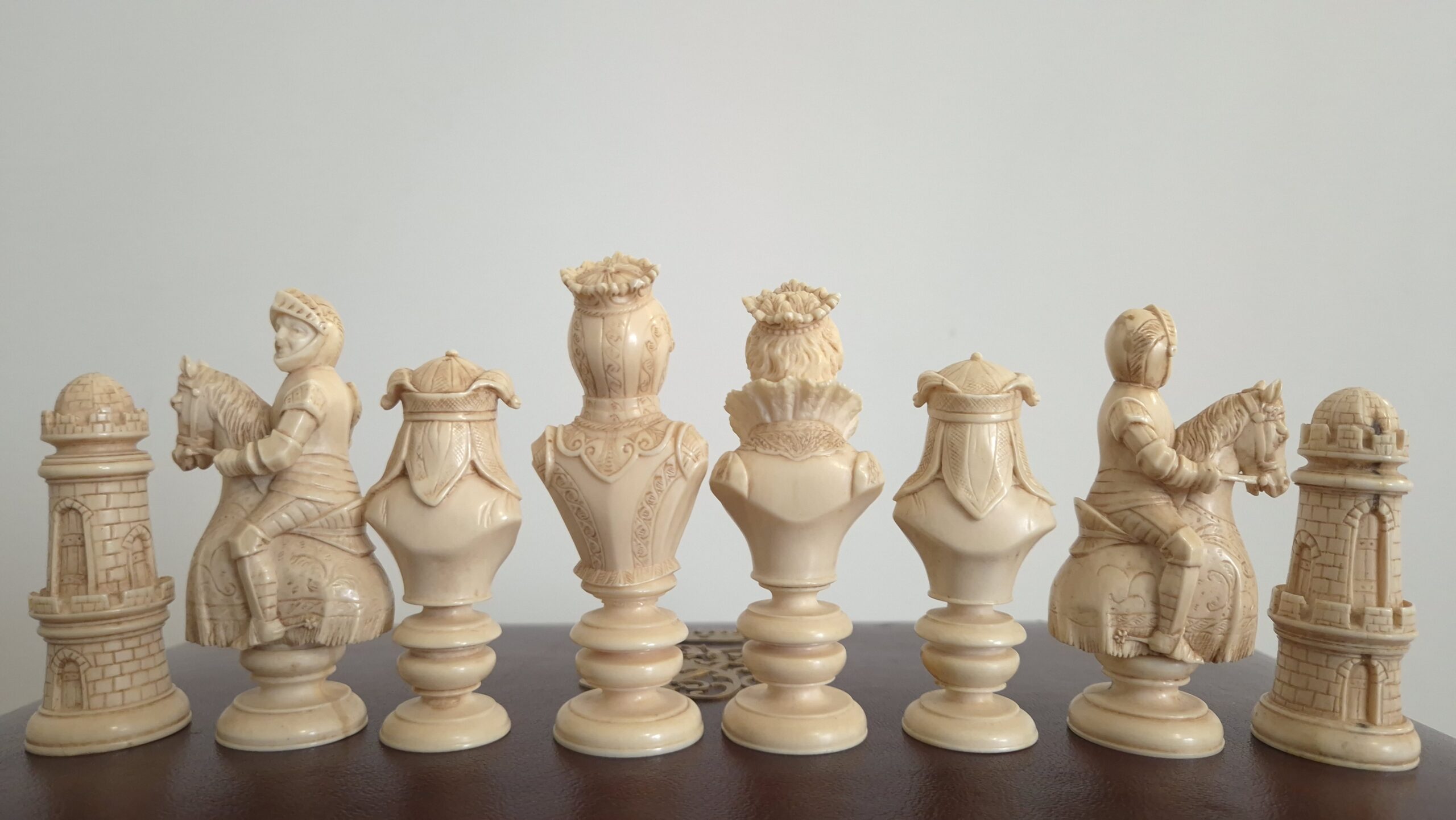
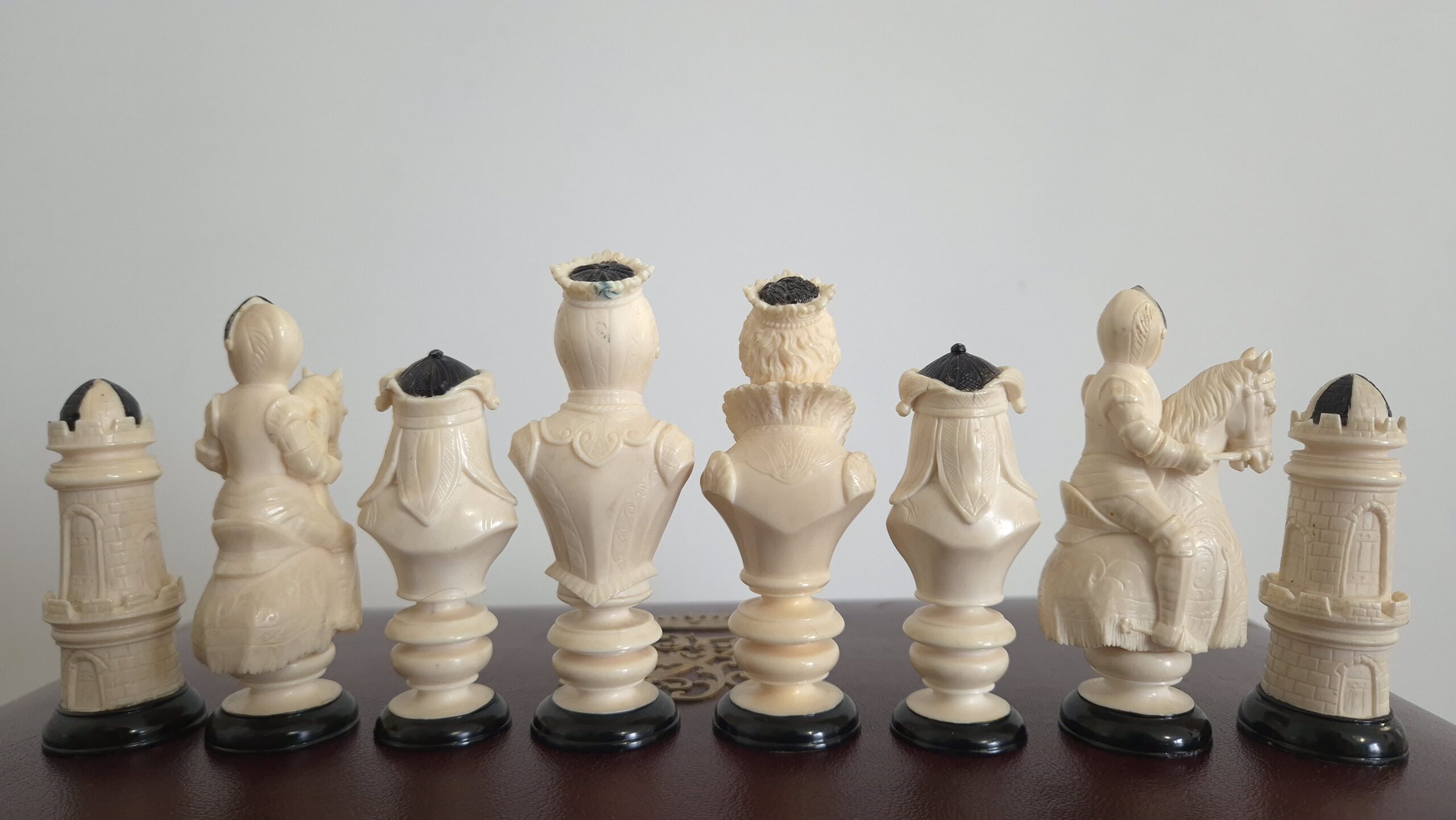
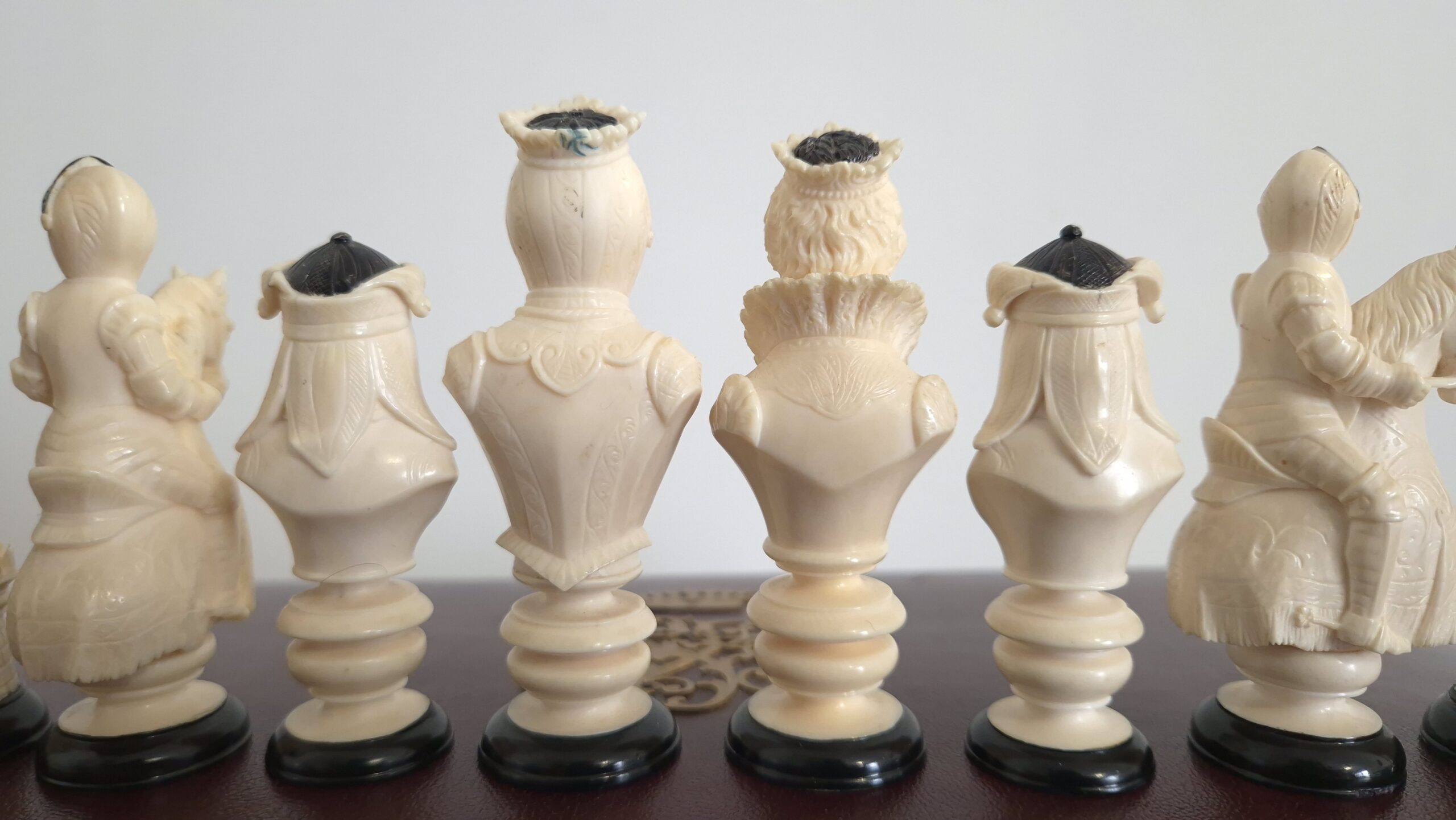
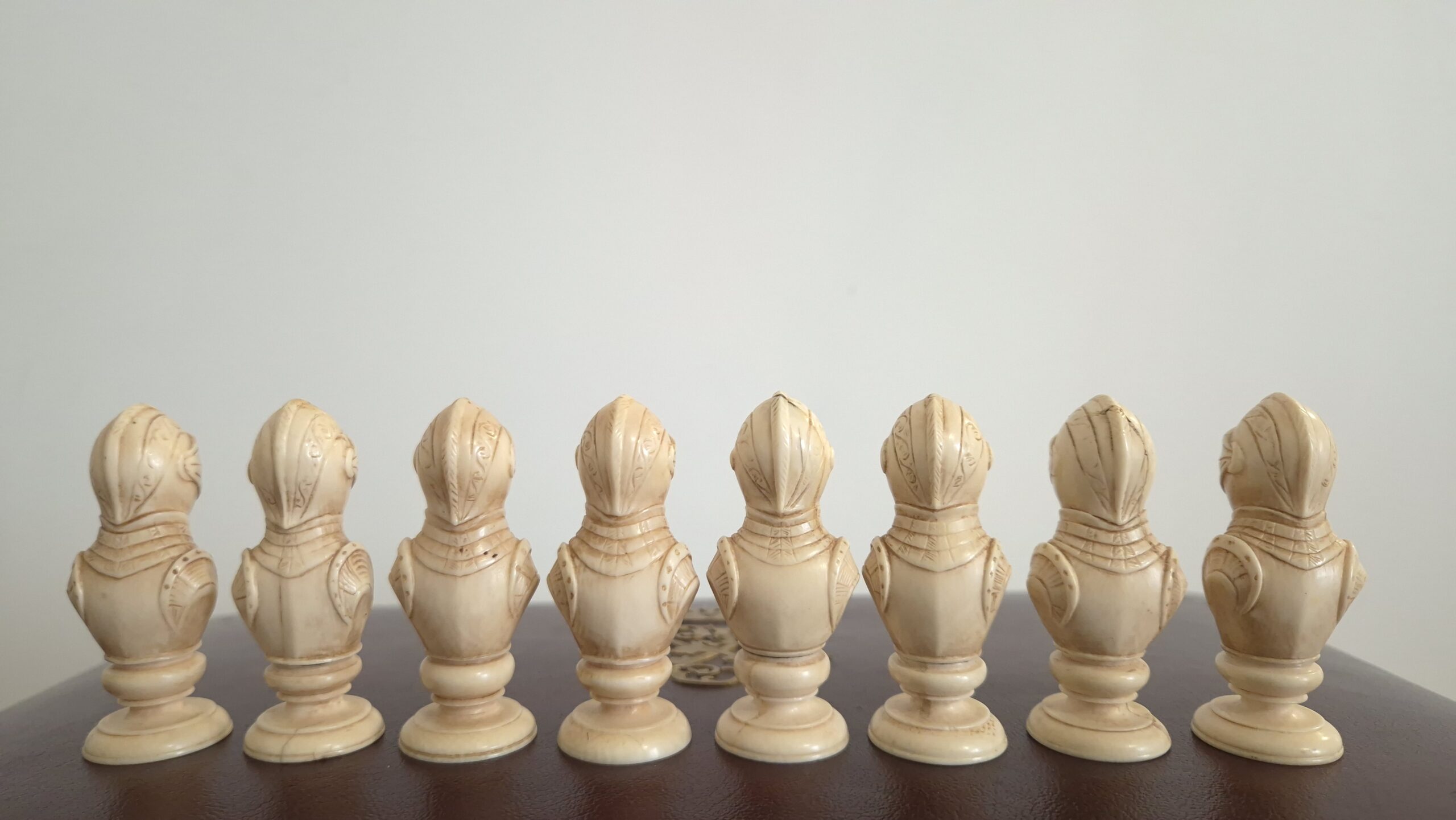
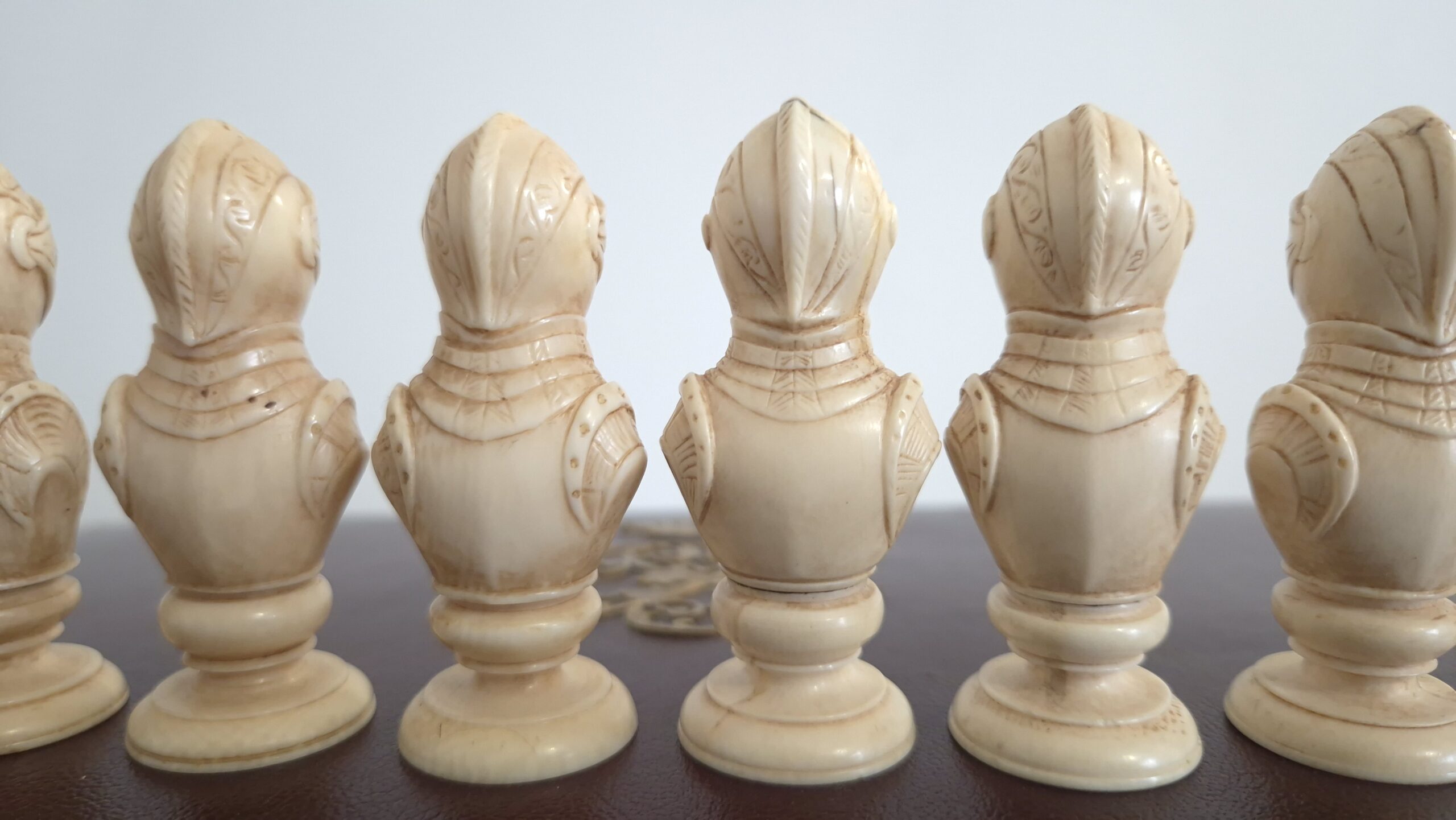
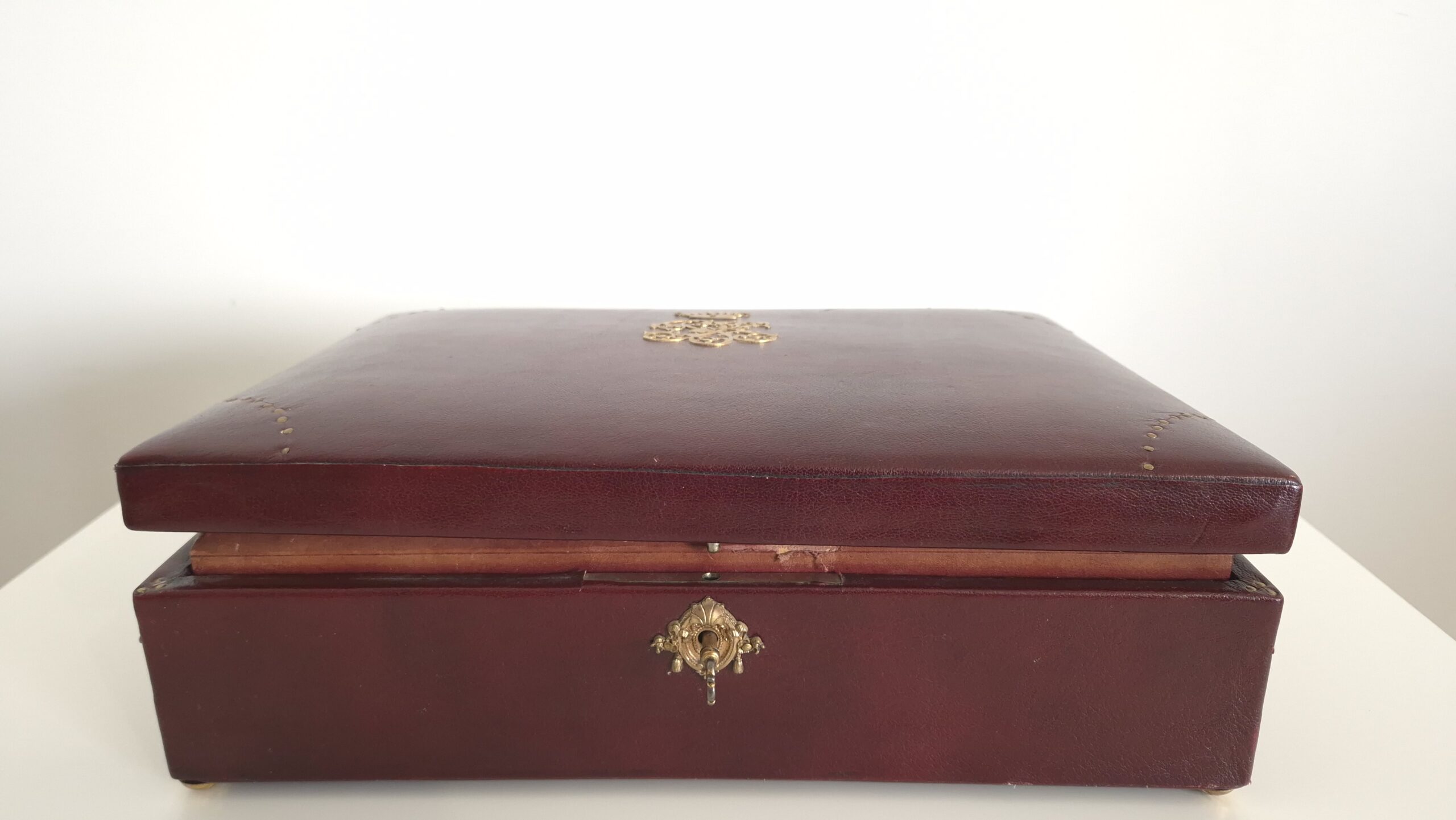
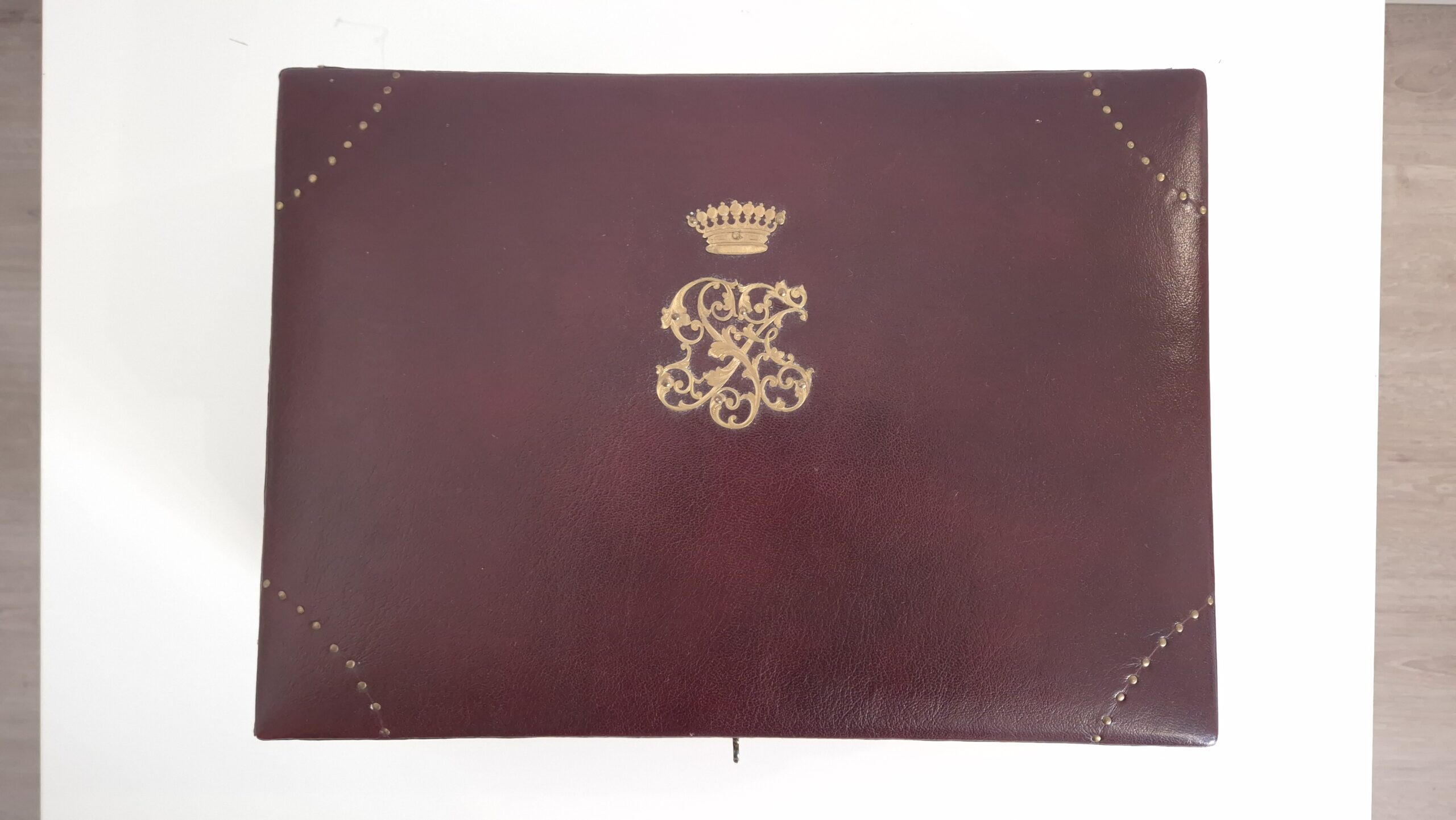
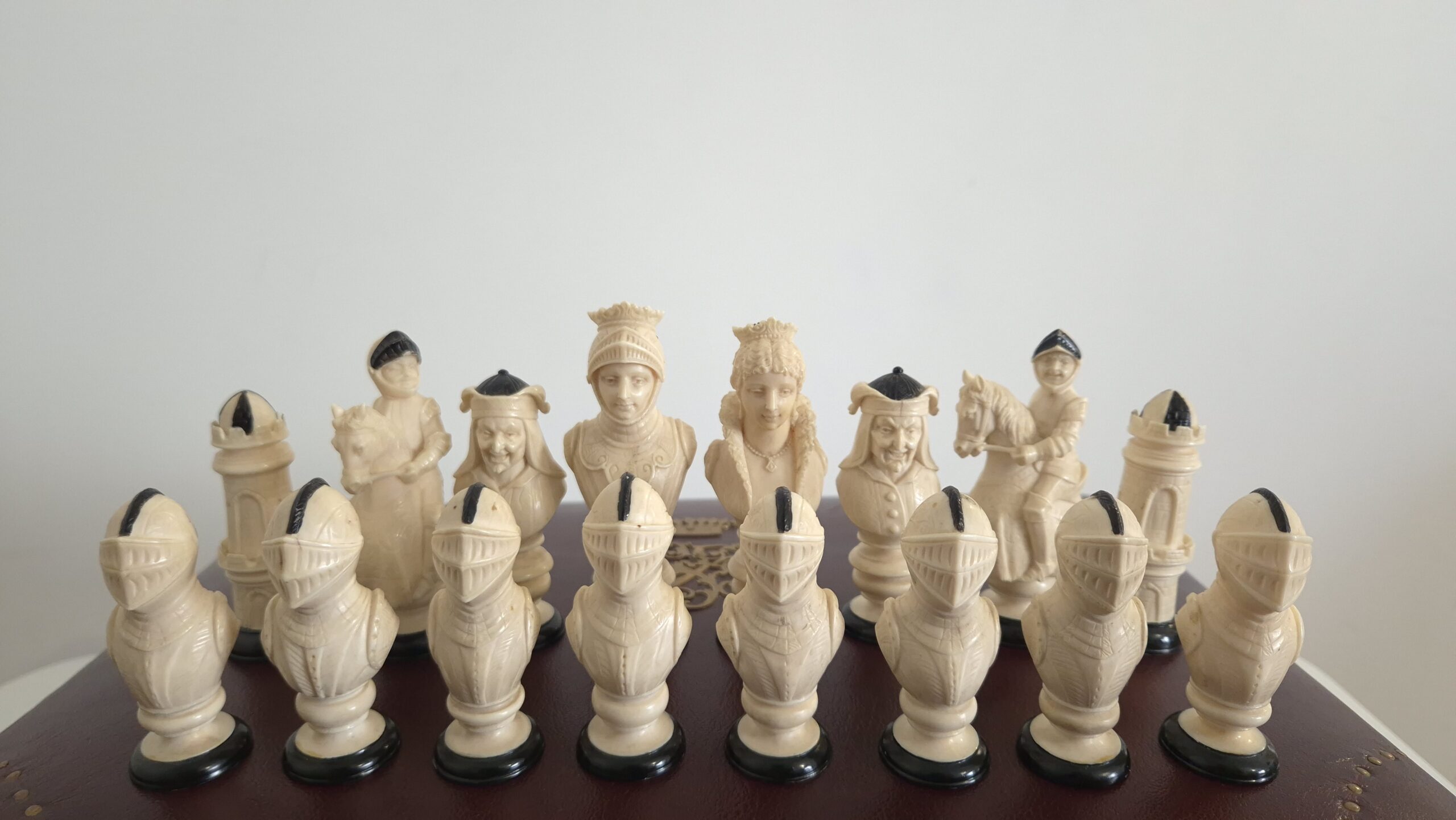
An antique 19th-century French chess set, it resembles a Dieppe set but apparently it is rather a set from the “Paris School” according to my research; these sets made at the time in the capital by artists and craftsmen are rarer and can be far more sophisticated than those from Dieppe.
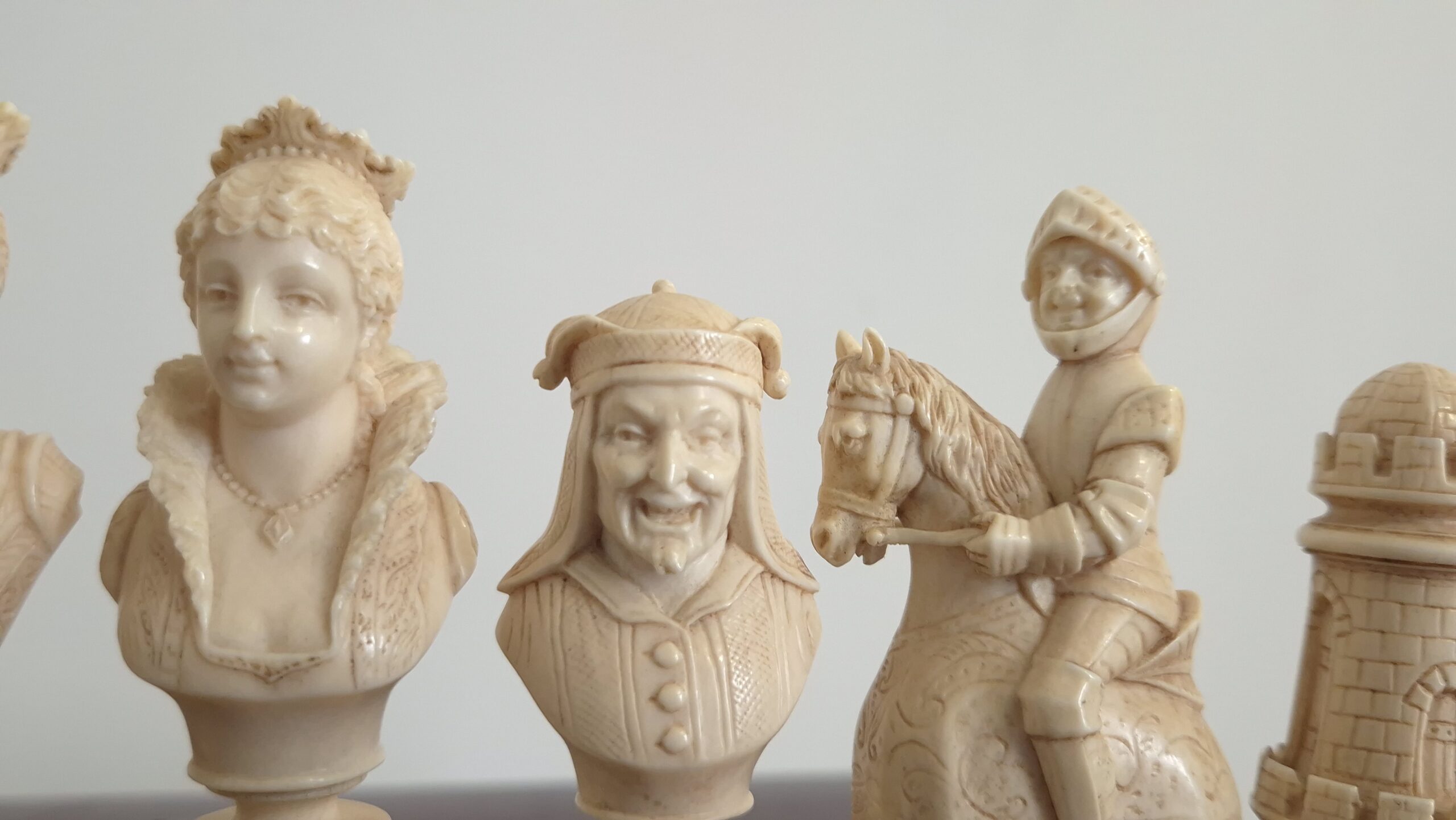
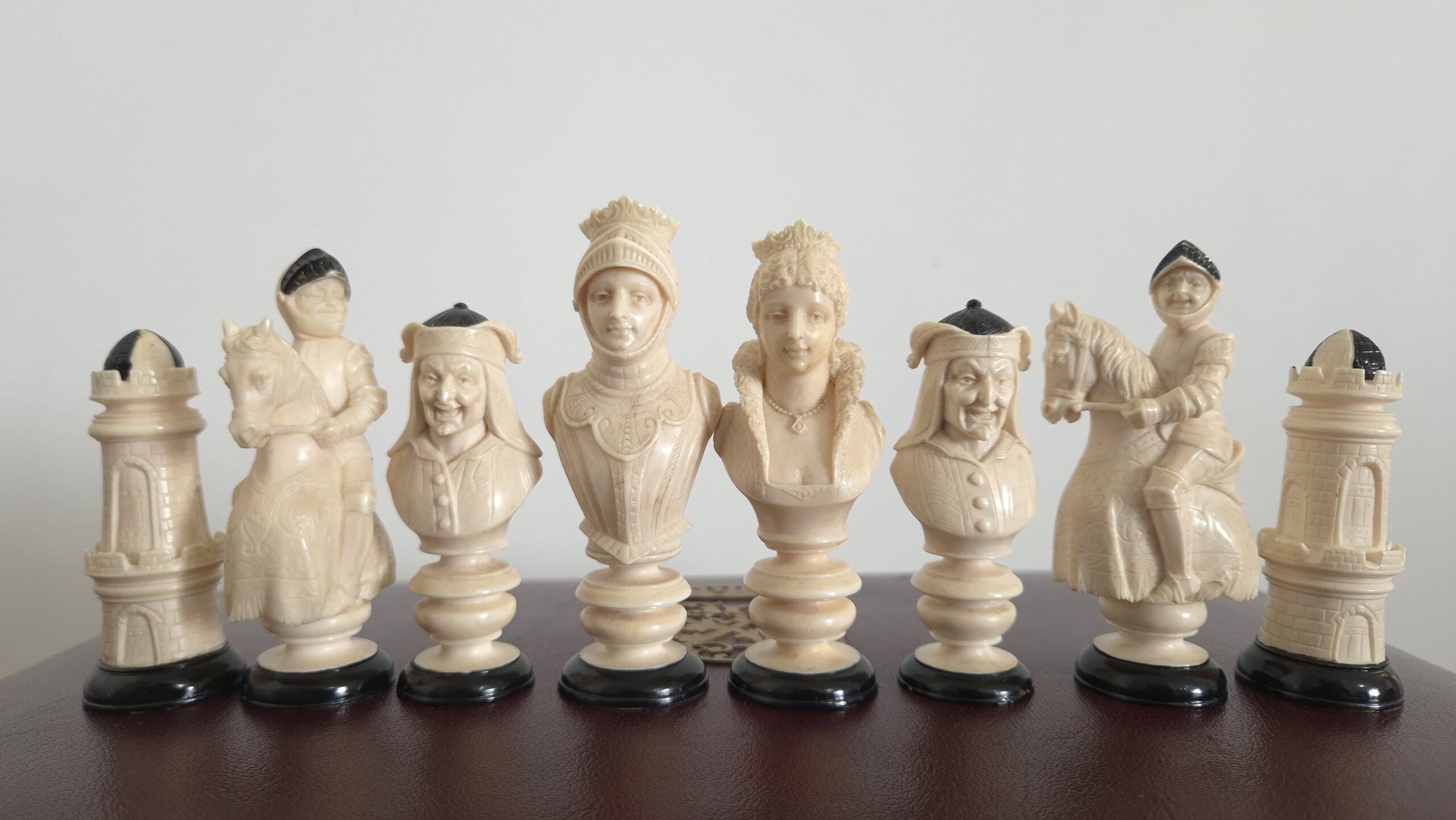
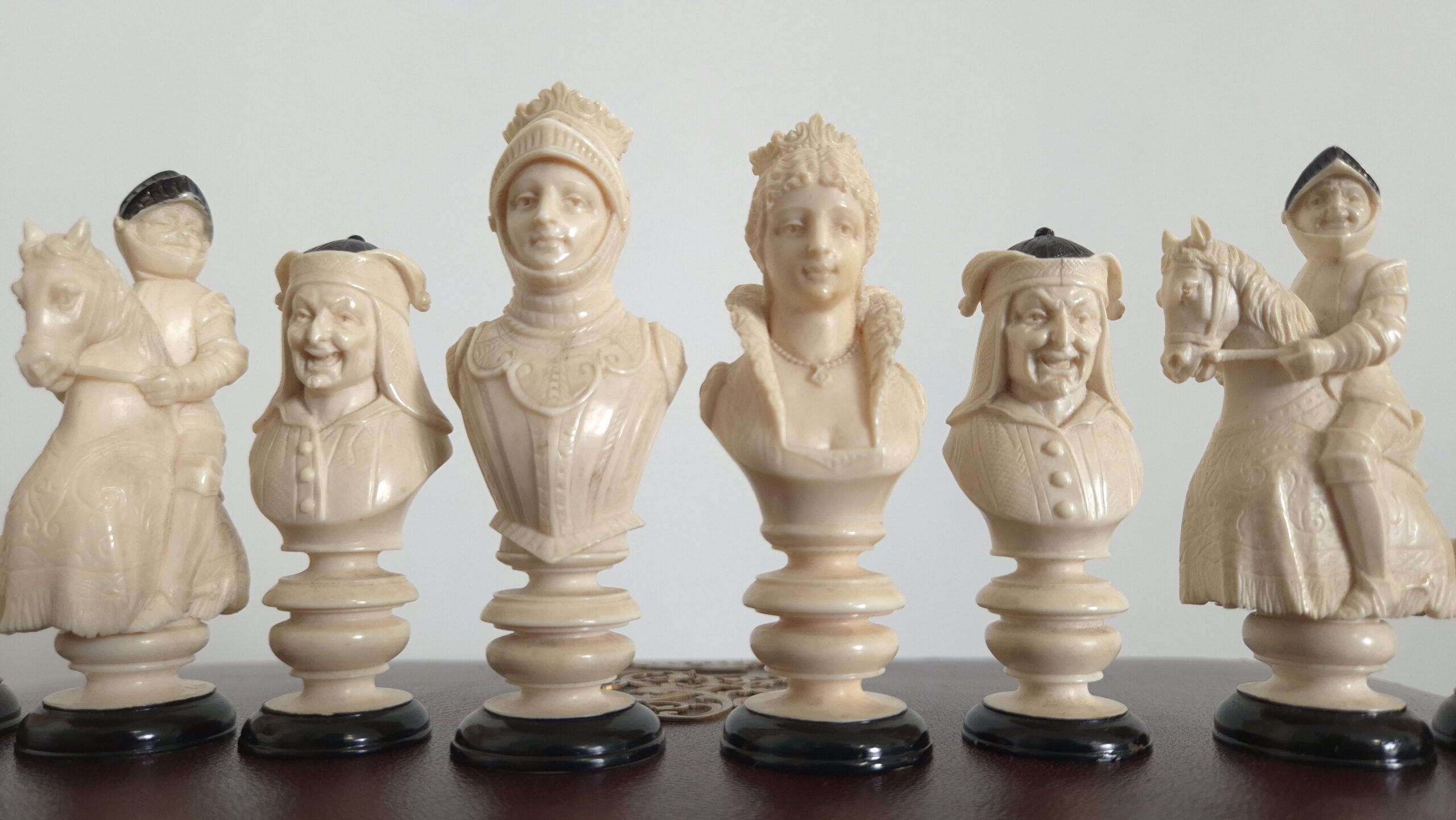
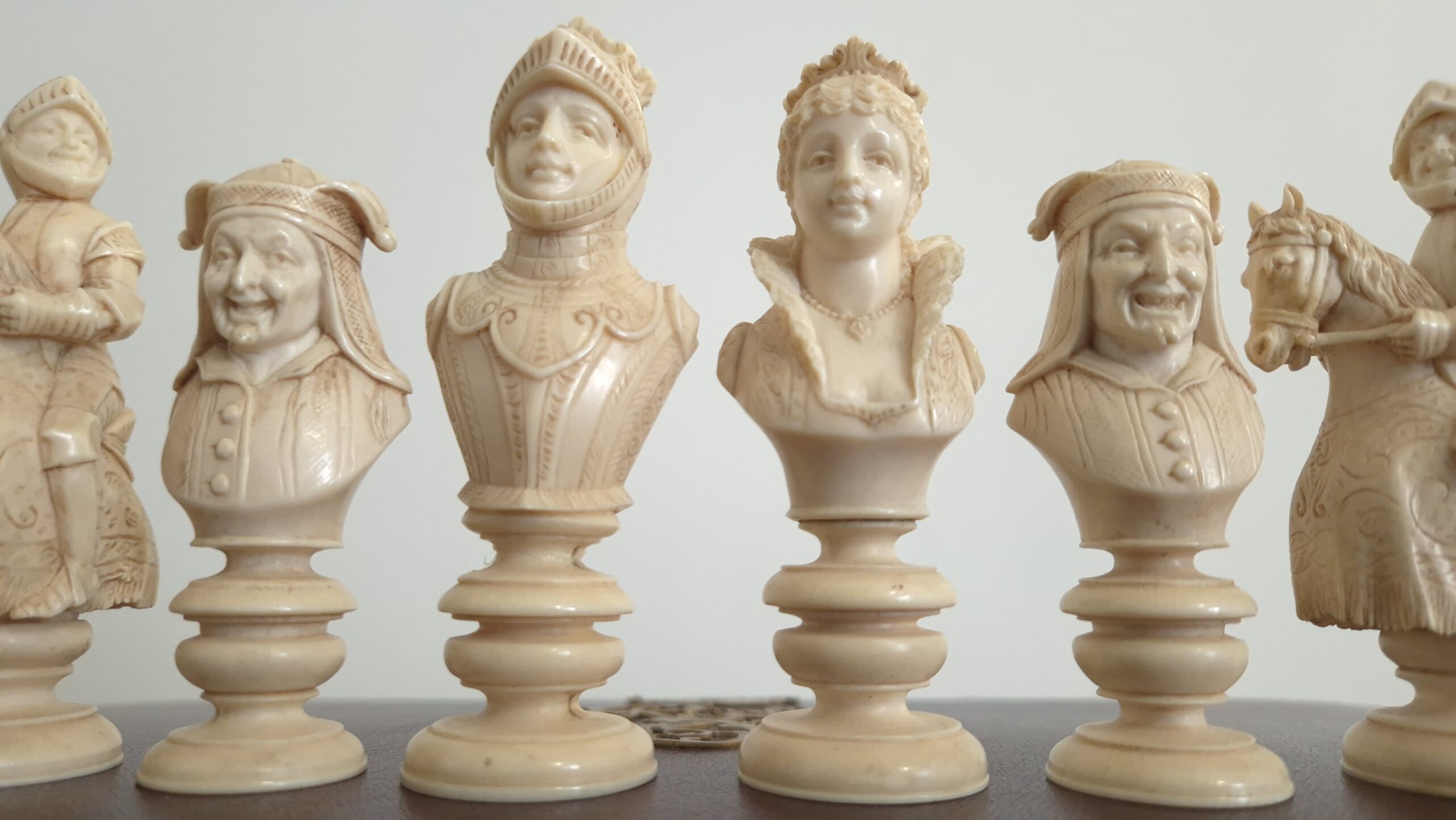
The pieces are of unimaginable sophistication and refinement. They depict medieval characters.
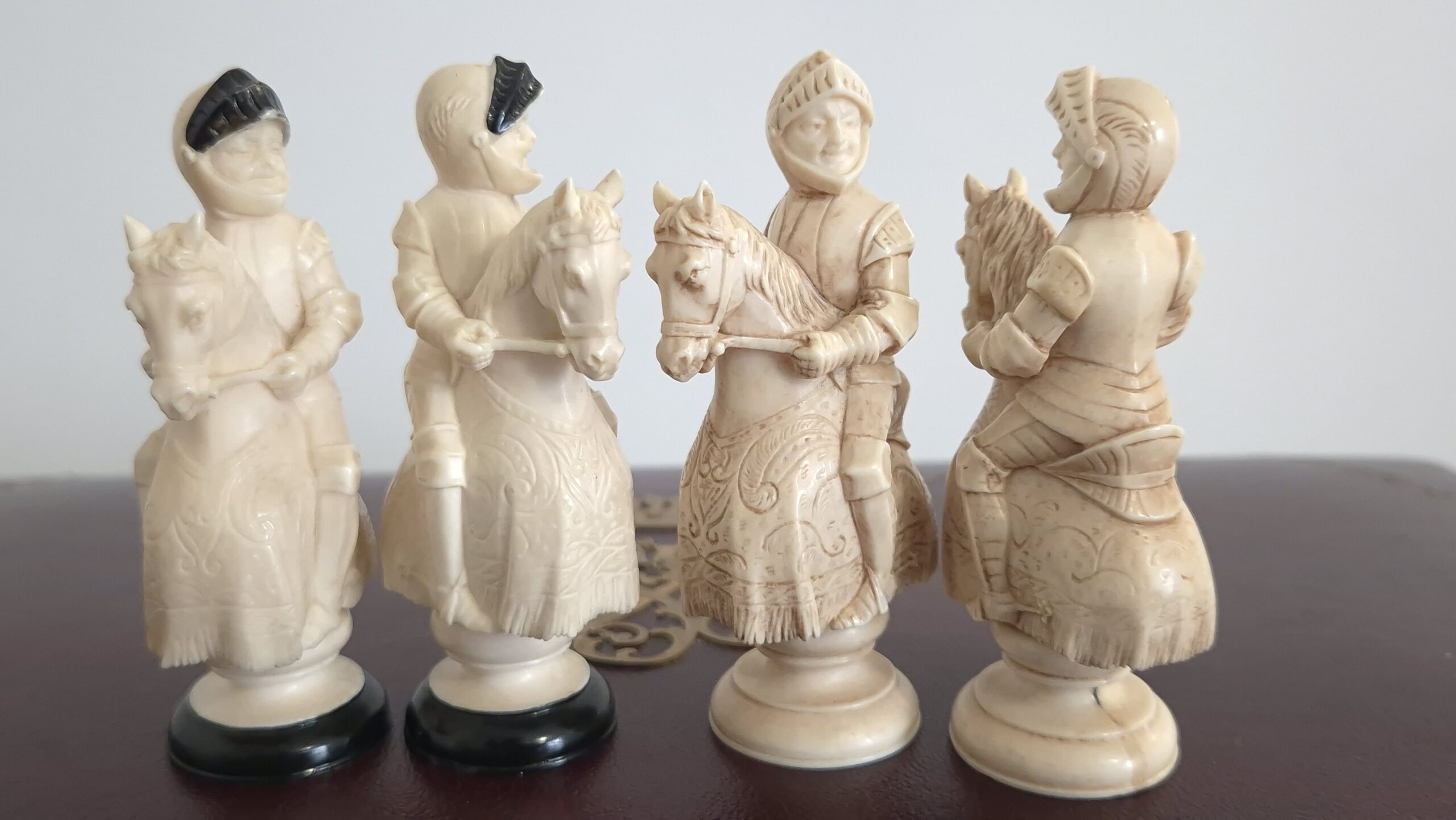
The knights are mounted on “hobby horse” style horses and are very finely worked.
The bishops are represented by the king’s jesters; during the anti-clerical wave in France, between the end of the 18th and the first half of the 19th century, bishops—generally depicted as bishops—were replaced by the king’s jesters on chess sets.
Half of the pieces are white and the other half is tinted with a pronounced beige.
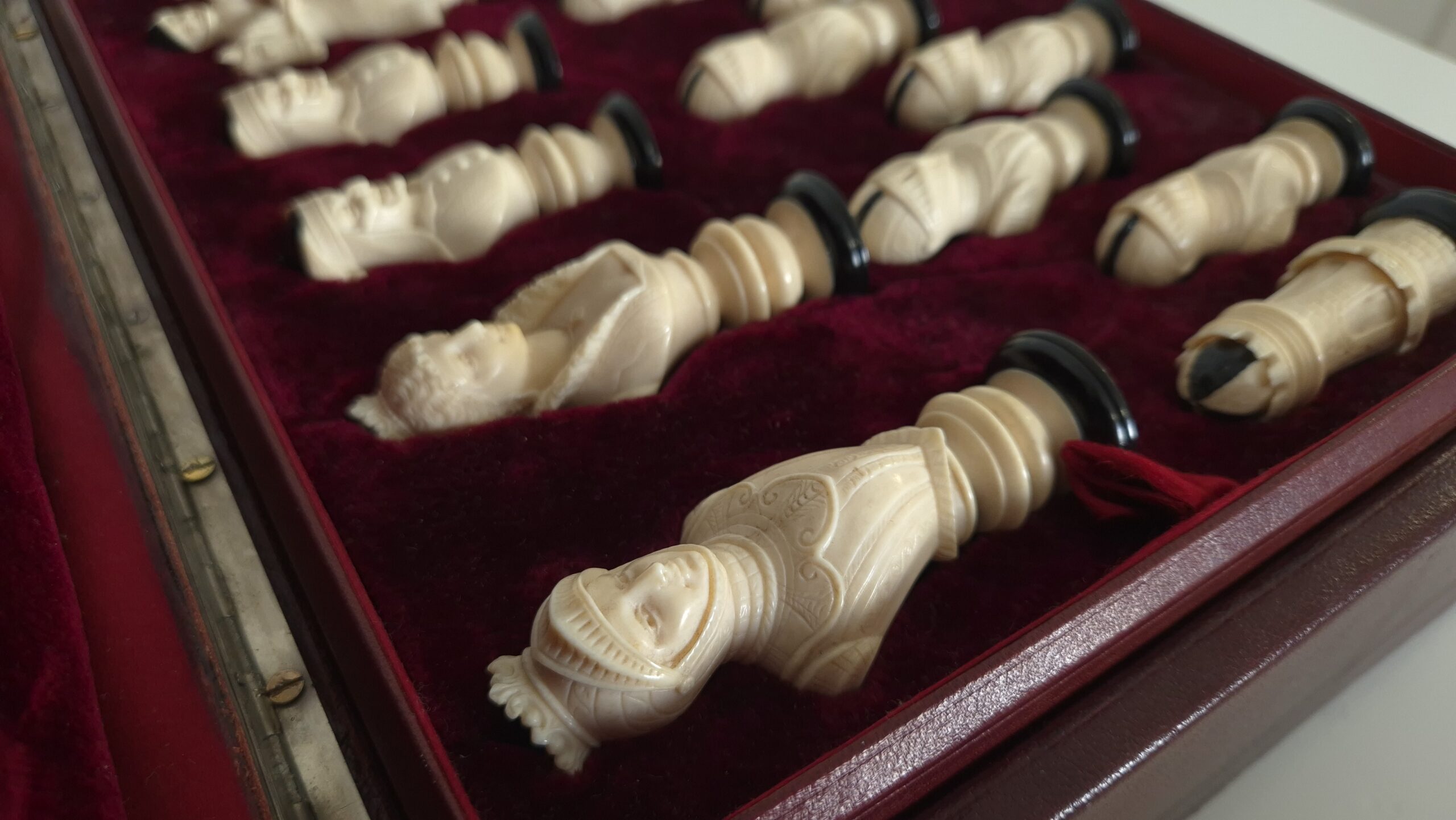
Black was also added on the white side to help distinguish them.
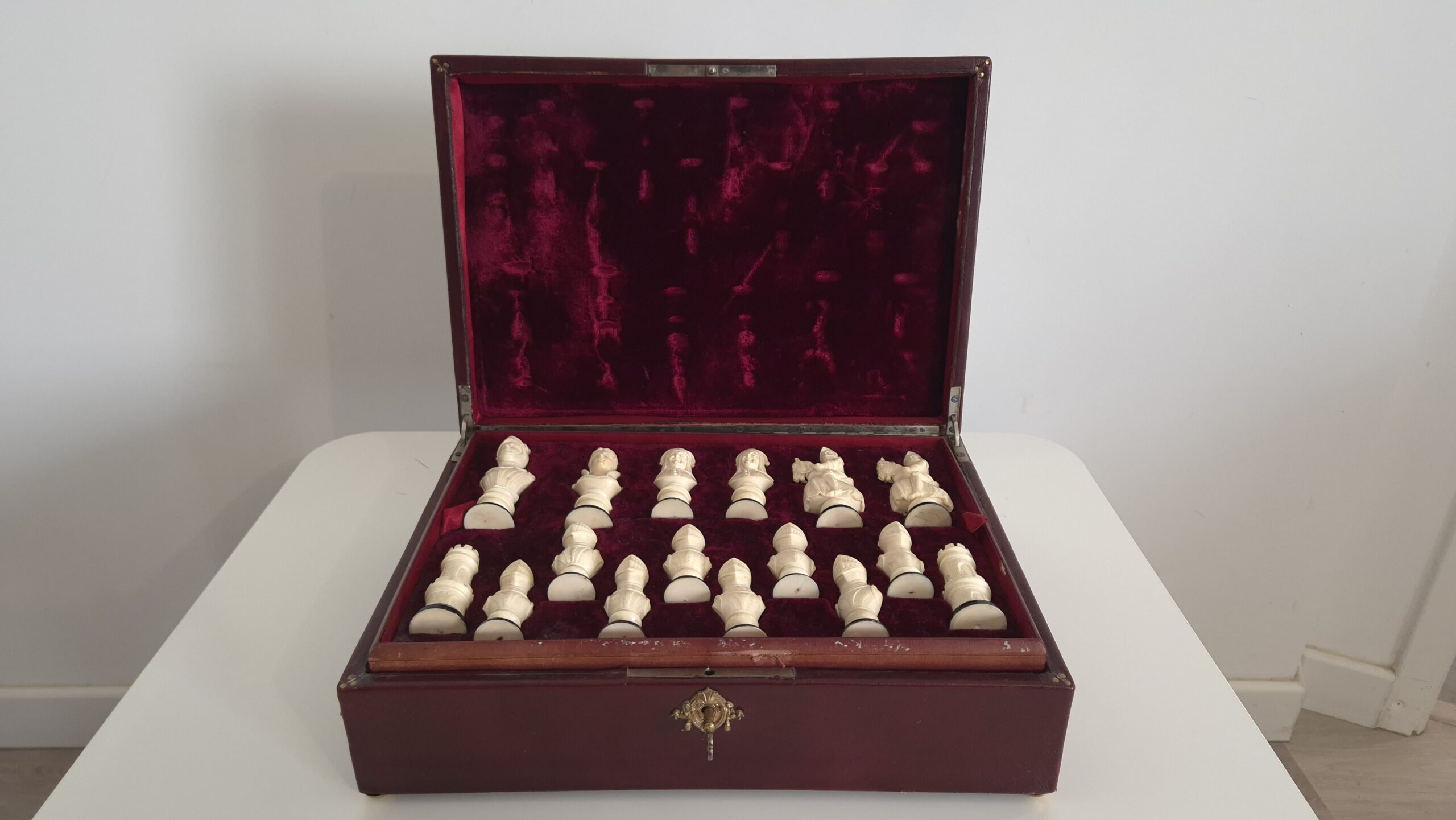
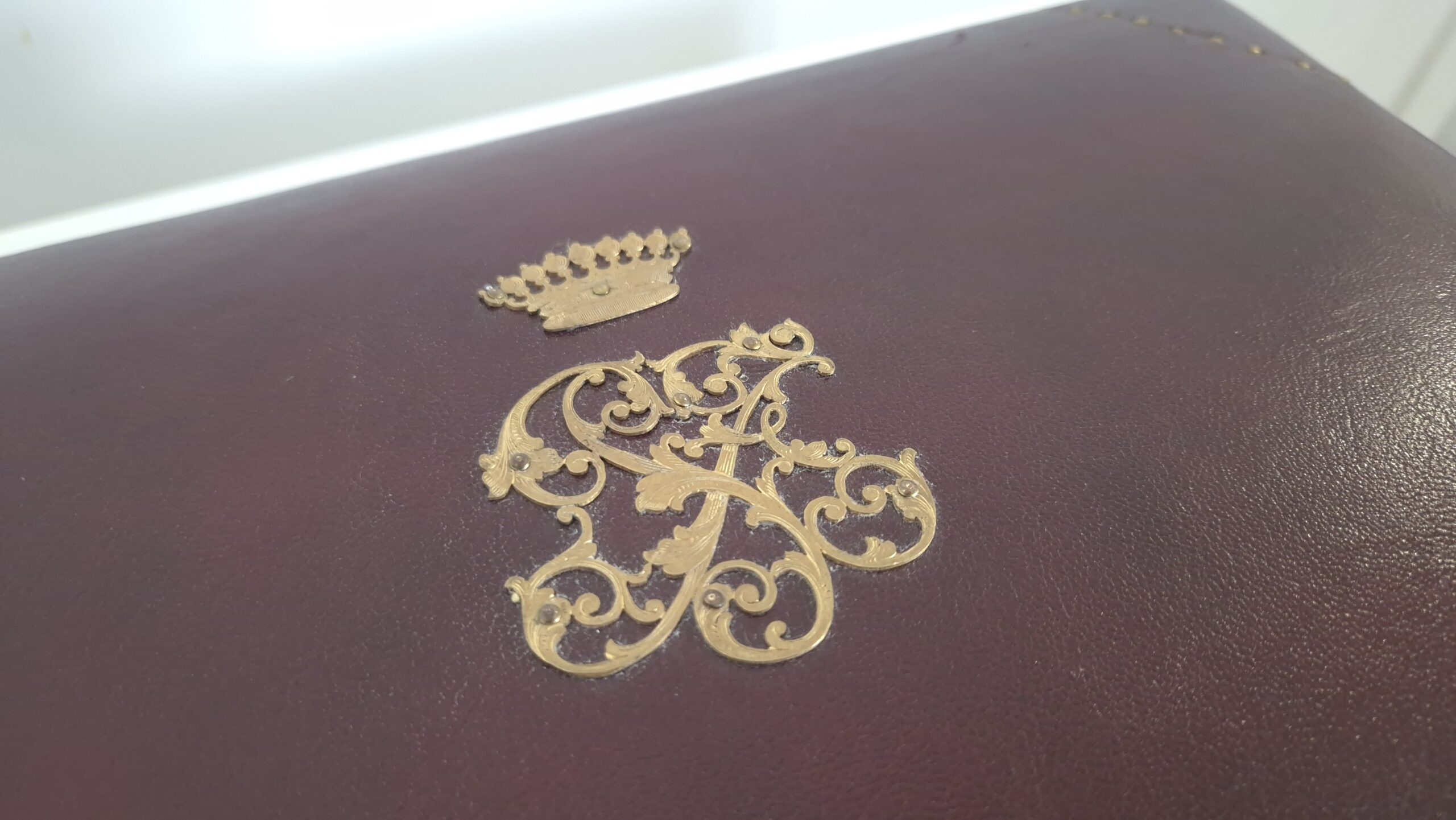
The pieces come with a magnificent, very substantial leather case with velvet and a gold monogram topped with a crown. It has individual storage compartments for the pieces.
Such a case is something extremely rare for a set from this period.
The king is 9.5 cm tall.
The knights are 8.5 cm tall.
The pawns are 6.3 cm tall.
The case measures 35 cm wide and 25 cm deep.
The pieces are in excellent condition, with no damage except for minor, insignificant chips on the rooks.
The case is in good condition but no longer closes; it still has its key, but the mechanism is broken.
The set belonged for several generations to the Lavi family in Switzerland, in the canton of Vaud. However, after speaking with heraldry specialists about the monogram on the box, it was possible to determine that it originally belonged to a count before being acquired by the Lavi family.
The crown above the monogram, with open points adorned with pearls, is the distinctive and recognizable sign of the title of count.
The letters of the monogram are “PF”.
Unfortunately, it is impossible to determine which count the set belonged to based on these two letters alone, as they could correspond to a name, an estate name, or the interlacing of the names of two married individuals.