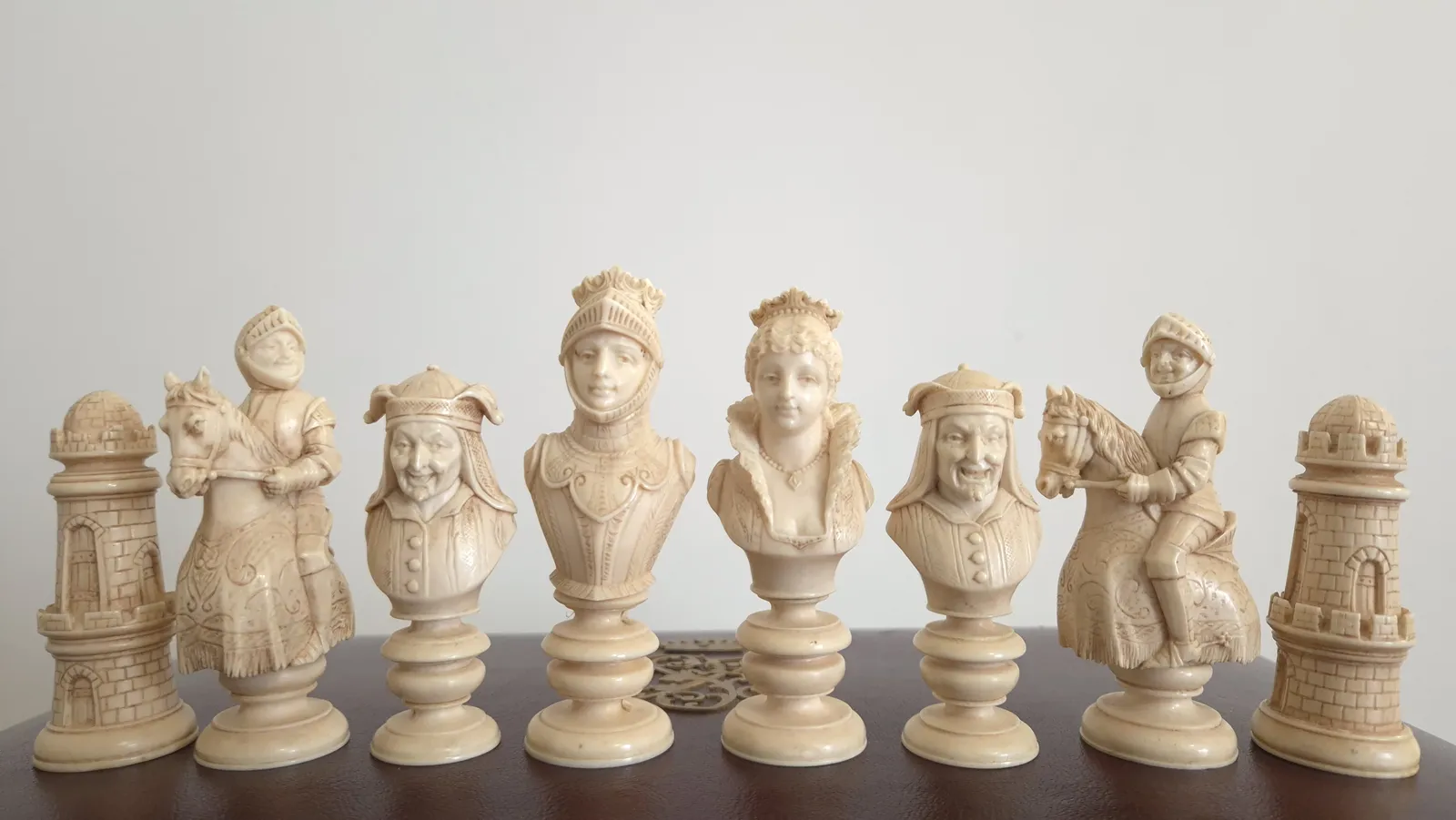
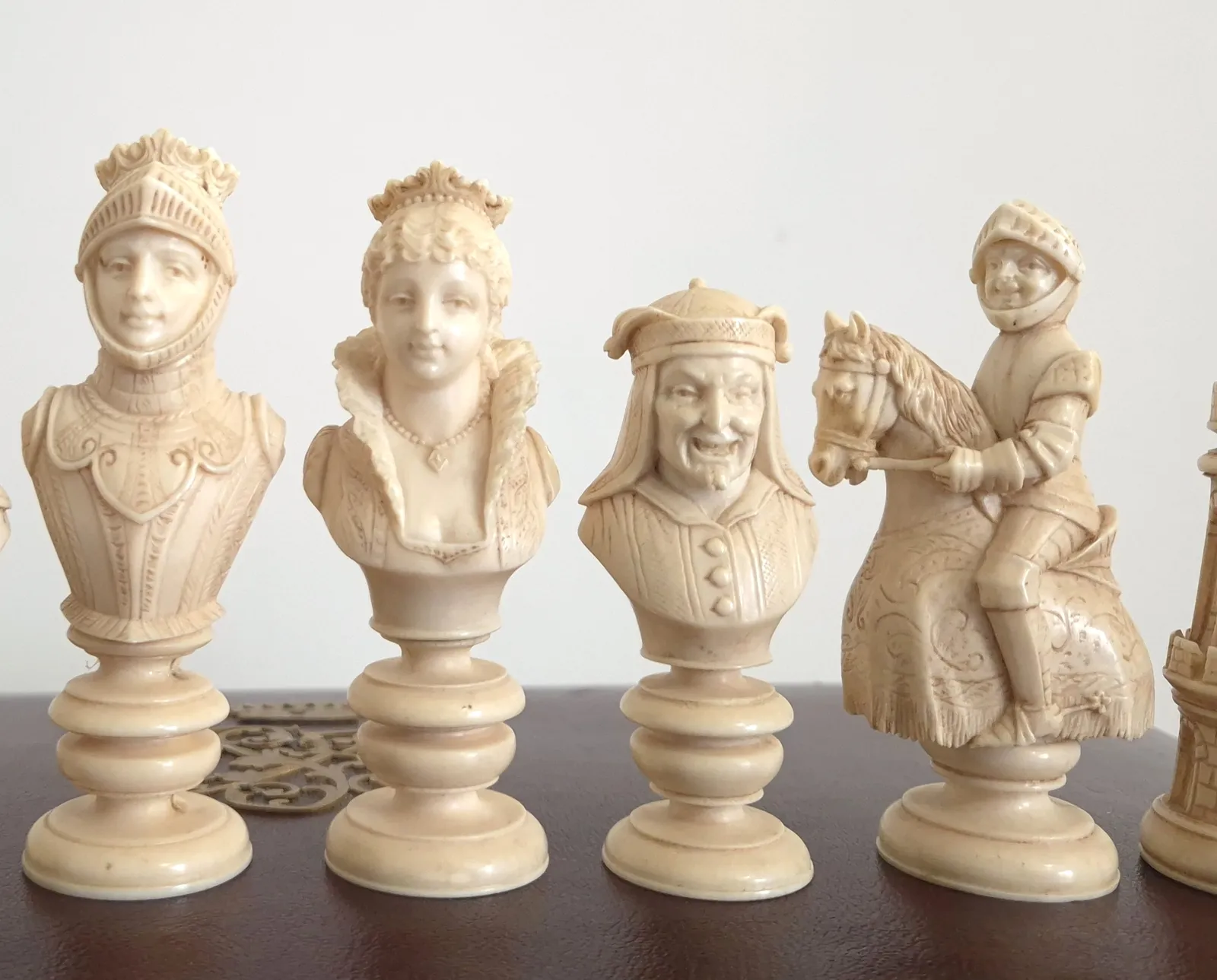
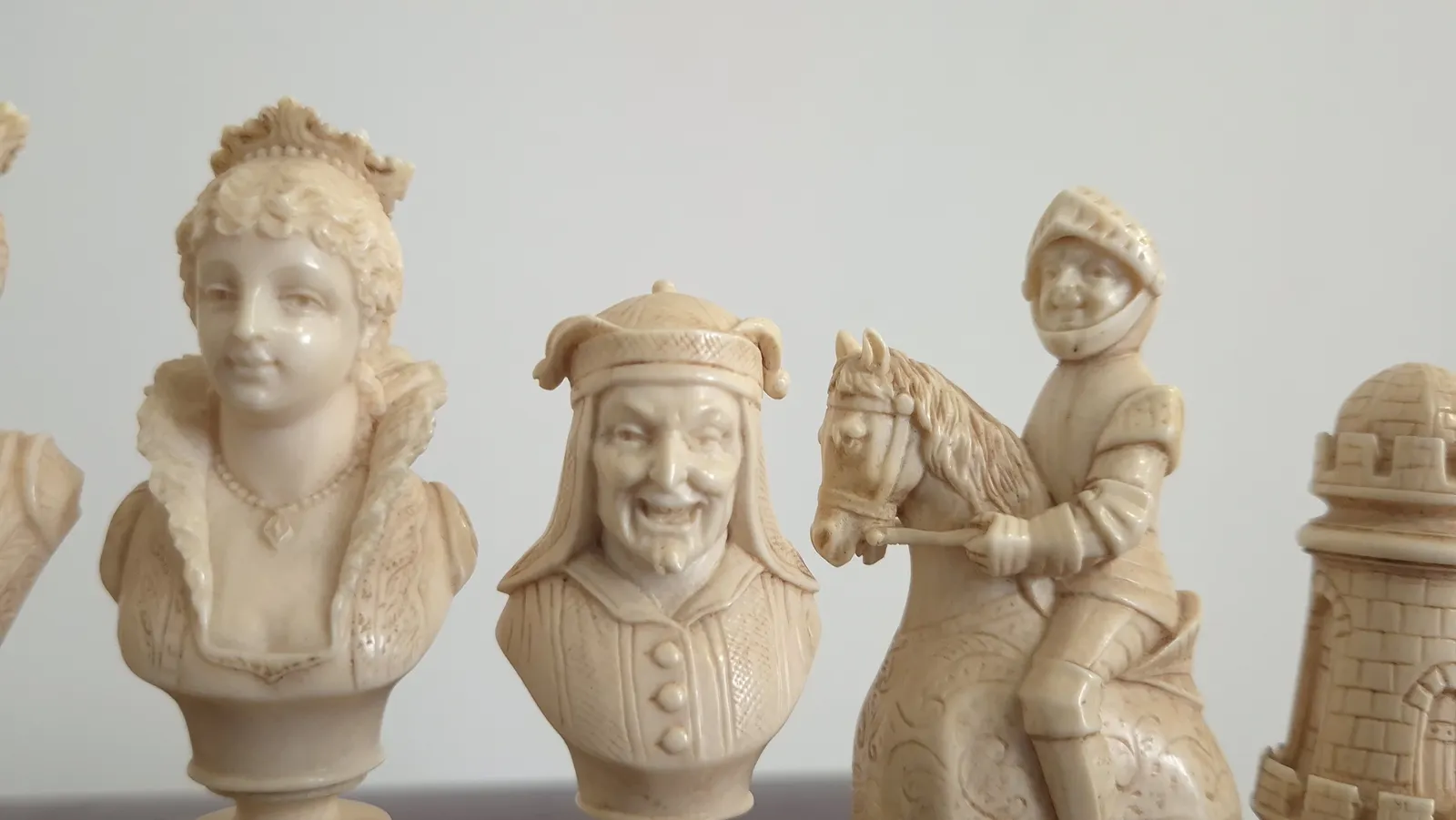
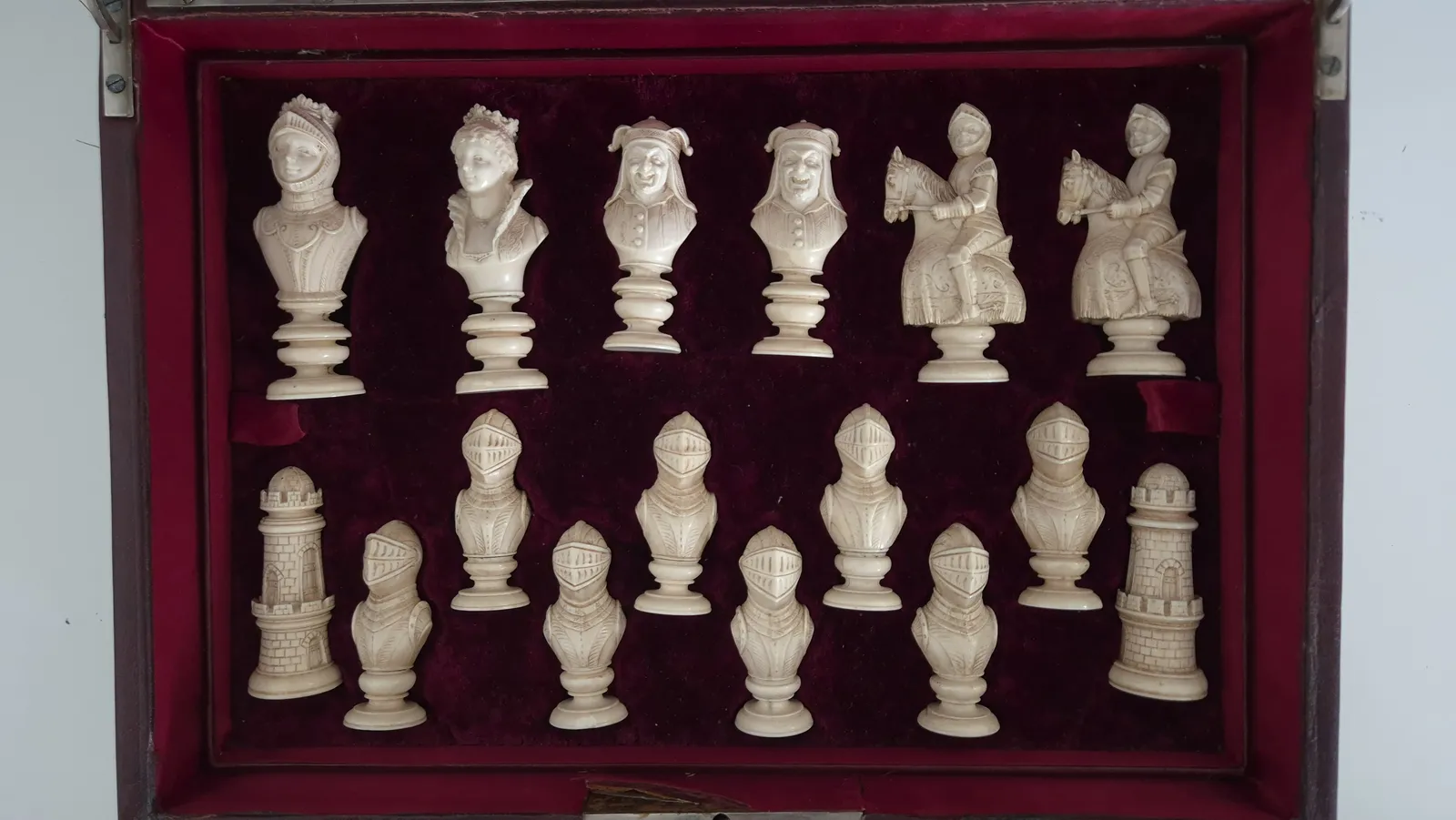
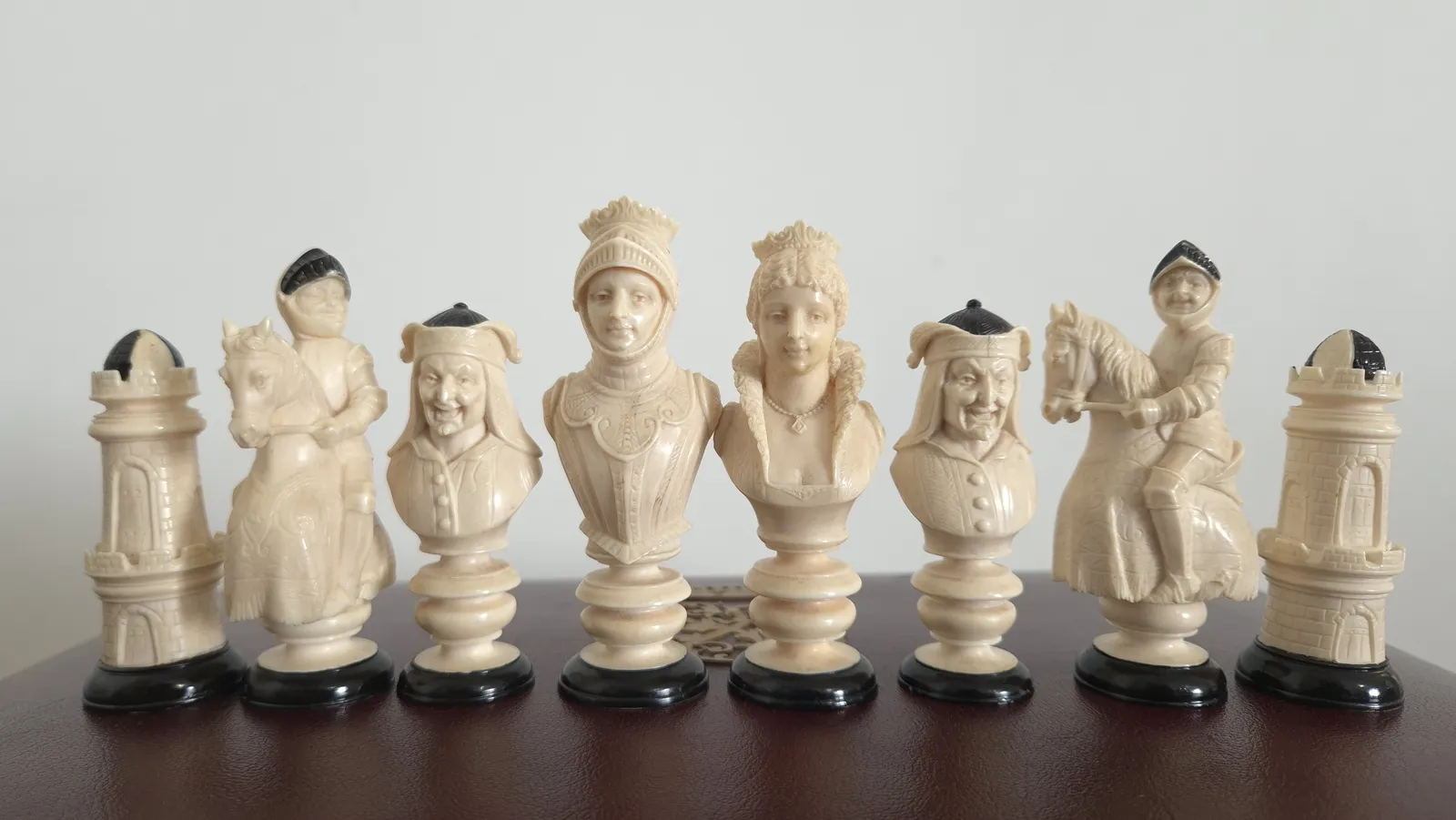
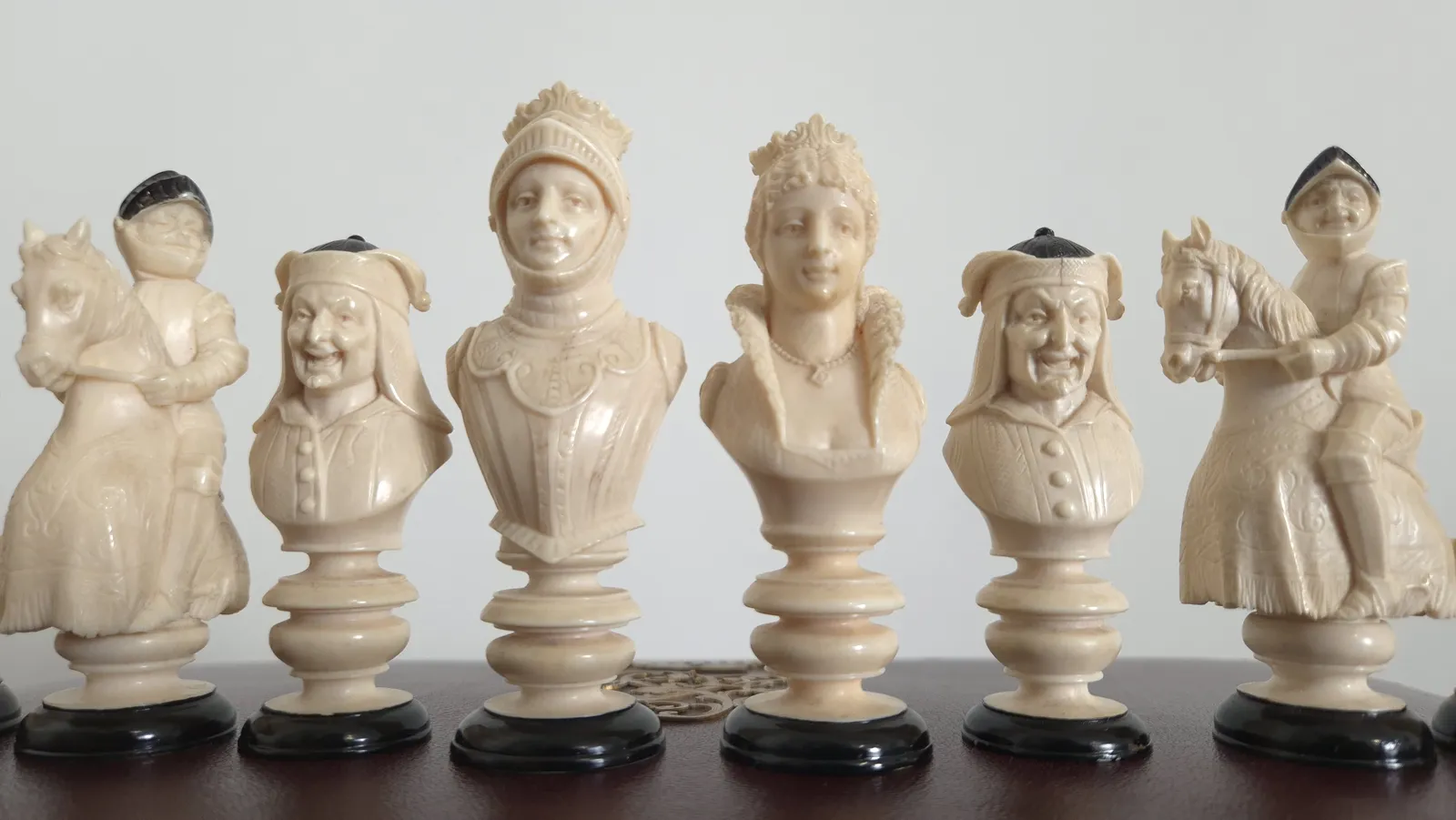
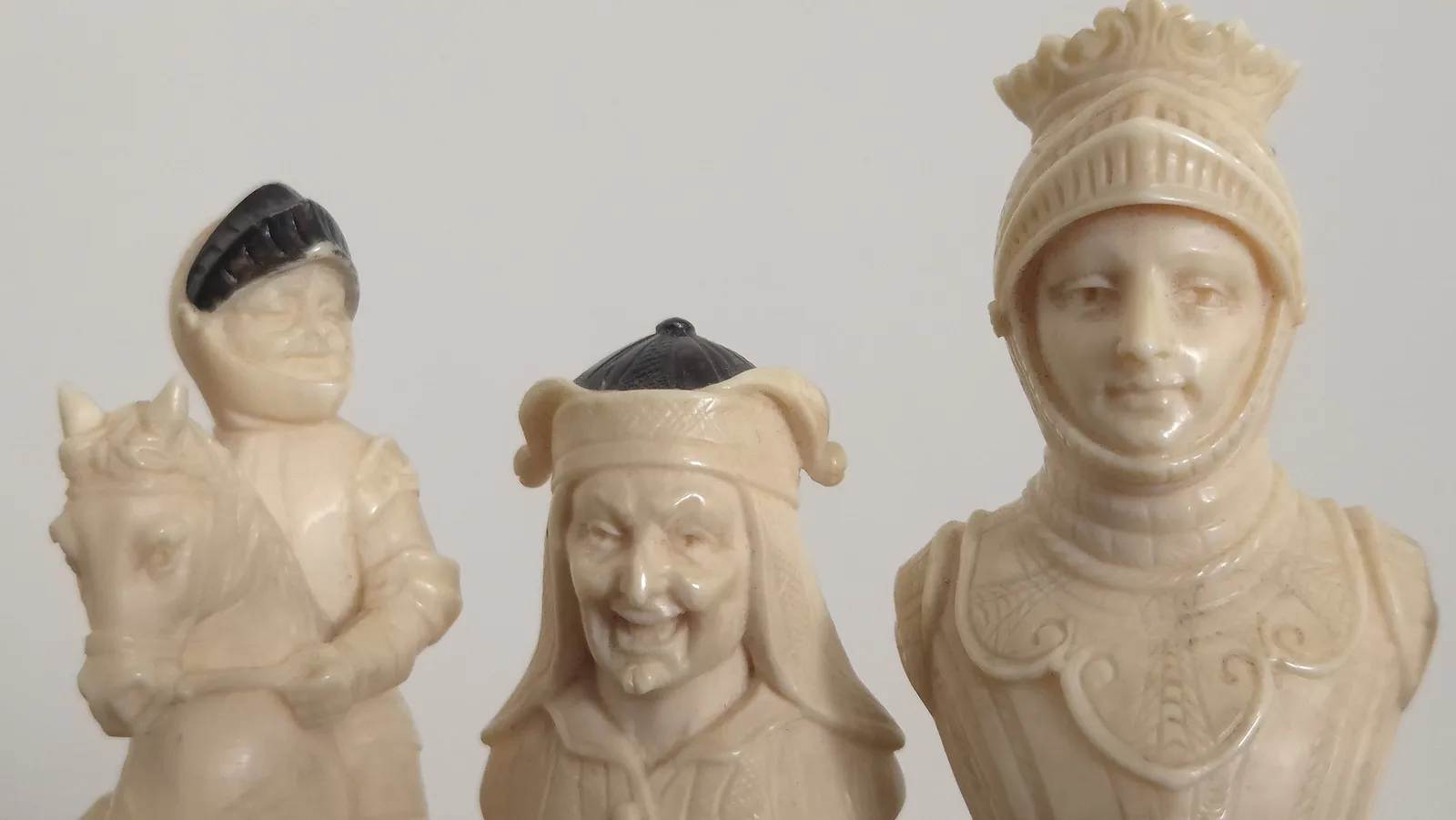
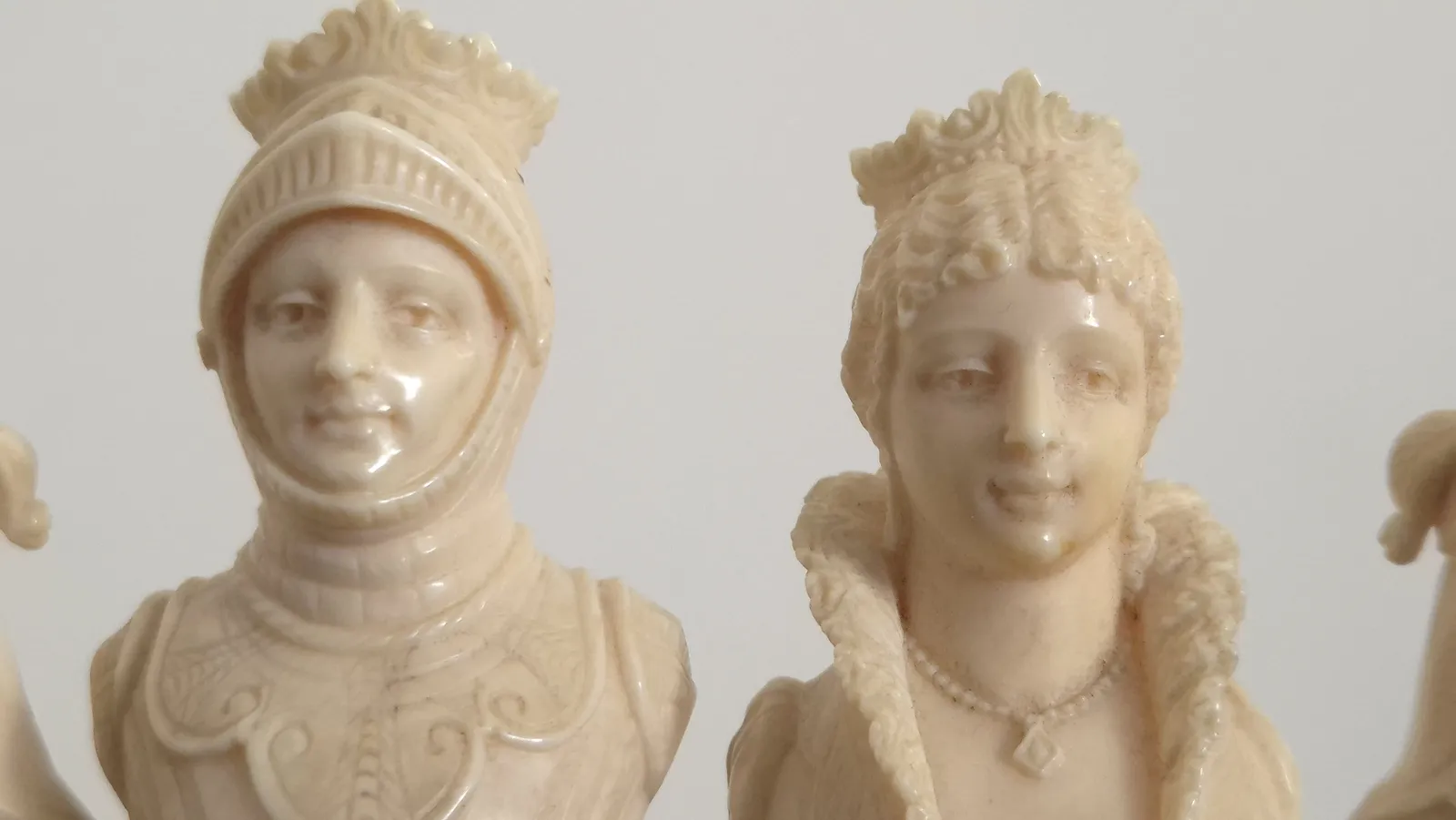
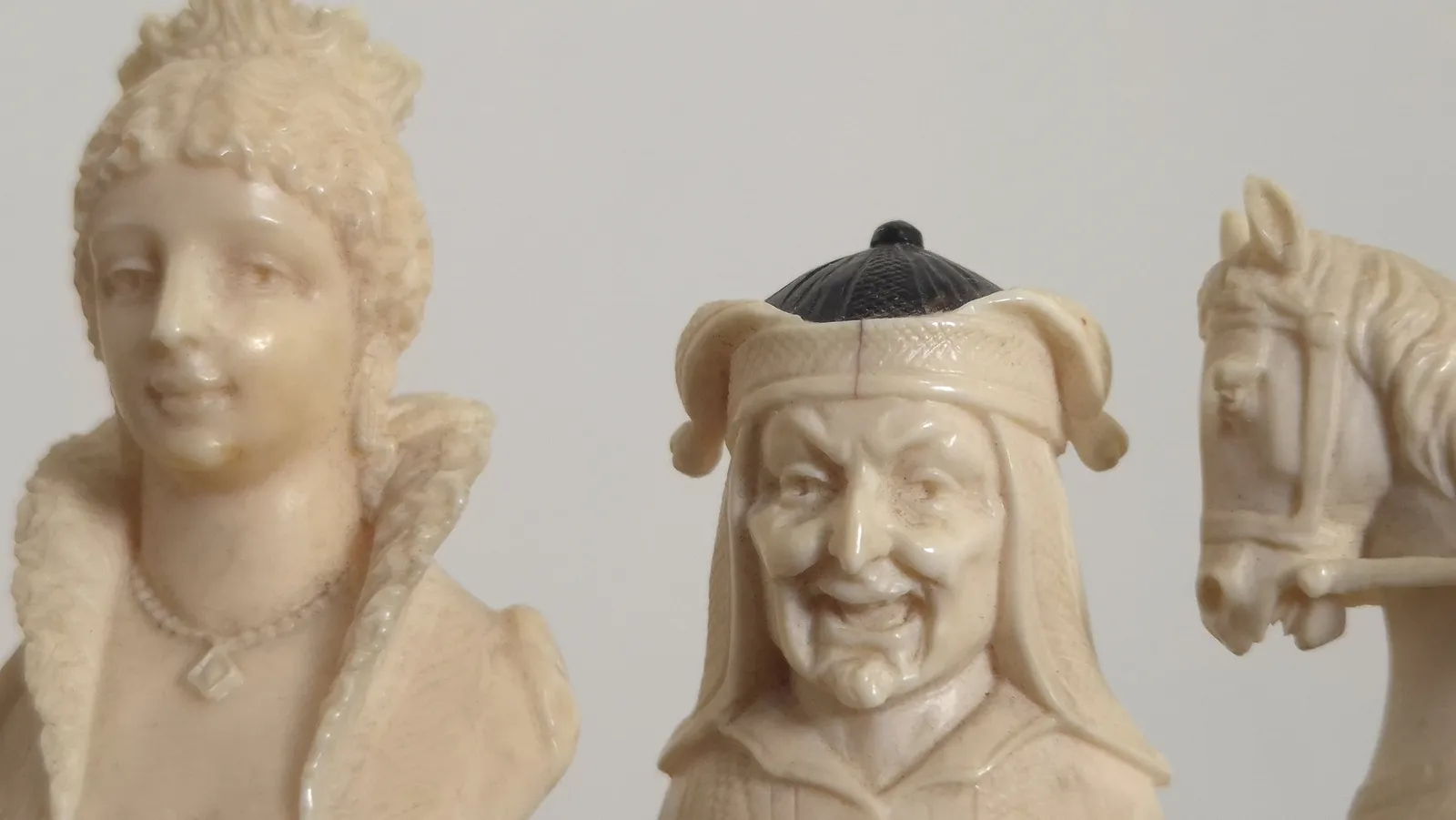
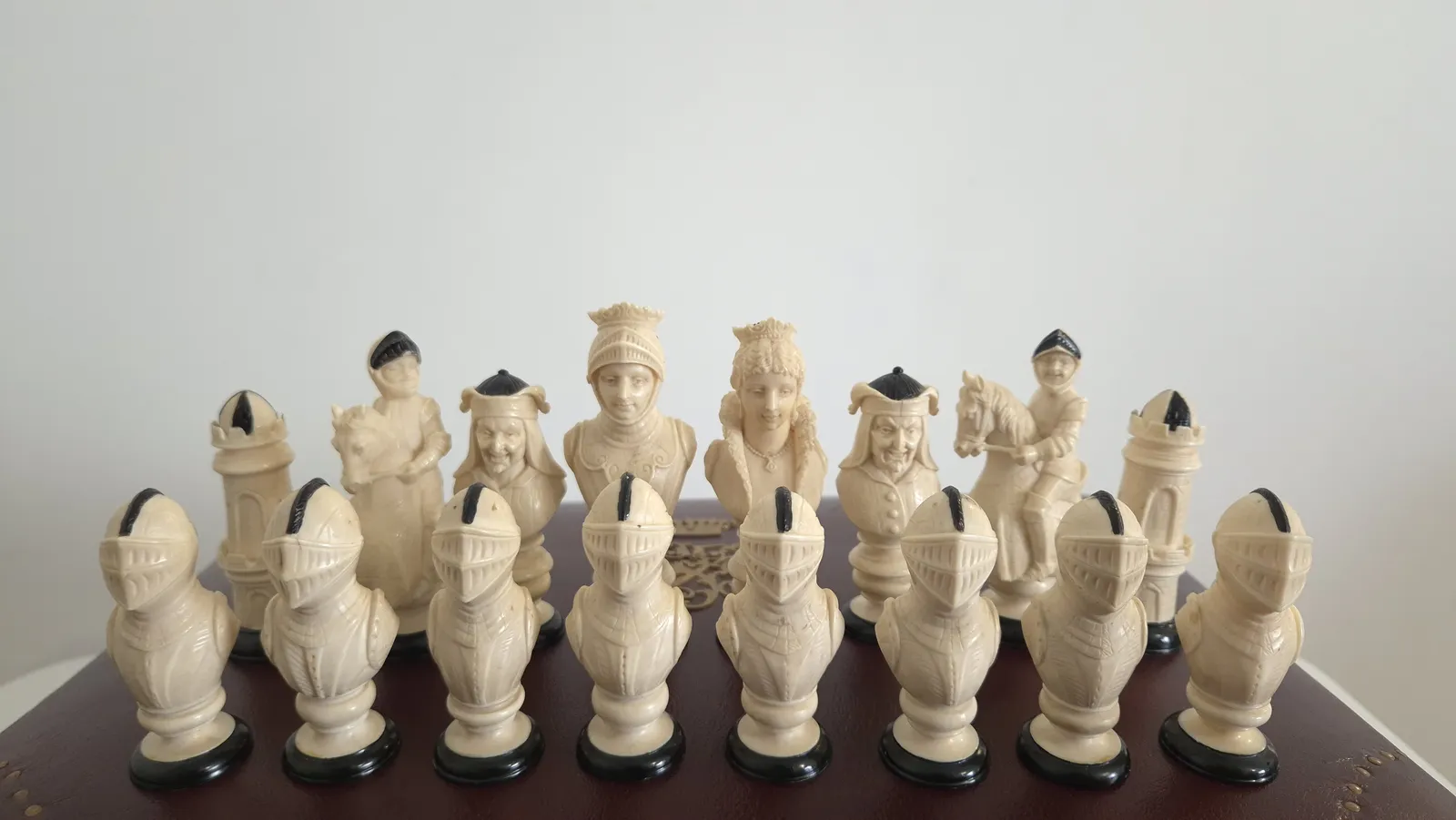
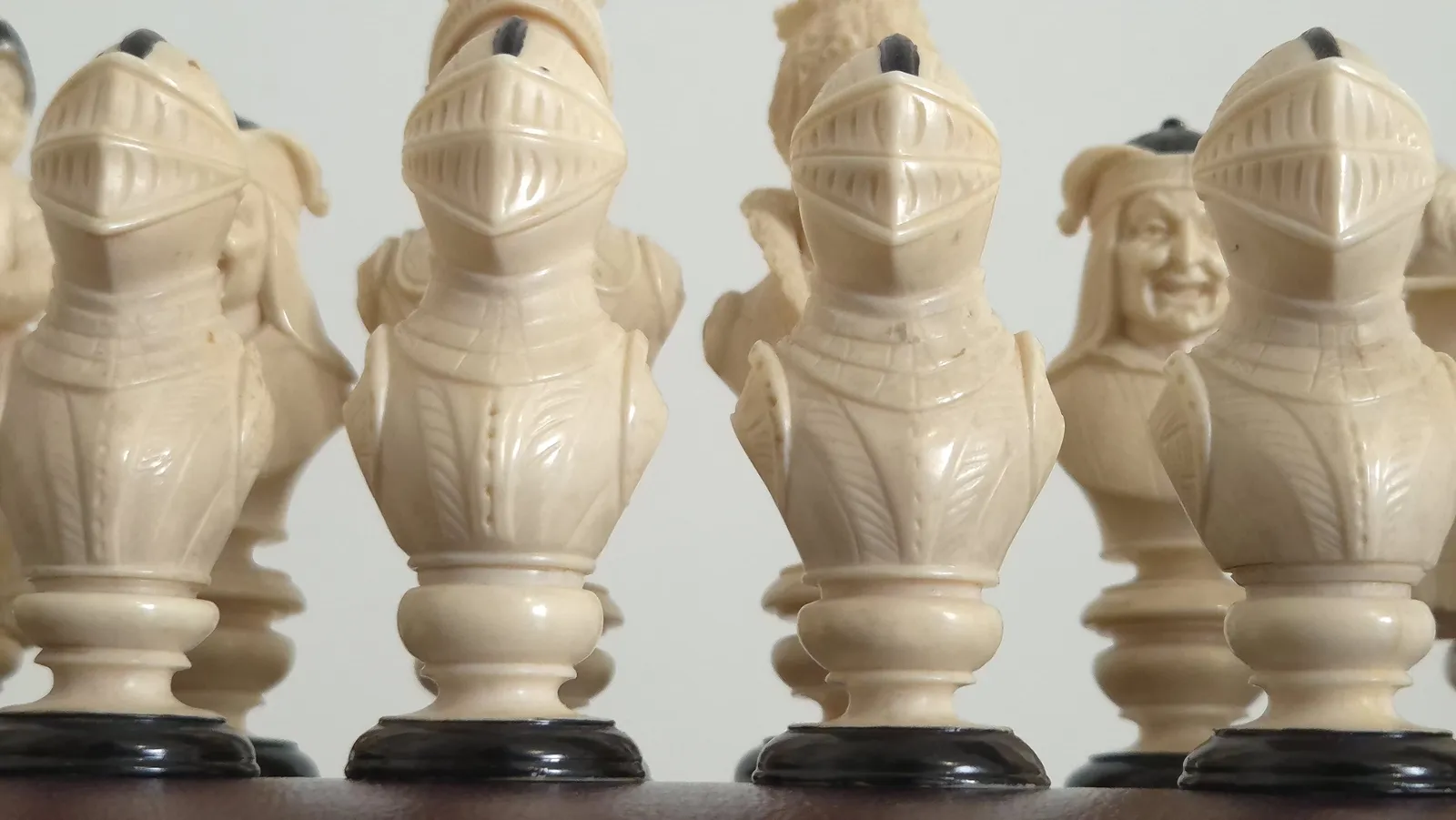
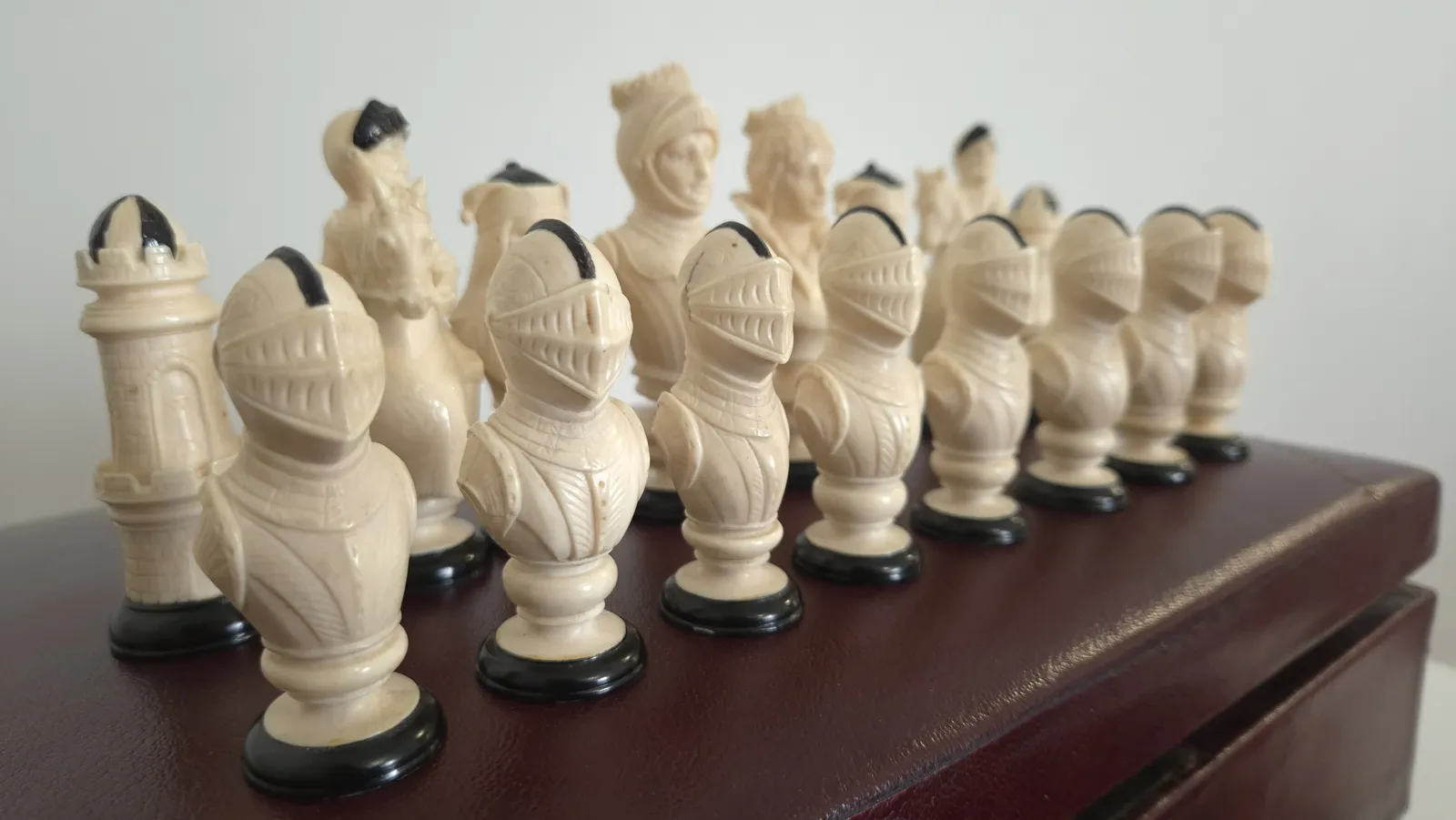
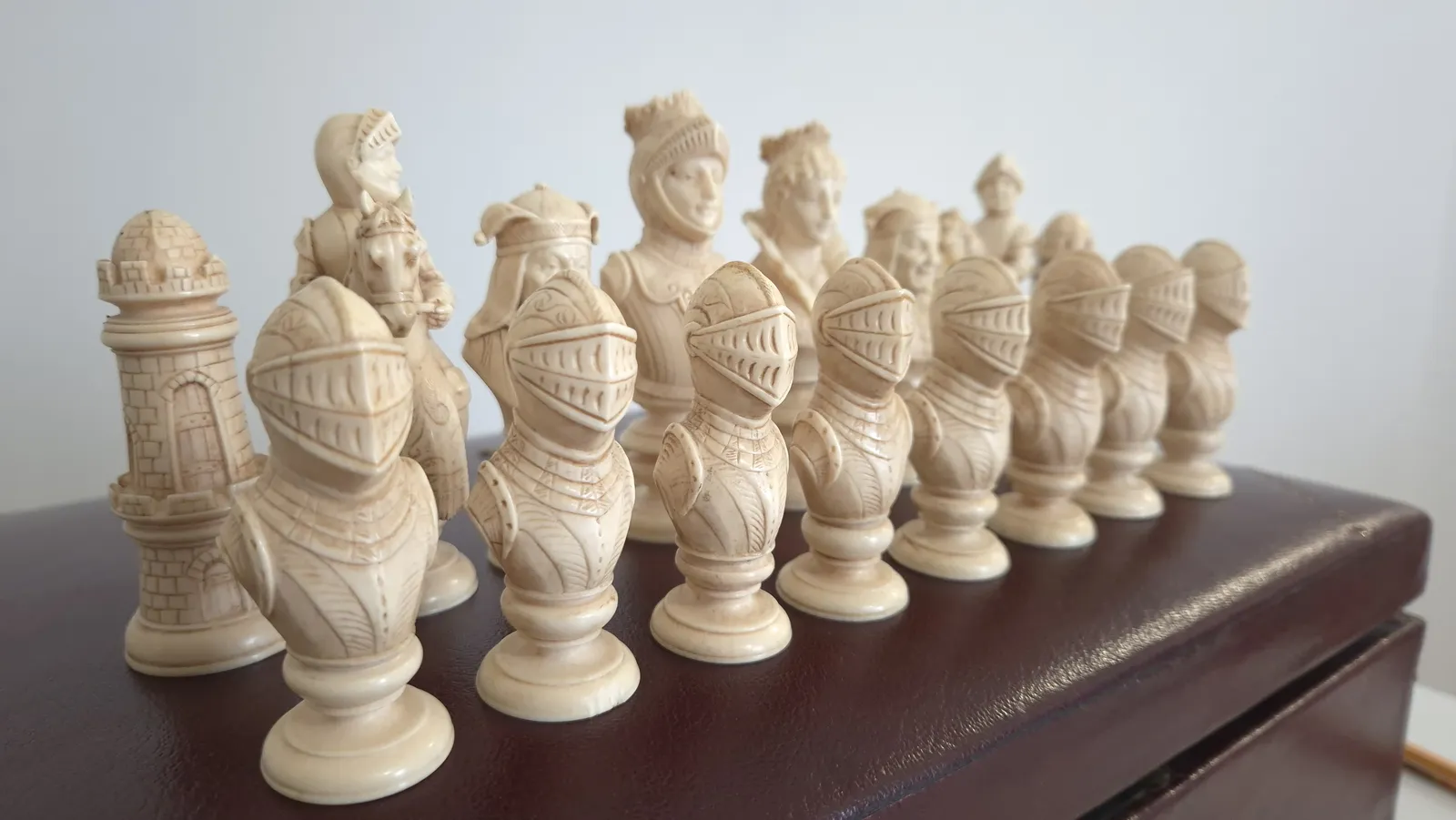
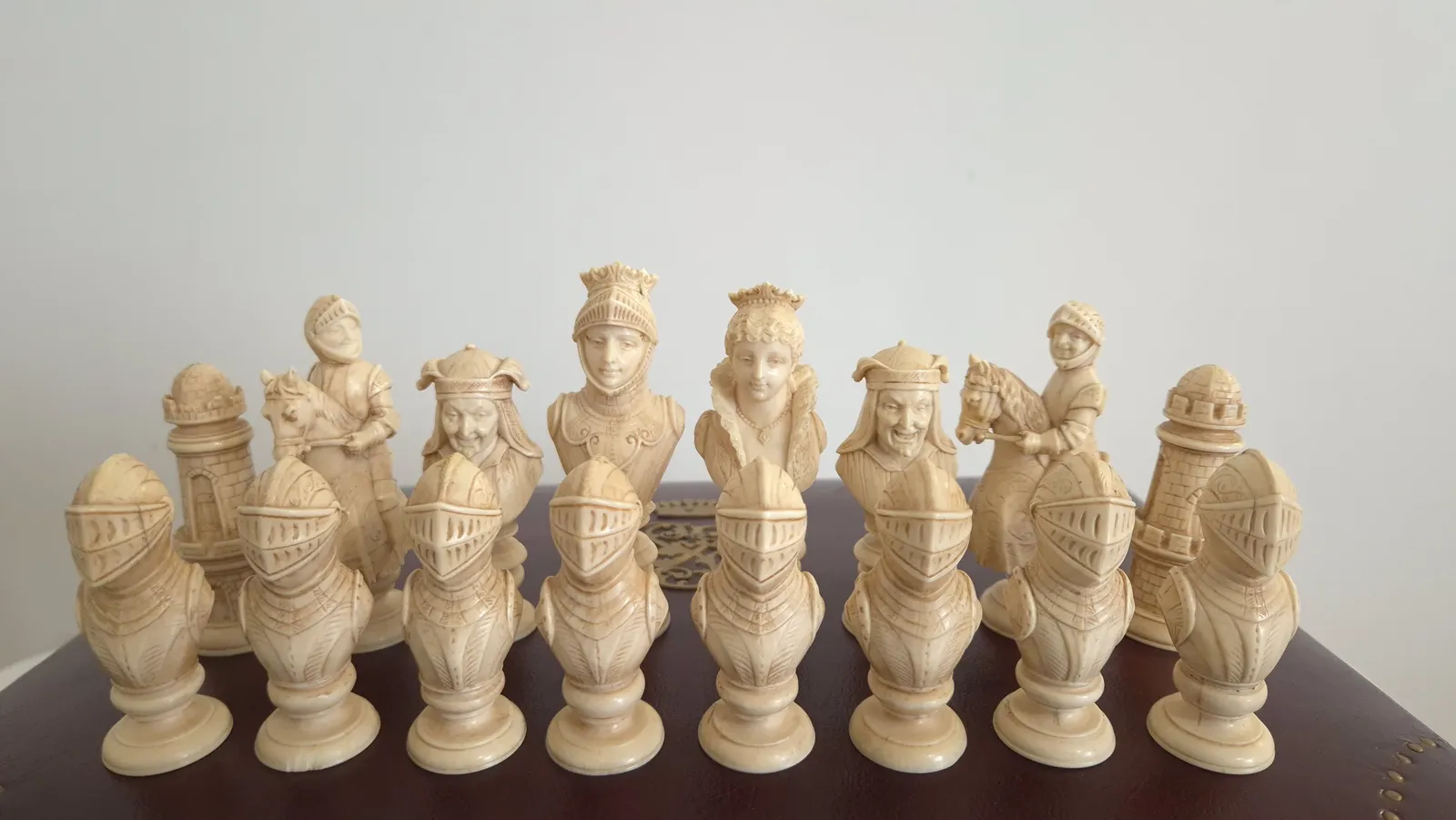
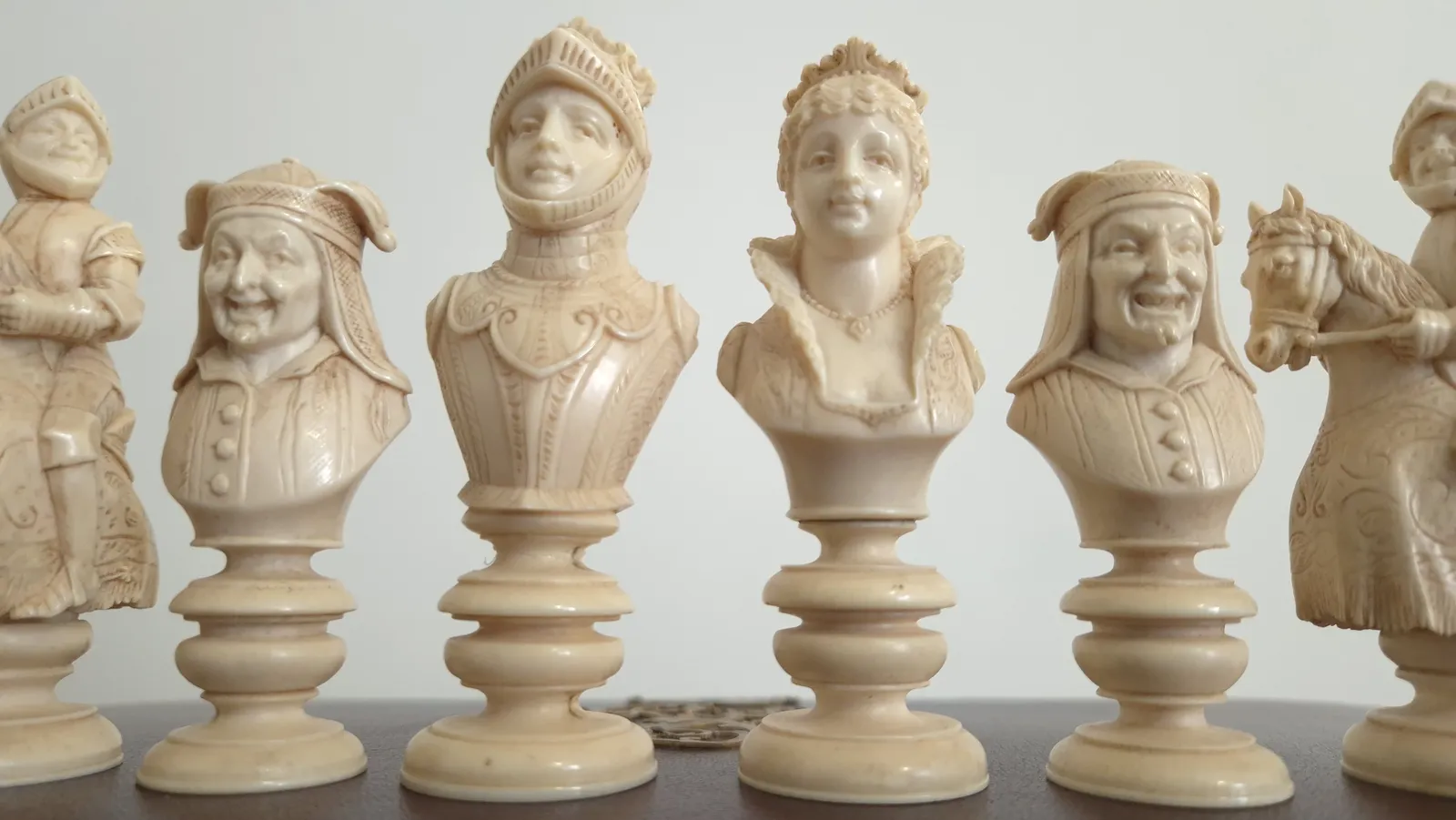
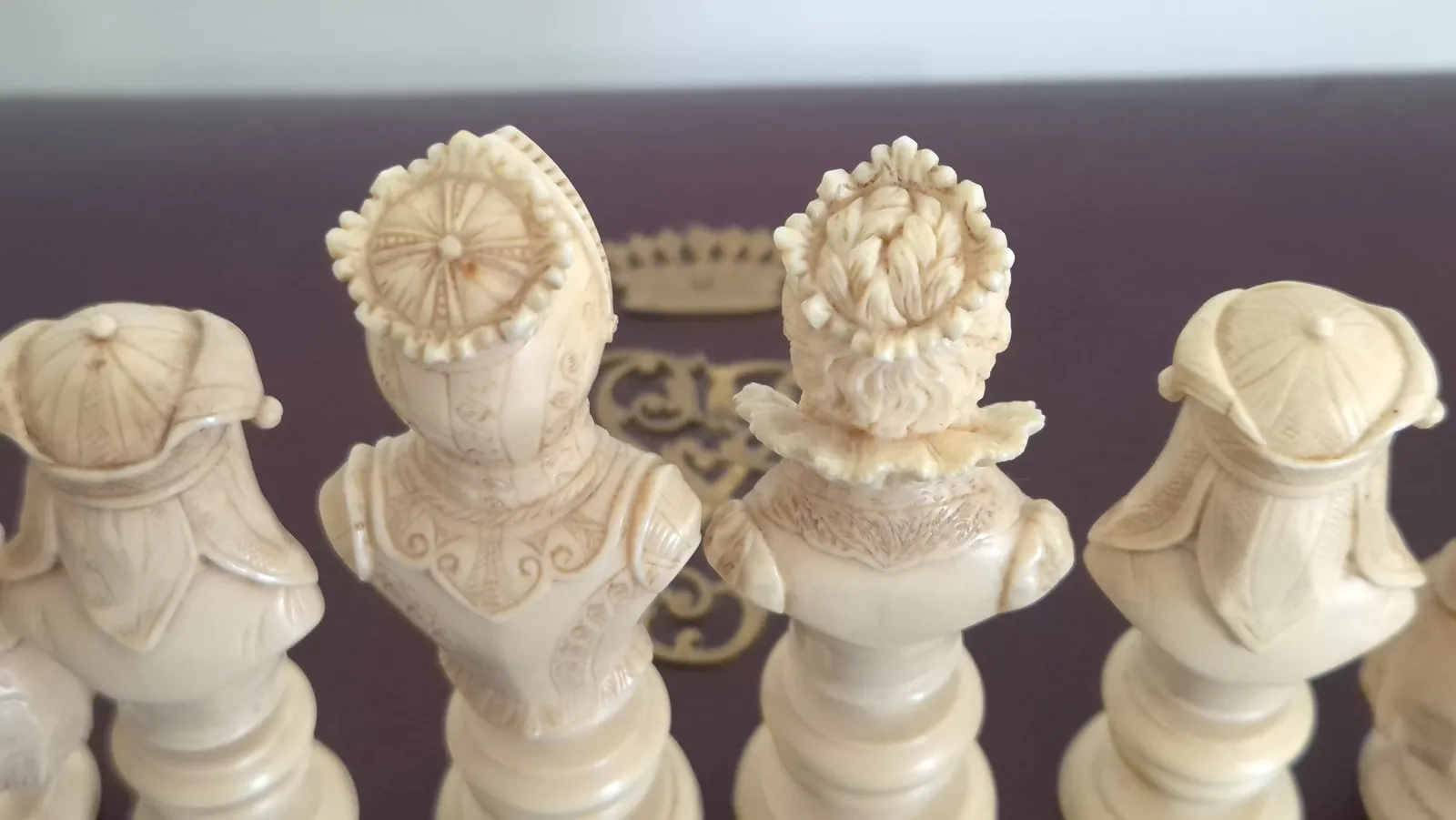
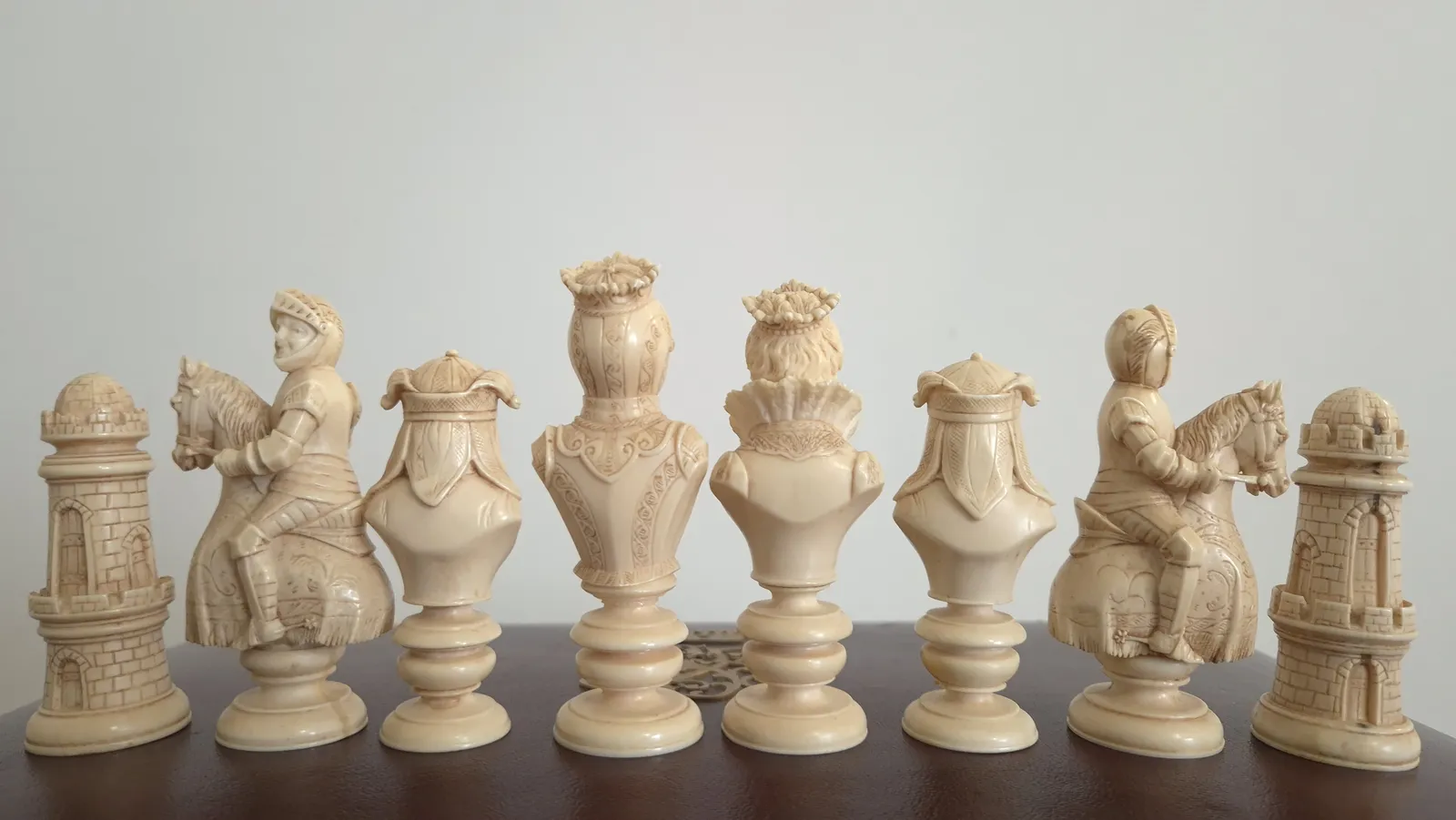
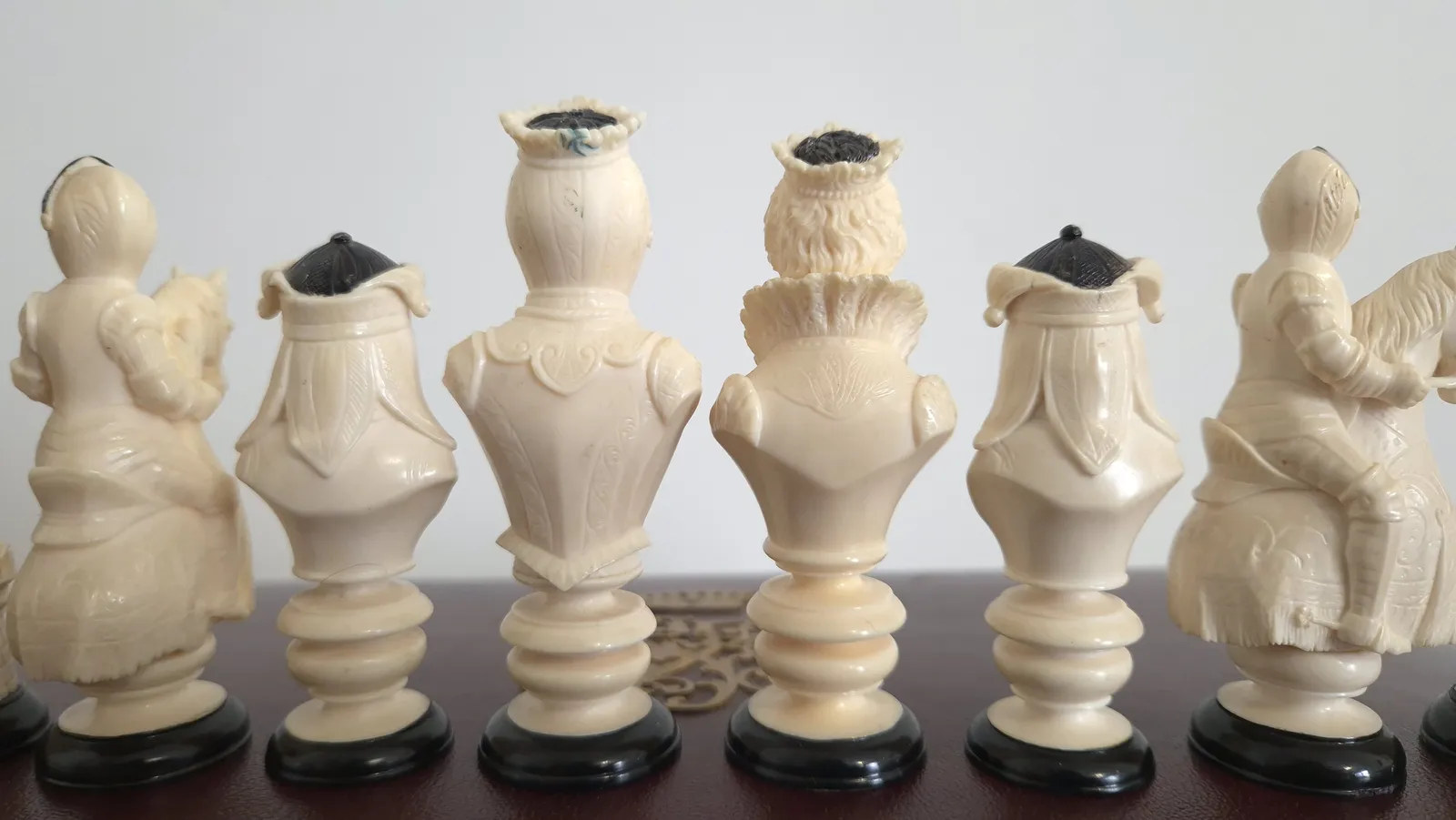
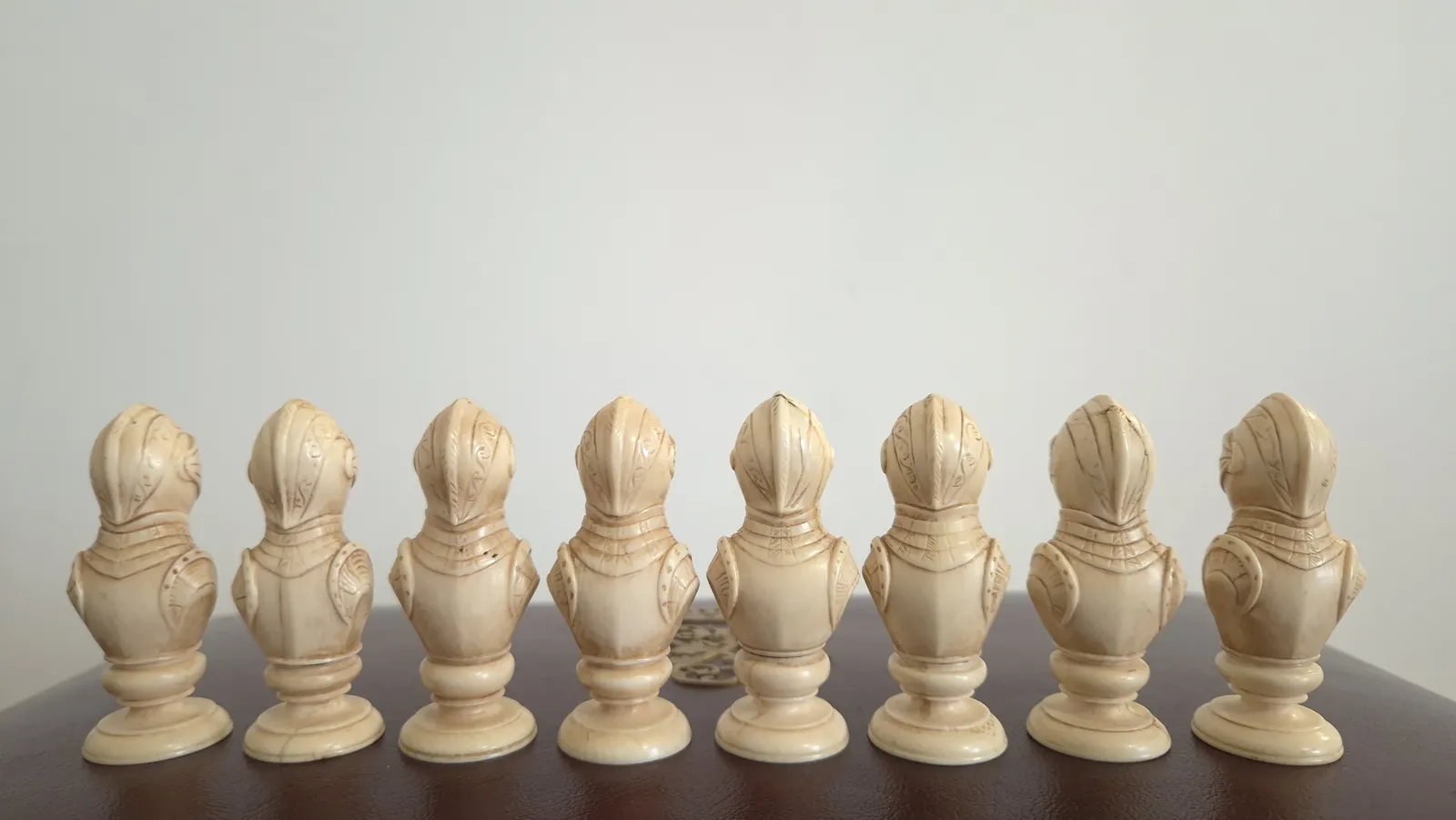
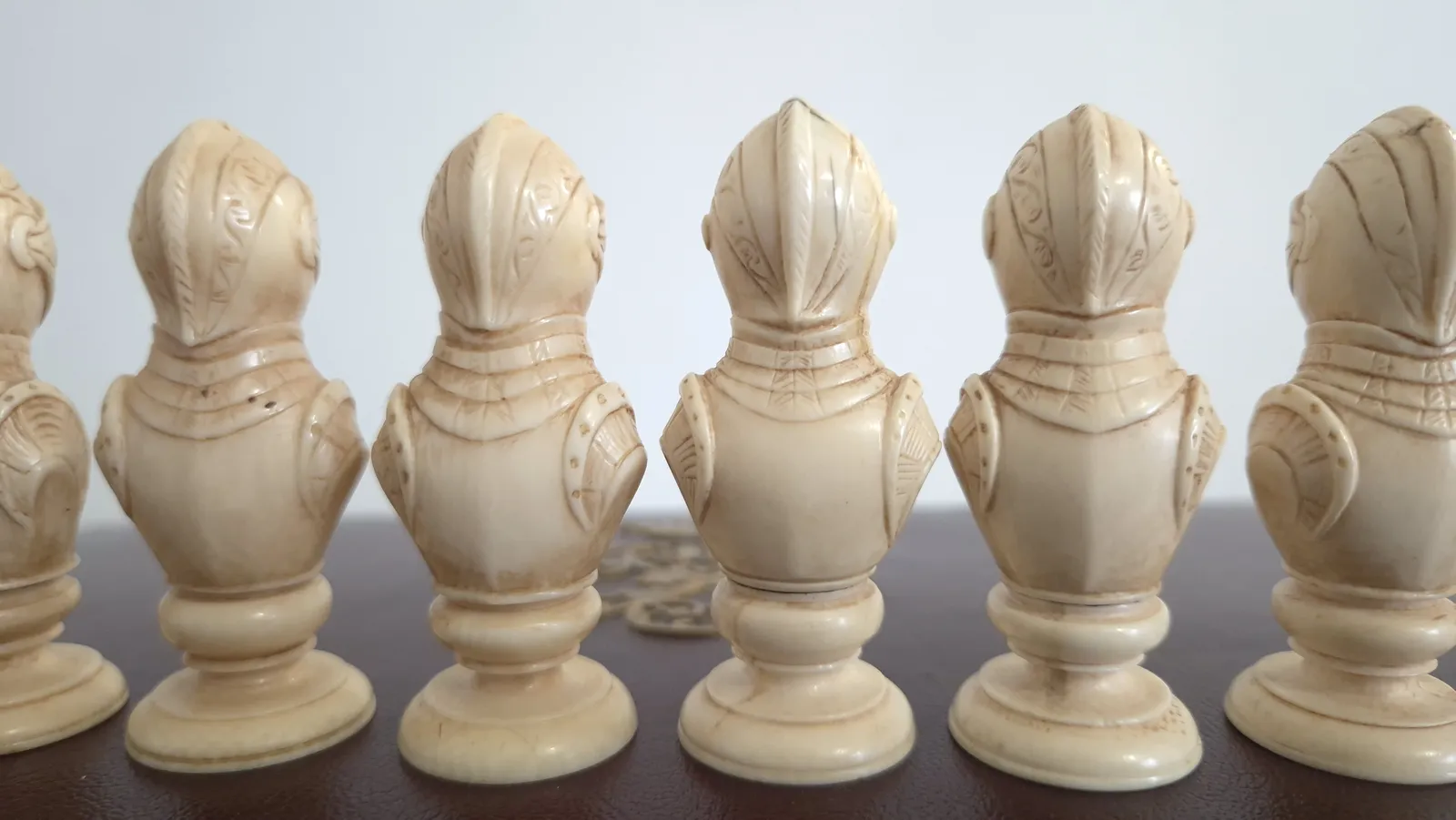
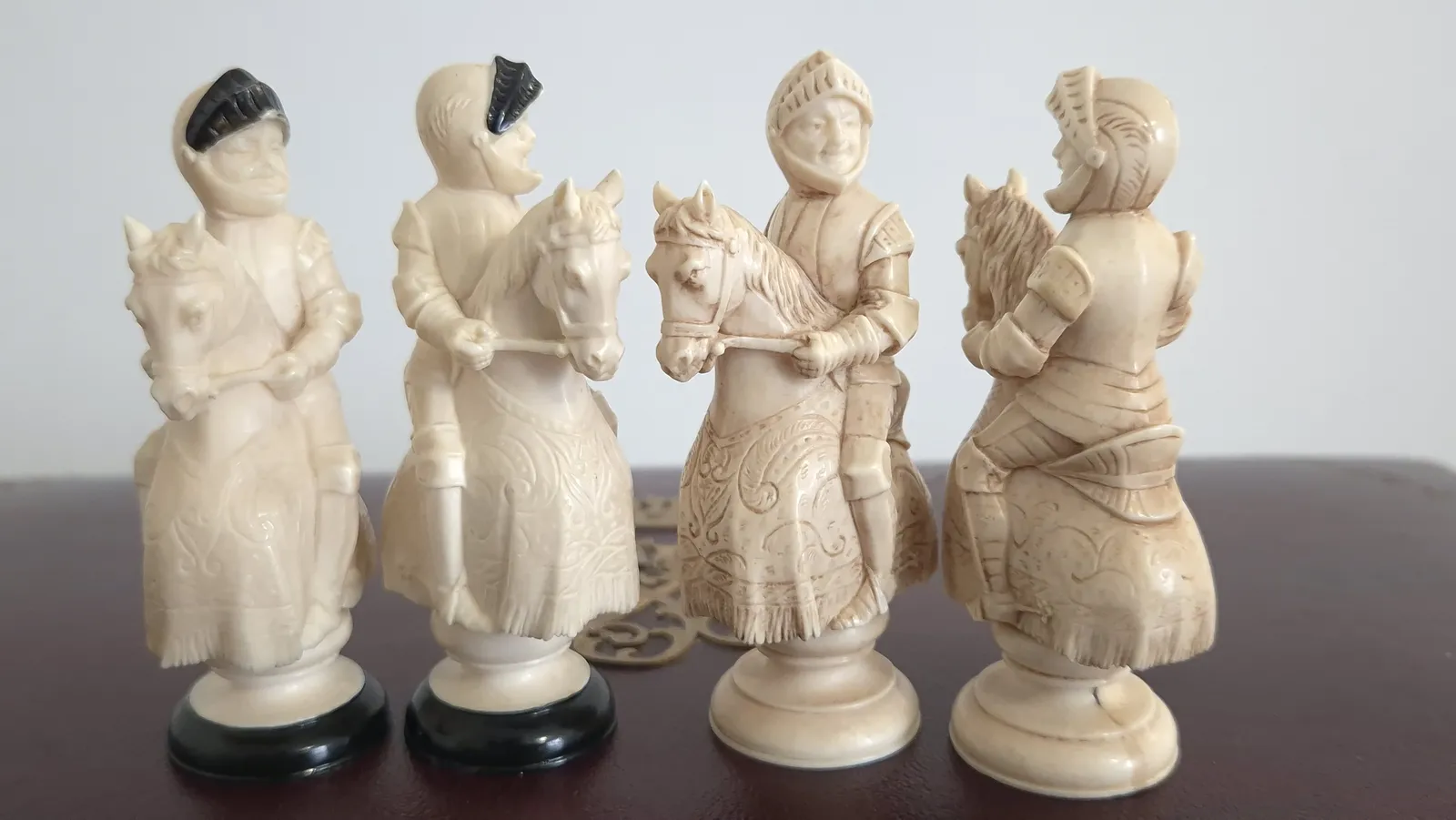
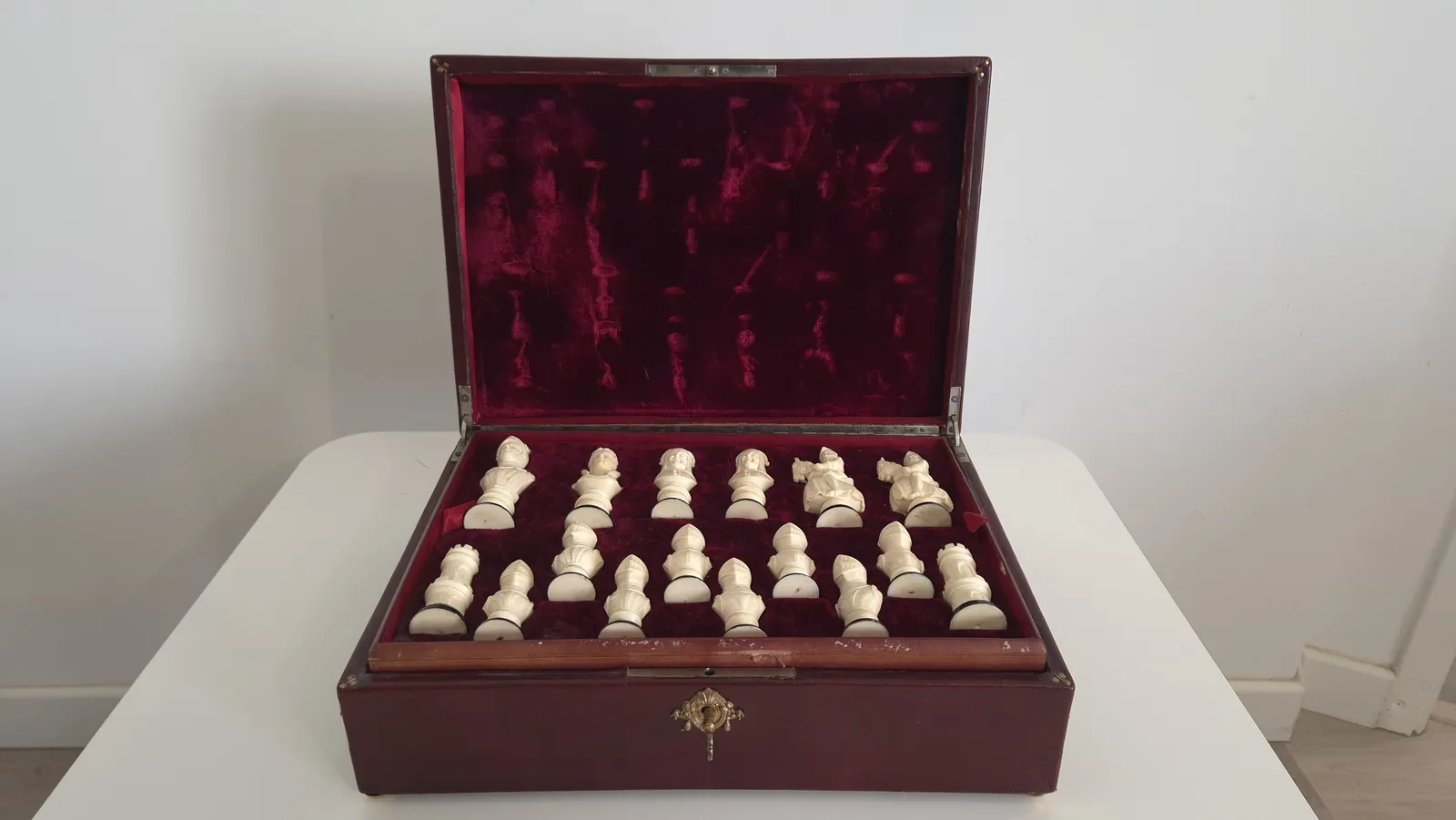
An antique 19th-century French chess set. It resembles a Dieppe set, but according to my research, it appears to be more of a ‘Paris school’ set. These sets, made at the time in the capital by artists and artisans, are rarer and can be much more sophisticated than those from Dieppe. The pieces exhibit unimaginable sophistication and refinement. They depict medieval characters.
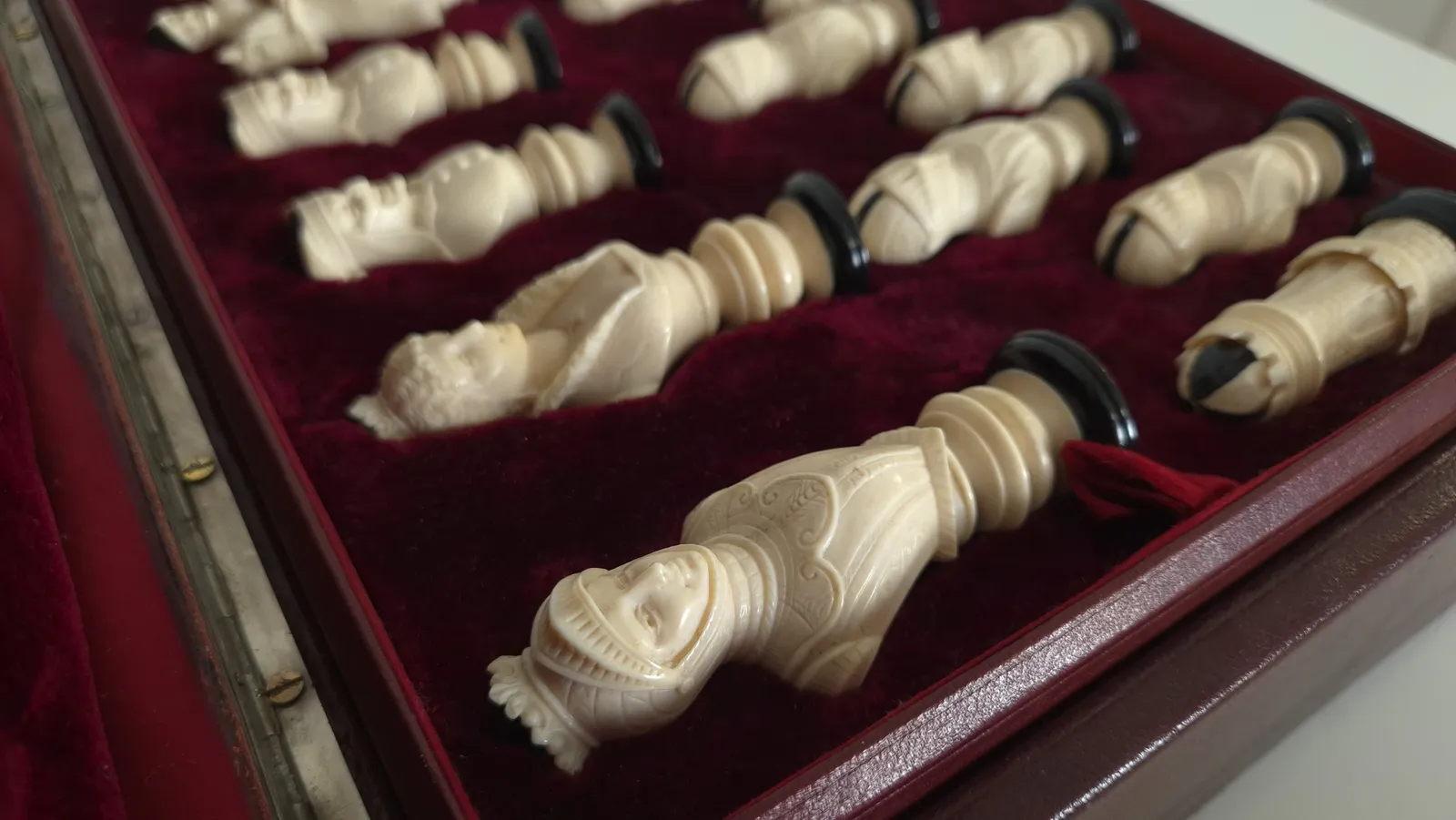
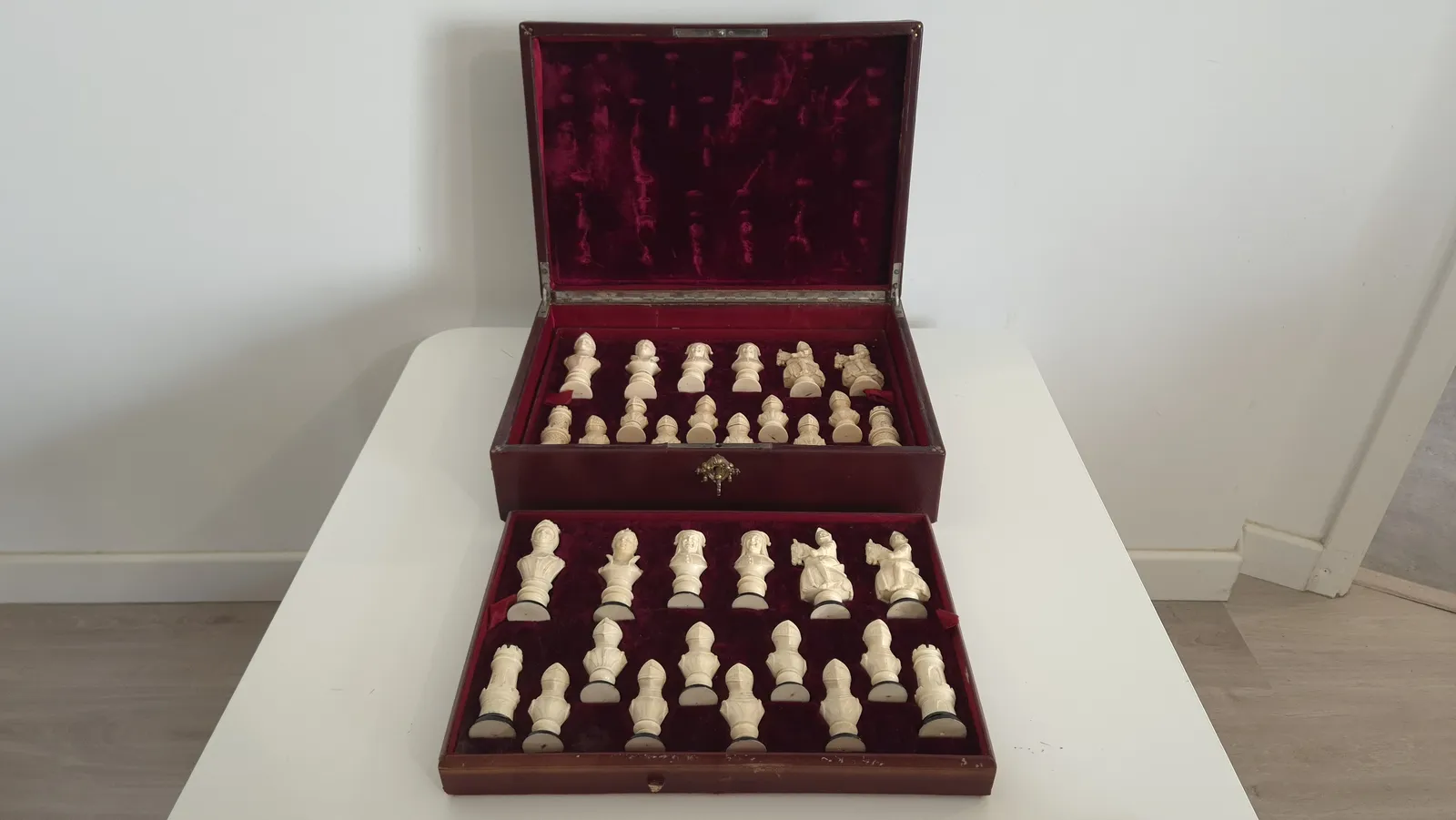
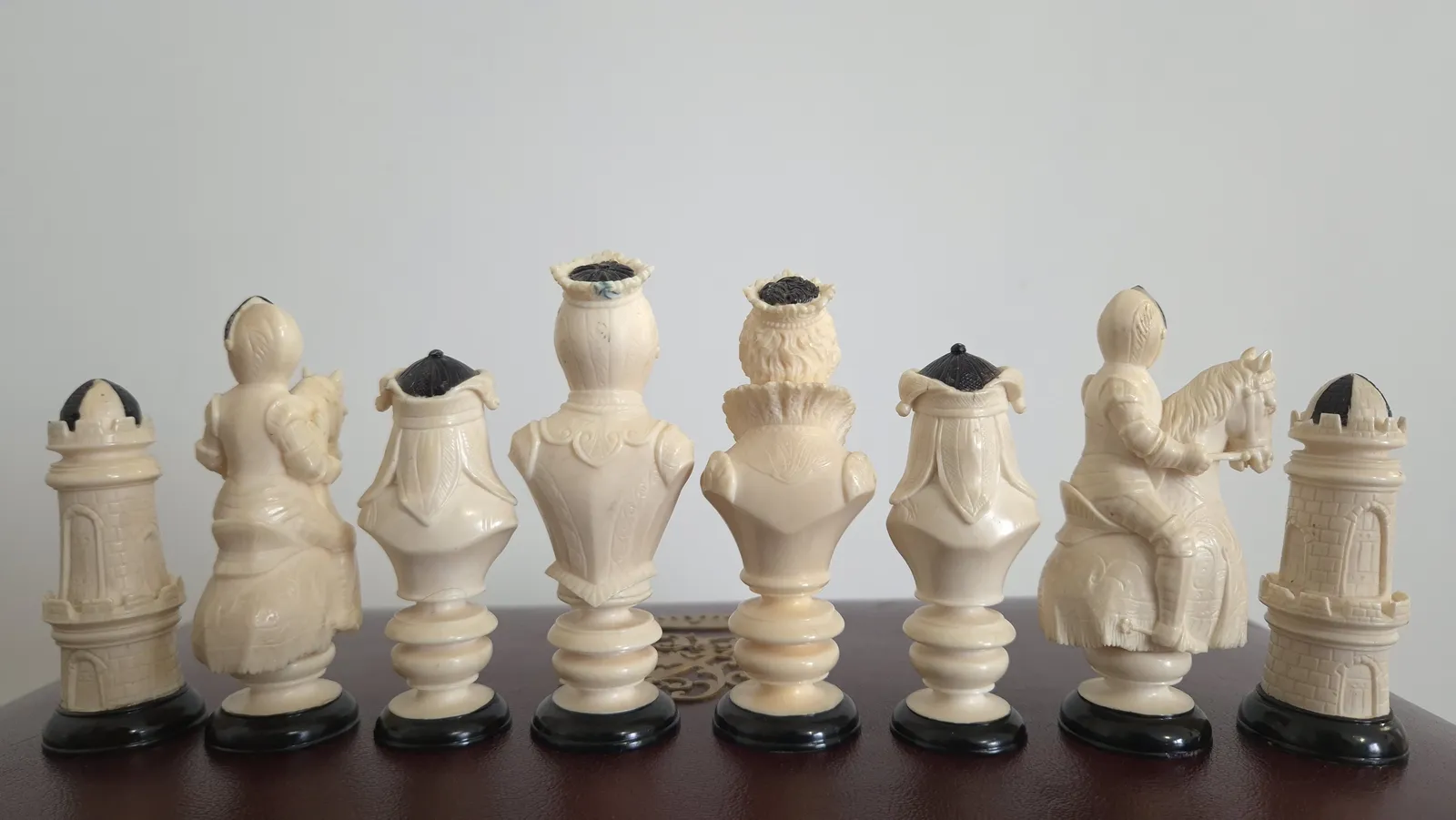
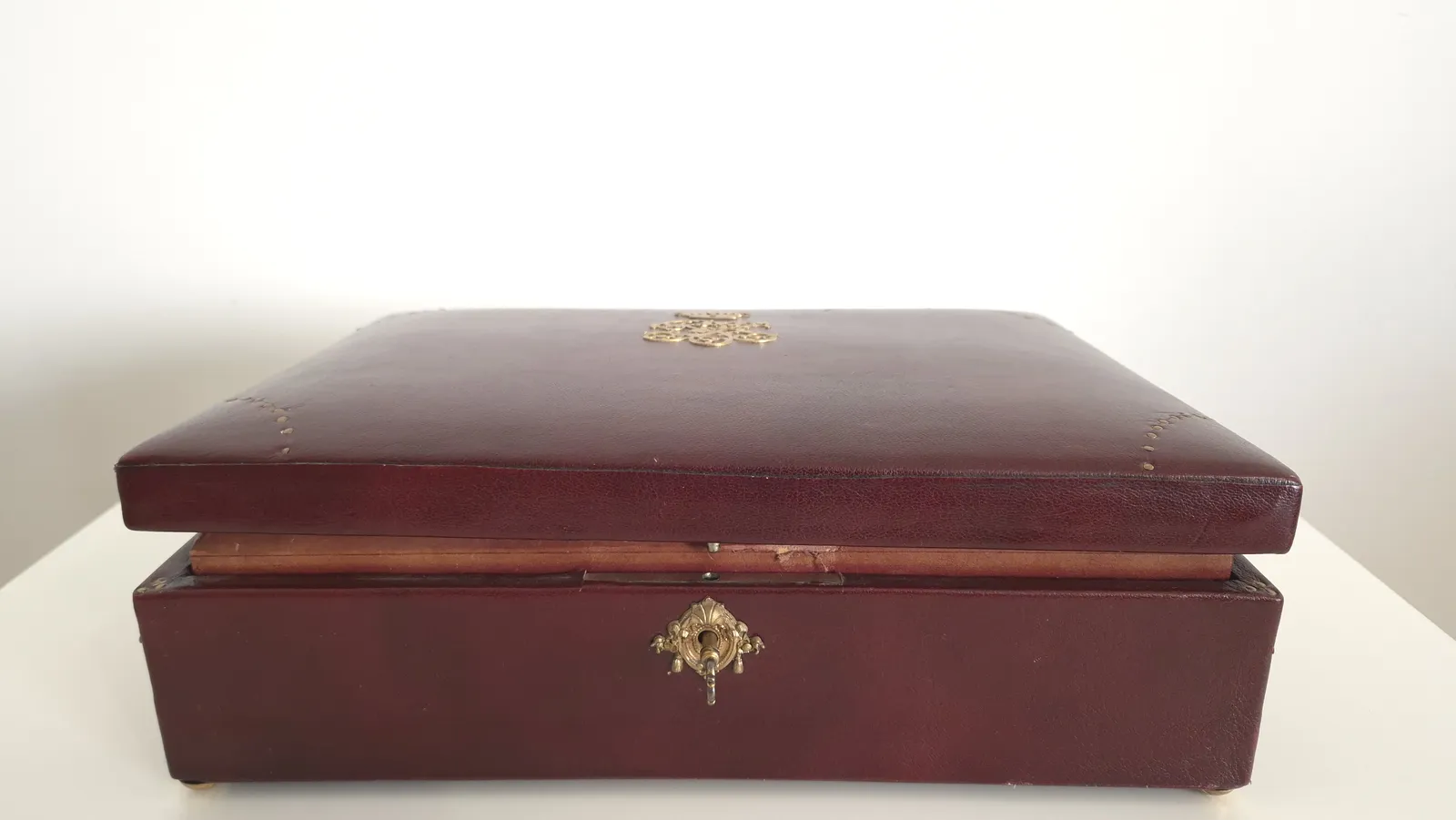
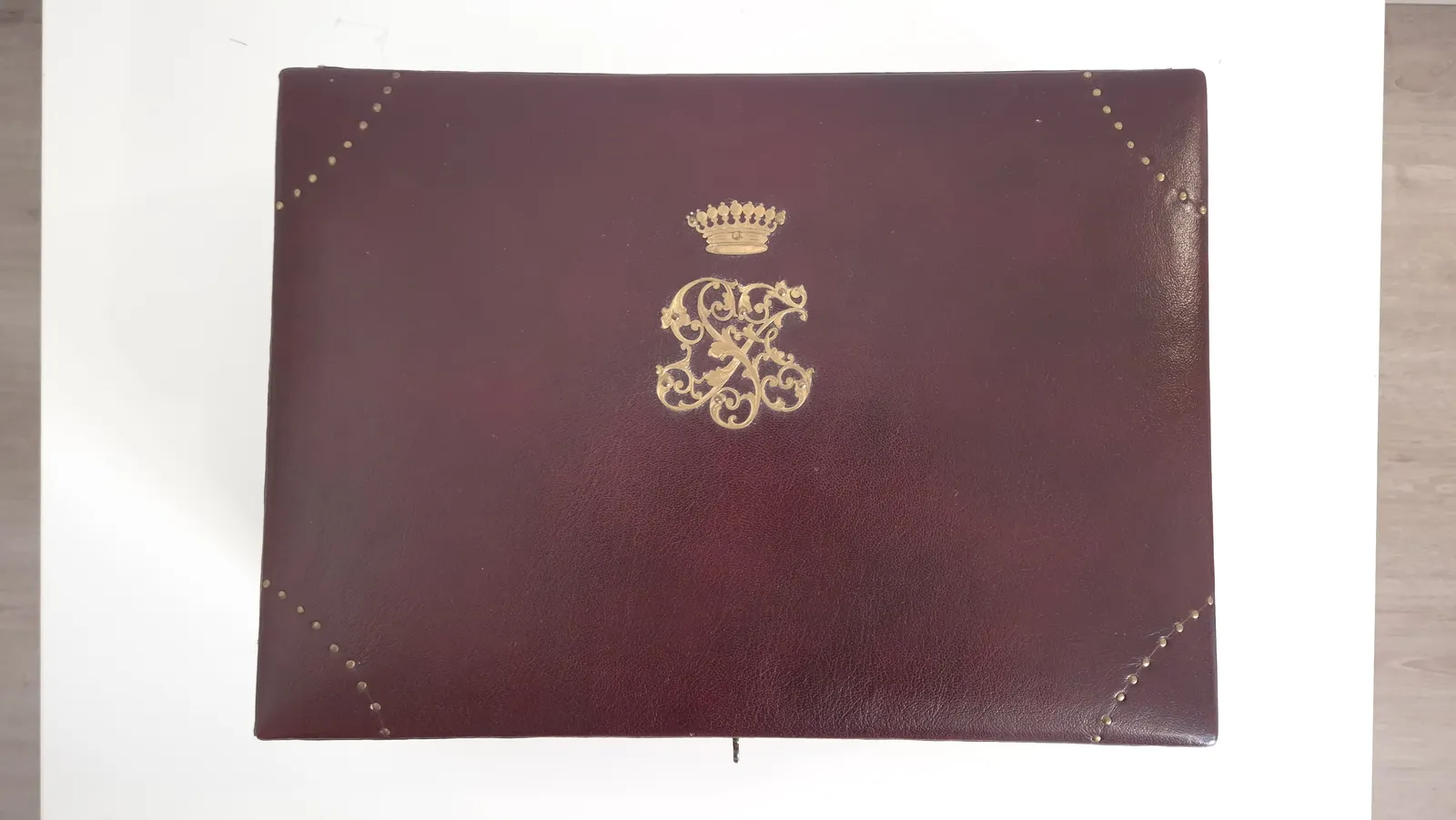
The knights are mounted on ‘hobby horse’ style horses and are very intricately crafted. The bishops are represented by royal jesters; during the anti-clerical wave in France, between the late 18th and first half of the 19th century, bishops, which typically represented the church, were replaced by royal jesters on chess sets. Half of the pieces are white, and the other half are stained with a pronounced beige. Black has also been added to the white side to help distinguish them. The pieces come in a magnificent, very imposing leather case with velvet lining and a gold monogram topped with a crown. It features individual storage compartments for the pieces. Such a case is extremely rare for a set from this period.
The king measures 9.5 cm high
The knights measure 8.5 cm
The pawns measure 6.3 cm
The case measures 35 cm wide and 25 cm deep.
The pieces are in excellent condition, with no damage except for insignificant small chips on the rooks.
The case is in good condition but no longer closes; it still has its key, but the mechanism is broken.
The set belonged for several generations to the Lavi family in Switzerland, in the canton of Vaud. However, after consulting with heraldists about the monogram on the box, it was possible to determine that it initially belonged to a count before being acquired by the Lavi family.
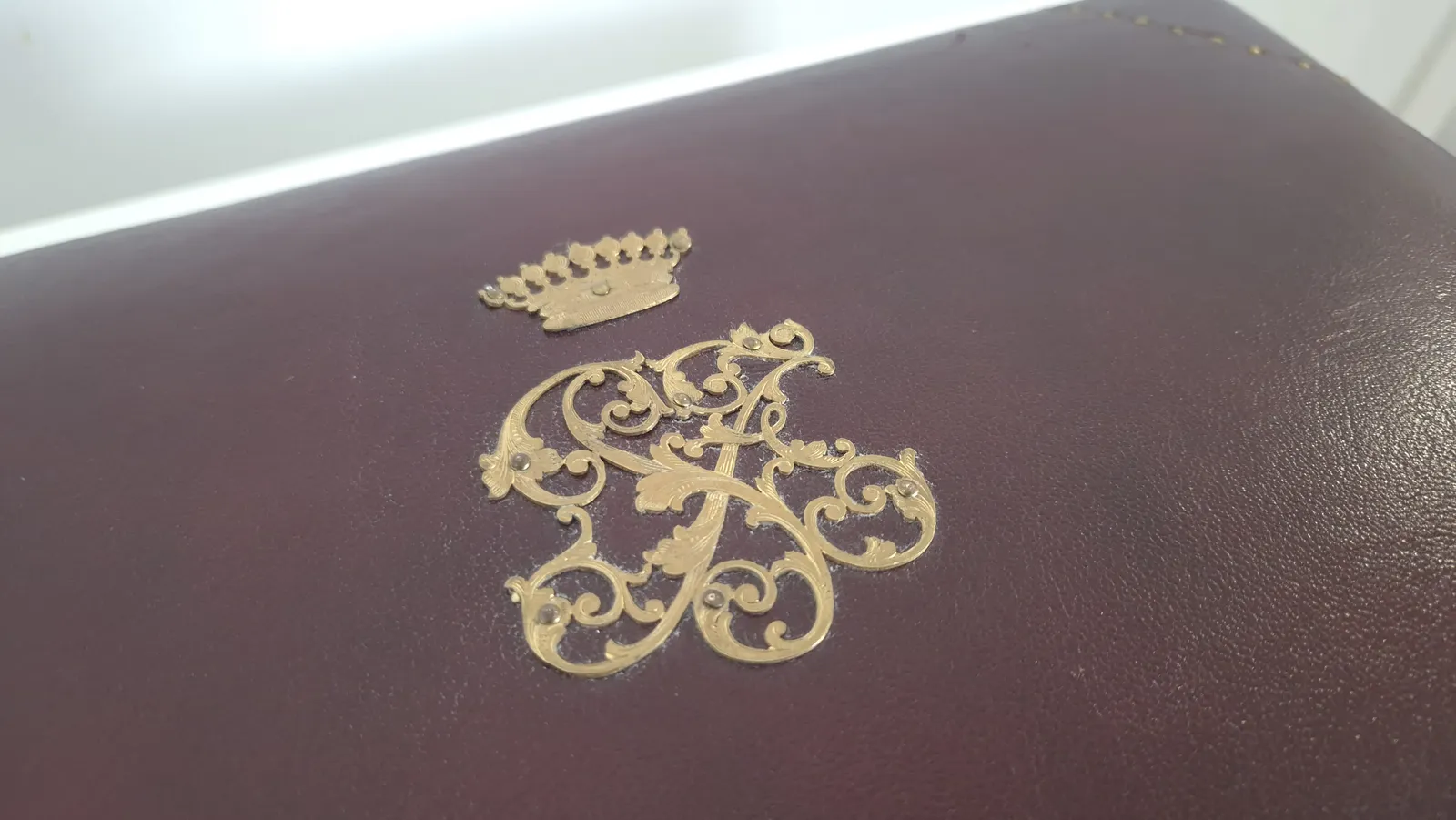
The crown above the monogram, with its open points adorned with pearls, is the distinctive and recognizable sign of a count’s title.
The monogram letters are ‘PF’.
Unfortunately, it is impossible to determine which count the set belonged to based on these two letters alone, as they could correspond to a name, a domain name, or the intertwining of two married individuals’ names.